





How Gujarat’s Kesar Mango Became a Global Brand From Gir to Heathrow
Ahmedabad | Gujarat — When the cargo doors open at London’s Heathrow Airport and the boxes of Kesar and Alphonso mangoes arriving from Gujarat are unloaded, their fragrance wafts across the entire...

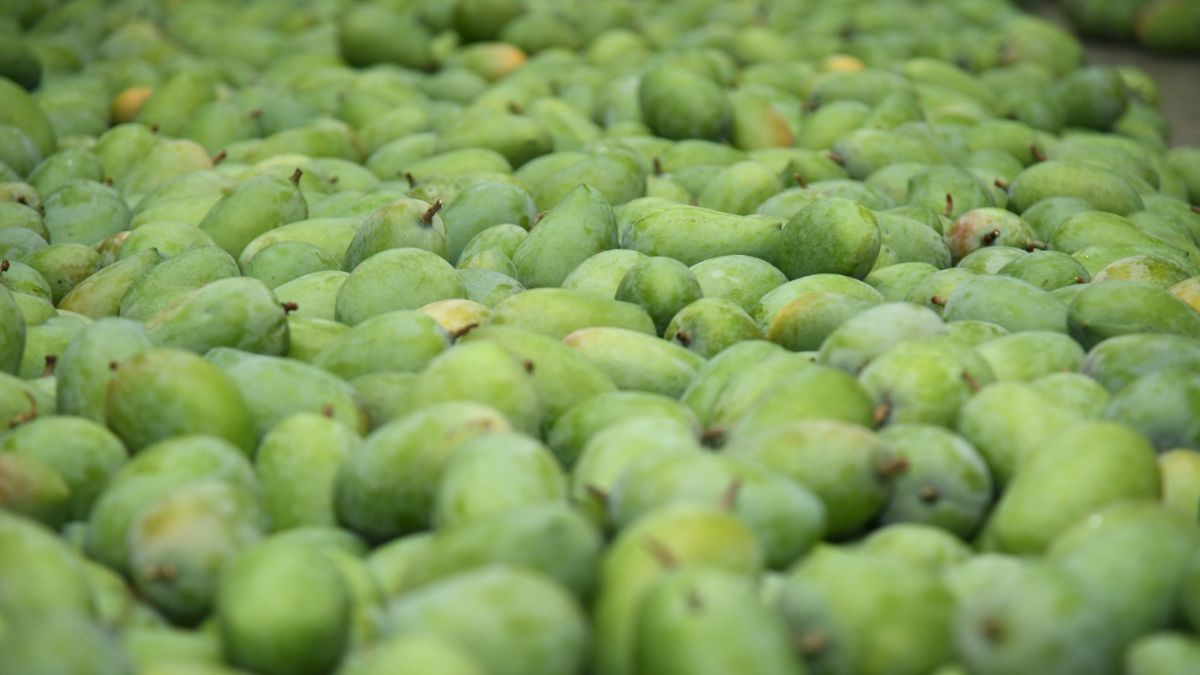
Ahmedabad | Gujarat — When the cargo doors open at London’s Heathrow Airport and the boxes of Kesar and Alphonso mangoes arriving from Gujarat are unloaded, their fragrance wafts across the entire cargo area, making you feel immensely proud as an Indian. For the Gujaratis and Indians living in London, Leicester, and Birmingham, this is not just a fruit—it is a tangible memory of their homeland. People are willing to buy them regardless of the price. Now, even European consumers have developed a taste for Indian mangoes.”
These are the proud words of Digvijaysinh Gohil, an importer who resides in England and travels personally to Gujarat every year to oversee his mango purchases.
Gohil further notes that while many varieties of mangoes are available across India and the globe, Gujaratis and foreigners alike are uniquely fond of the Kesar mango and Maharashtra’s Alphonso. The demand for Kesar is particularly high. The distinct aroma and sweetness found in India’s Kesar and Alphonso are unmatched anywhere else in the world. While mangoes from South America, Brazil, or Peru look vibrantly red and attractive on the outside, they are often bland on the inside. The Indian Kesar, by contrast, is truly the king of flavor.
Turning an Orchard Fruit into a ‘Global Product’ through science
Mangoes are only exported after being sourced from orchards certified by the Agricultural and Processed Food Products Export Development Authority (APEDA) and processed at recognized high-tech pack houses.
Sameer Sapariya, owner of the APEDA-approved Kunj Cold Ware Solution Pack House located in Kuvadava, Rajkot, explains the operation:
“We handle the entire export processing pipeline at our pack house. We process and pack mangoes customized to the specific requirements of the USA, UK, UAE, Australia, Canada, European countries, and the Gulf nations. For the US market, we perform a specialized hot water treatment, which has received an outstanding response. For the UK and Canada, we couple the hot water treatment with a controlled ripening process before final packaging. We process Kesar, Rajapuri, and Alphonso varieties. Our Kesar mangoes are sourced from Junagadh, Talala, and Kutch, while the Rajapuri comes from Valsad.”
The Protocol: From De-Sapping to Hydro-Cooling
The process begins in mango orchards registered on APEDA’s Hortinet portal. Once the mangoes reach the ideal stage of maturity, they are carefully harvested during the cool early morning hours. Workers ensure that the fruits do not get bruised and that the sticky sap from the stem does not spread onto other mangoes, as this can cause black spots on the skin.
When crates of mangoes arrive at APEDA-registered pack houses, the first step is de-sapping. Mangoes are placed upside down on special conveyor belts or trays so that all the sap drains out completely. This significantly increases the fruit’s shelf life.
Strict quality standards are enforced for exports. Trained workers and machines classify mangoes according to weight, size, color and shape. Rotten, damaged or blemished fruits are separated. This entire process is completed within 24 to 36 hours of harvesting.
Raw mangoes are then immersed for about 10 minutes in hot water maintained at temperatures between 48°C and 52°C. Depending on export protocols, the duration and temperature may vary from country to country.
This treatment destroys anthracnose — a fungal disease that causes black spots and decay — along with other harmful fungi. Eggs and larvae of fruit flies hidden beneath the mango skin are also eliminated, preventing spoilage.
The hot water treatment also activates the fruit’s natural ethylene gas, ensuring that all mangoes ripen uniformly and simultaneously. It removes the latex from the stem area, preventing black patches on the skin.
Immediately after the hot water treatment, the mangoes undergo hydro-cooling. The treated fruits are placed in normal or chilled water maintained at temperatures between 10°C and 15°C for around 10 minutes, after which they are air-dried thoroughly.
Without rapid cooling after hot water treatment, residual internal heat can cause the fruit to over-ripen and become excessively soft from inside. Cold water quickly stabilizes the internal temperature. Cooling also slows down the mango’s respiration rate, allowing it to remain fresh for a longer duration without spoiling.
This process keeps the skin firm and helps the fruit develop an attractive golden-yellow color upon ripening. Only premium-quality mangoes move forward for export.
Thus, the Kesar mangoes emerging from the orchards of Gir have today transformed into a global brand through Rajkot’s high-tech pack houses. The hard work of farmers, combined with technology, has proved that if a product has true quality, it can earn worldwide recognition.
New Horizons for Farmers: Earning Dollars and Pounds Directly
Through Farmer Producer Organizations (FPOs), growers can now bypass traditional middlemen and export their mangoes independently, allowing them to earn foreign currency directly.
When farmers form collective groups or FPOs to achieve uniform quality and standardized production scale, the government provides various subsidies and financial assistance. Sapariya emphasizes that his facility is fully prepared to provide complete technical guidance and operational support to any farmers looking to venture into direct exports.
Beyond Mangoes: Premium Vegetables to Follow Suit
According to local exporters, Gujarat’s footprint in the global agricultural market is set to expand rapidly. Following the end of the monsoon season—starting this September—the region plans to leverage this identical high-tech pack house infrastructure to export premium vegetables. Shipments of:
G-4 green chilies
Okra (ladyfinger)
Bitter gourd
Ridge gourd and sponge gourd are scheduled to be processed and dispatched under the same stringent scientific standards to capture western retail markets.
“When a product possesses genuine quality and is backed by modern technology, it achieves global recognition. The Kesar mango, born in the orchards of Gir and Kutch, has successfully transformed into an elite global brand through the power of cold-chain technology.” Says Sameer Sapariya, Pack House Owner