







Surat | Gujarat — Surat’s textile industry, long known as the powerhouse of India’s man-made fabric production, is stepping into a new global race. With daily production of up to 15 lakh meters of...

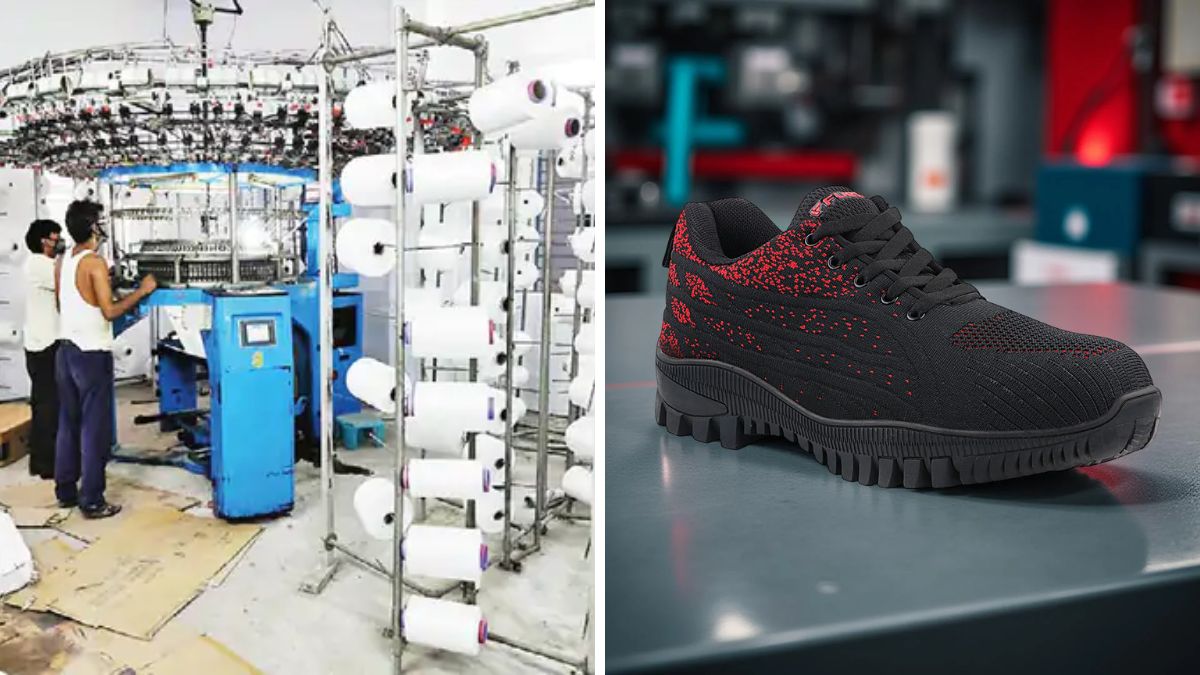
Surat | Gujarat — Surat’s textile industry, long known as the powerhouse of India’s man-made fabric production, is stepping into a new global race. With daily production of up to 15 lakh meters of shoe fabric, the city is positioning itself as a serious competitor to China in the fast-growing sports footwear supply chain.
For decades, India relied heavily on Chinese imports for sports shoe fabric. Today, that dependence is rapidly shrinking as Surat’s MSME-driven textile ecosystem pivots toward this high-demand segment. What began as a small experiment nearly 12 years ago has now evolved into a major opportunity for the city’s textile economy.
From Sarees to Sports Shoes
Surat already produces an astonishing 65 million meters of cloth daily, making it the country’s largest man-made fabric hub. Traditionally dominated by sarees and dress materials, the city’s textile sector is now diversifying into mesh, knitted and PU-coated fabrics widely used in sports footwear manufacturing.
These fabrics are now being supplied to major footwear hubs such as Agra, Delhi and South India, marking a significant shift in the domestic supply chain.
“Overall, Surat’s textile industry is going through a new phase of change, where shoe-fabric work is emerging as a new growth engine along with traditional textiles,” said textile industrialist Girdhar Gopal Mundra. “The growth rate of shoe fabric demand is the highest.”
Four Key Factors Driving Growth
Industry experts say Surat’s rise in shoe fabric manufacturing is backed by four strong advantages.
One-stop textile ecosystem: From yarn production to weaving, dyeing, printing, coating and finishing, the entire supply chain exists within Surat. This integrated setup drastically reduces lead times and costs.
Advanced machinery: High-speed airjet, rapier jacquard and modern knitting machines allow local manufacturers to produce fabrics that meet global quality standards.
Cost competitiveness: Smaller, agile MSME units enable faster design changes and lower production costs compared to China.
Strong MSME network: While large global brands may not yet dominate the sector, Surat’s dense supplier ecosystem ensures reliability and scalability.
China+1 Strategy Opens Export Doors
Global footwear brands are increasingly diversifying supply chains under the “China+1” strategy, creating new opportunities for Indian manufacturers. Experts believe Surat could emerge as a major export hub if policy support and infrastructure keep pace with demand.
“Foreign shoe brands are actively looking at India as an alternative sourcing destination,” said an industry expert. “Surat has the potential to capture a large share of this shift.”
Production Set to Double
Currently, shoe fabric accounts for only a small share of Surat’s massive textile output. However, demand for knitted and PU-coated fabrics is growing at the fastest pace in the sector.
Industry leaders expect production to double within the next three years, turning shoe fabrics into a major pillar of the city’s economy.