






Middle East War Triggers Staggered shutdown in Surat textile mills
Surat | Gujarat — Surat Textile Mills Opt for ShutdownsThe escalating conflict in the Middle East is now casting a long shadow over India’s textile hub, as nearly 450 textile processing units in...

Surat | Gujarat — Surat Textile Mills Opt for ShutdownsThe escalating conflict in the Middle East is now casting a long shadow over India’s textile hub, as nearly 450 textile processing units in Surat and surrounding industrial clusters prepare to shut operations on alternate days amid a deepening fuel crisis.
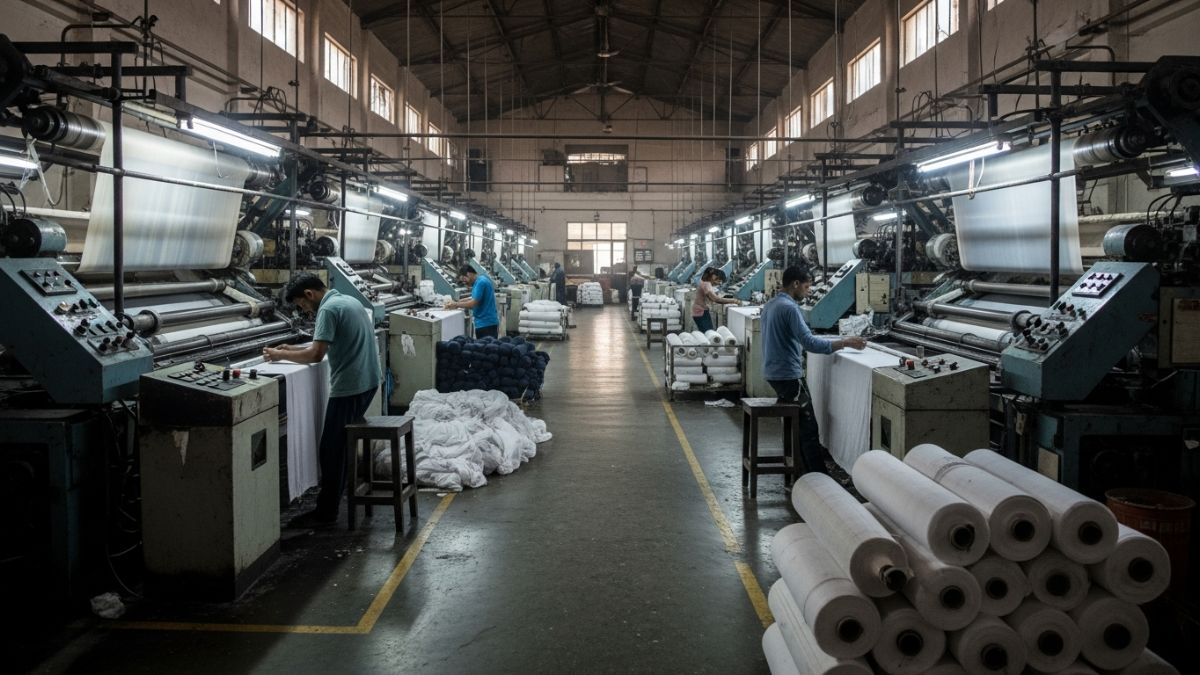
Faced with acute shortages of coal, lignite and LPG—critical fuels that power processing mills—industry leaders have taken the unprecedented decision to curtail production in a bid to survive rising costs and dwindling supplies. The move, which will impact key industrial zones including Pandesara GIDC, Sachin GIDC, Hojiwala Estate, Palsana and Kadodara, signals a serious disruption in one of the country’s largest textile ecosystems.
Kamal Vijay Tulsiyan, president of the Pandesara Industrial Association, described the situation as alarming. “We are facing severe shortages of coal, lignite and LPG due to the ongoing war in the Middle East. Textile mill owners have no option but to keep factories shut on alternate days to manage limited fuel resources,” he said.
The decision follows a high-level meeting convened by the South Gujarat Textile Processors Association (SGTPA), where stakeholders unanimously agreed on staggered shutdowns to conserve fuel and sustain operations for as long as possible. Industry leaders believe that this temporary measure may help retain manpower and prevent complete closures in the immediate future.
However, concerns are mounting rapidly. Tulsiyan warned that if the geopolitical tensions persist, the situation could spiral further. “If the war continues for a longer period, many mills may be forced to shut down completely,” he cautioned, pointing to the sharp rise in coal and LPG prices over the past ten days.
Jitu Vakharia, president of SGTPA, echoed similar concerns, highlighting the fragile supply situation. “Coal stocks with most mills are sufficient for only 10 to 20 days. With prices rising and supply tightening, a serious energy crisis is looming. To manage this, mills will remain closed for two days every week,” he said.
The ripple effects are already being felt across the textile value chain. Processing costs have surged, pushing up the prices of finished fabrics by 10 to 15 percent. At the same time, rising grey cloth prices have discouraged traders from sending material for processing, making mill operations economically unviable.
The crisis is also taking a heavy toll on labour. Surat’s textile sector employs around 2.5 lakh workers directly, many of whom are now facing reduced working days, lower wages and growing uncertainty. With job opportunities shrinking and living costs rising, a reverse migration trend has begun to emerge.
“Workers are leaving Surat in large numbers every day. If this continues, the industry could face a severe labour shortage when demand picks up again,” an industry source said.
Adding to their hardship, workers are struggling with basic necessities. Access to domestic LPG cylinders has become difficult, and many landlords prohibit the use of alternative cooking methods like induction stoves due to safety concerns. This has further compounded the challenges for those staying in rented accommodations.