





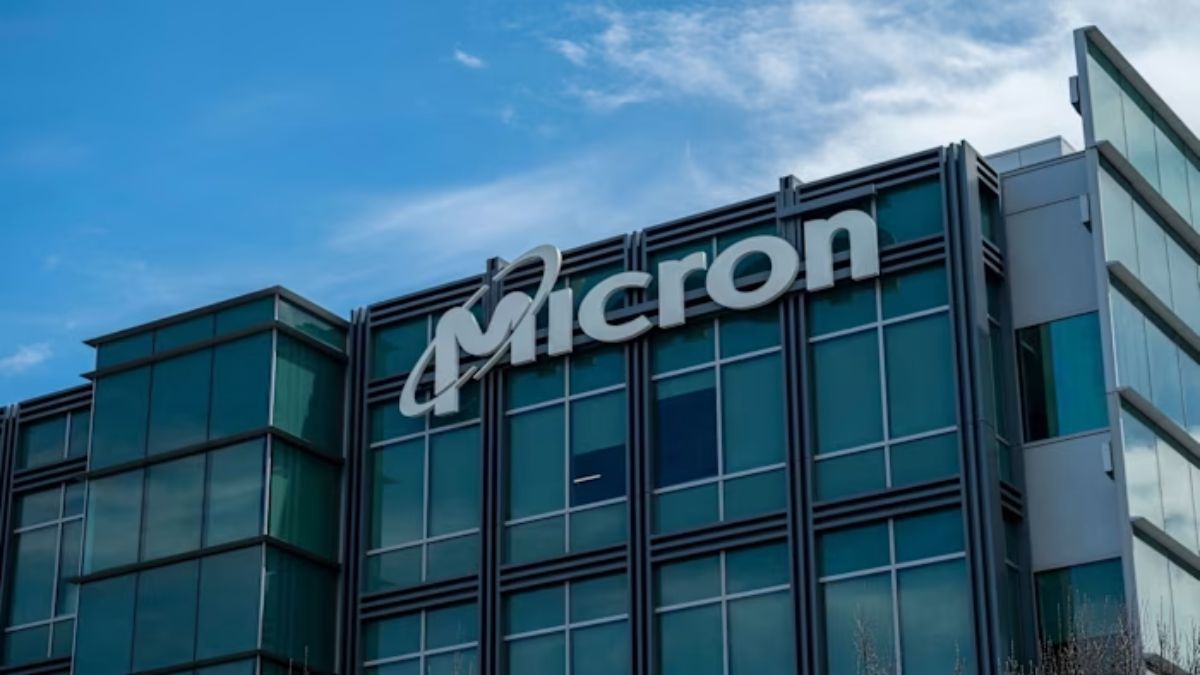
Gujarat : US Company Micron to Start Chip Production in Sanand by February-End
Gandhinagar | Gujarat — In a major boost to India’s ambition of becoming a global semiconductor manufacturing hub, US-based Micron Technology will begin chip production at its $2.75 billion...

Gandhinagar | Gujarat — In a major boost to India’s ambition of becoming a global semiconductor manufacturing hub, US-based Micron Technology will begin chip production at its $2.75 billion semiconductor plant in Sanand, near Ahmedabad, by the end of February. The announcement was made by Union Minister for Information Technology and Railways, Ashwini Vaishnav, at the World Economic Forum (WEF) in Davos, signalling a crucial milestone for the country’s high-tech manufacturing ecosystem.
The Sanand facility, one of the largest semiconductor investments in India to date, is expected to play a pivotal role in strengthening domestic chip manufacturing and reducing dependence on imports. “Work at Micron’s Sanand plant is progressing rapidly, and chip production will begin by the end of February,” Vaishnav said, underlining the government’s commitment to fast-tracking strategic projects under the India Semiconductor Mission.
The minister further revealed that pilot-level production has already commenced at several approved semiconductor facilities across the country, with commercial production set to follow soon. According to Vaishnav, India is steadily building capabilities across a wide technological spectrum. “India will have the capacity to manufacture chips ranging from 28-nanometer to as advanced as 2-nanometer technology in the coming years,” he said, highlighting the country’s growing technical depth.
India’s semiconductor push is being backed by extensive international cooperation. Vaishnav noted that India has partnered with countries including Japan, South Korea, Singapore, Australia, the US and several European nations to secure resilient and diversified supply chains. Global corporations such as Micron and Honeywell are also collaborating with India across multiple strategic sectors, reinforcing confidence in the country’s policy framework and talent base.
Beyond semiconductors, the minister emphasised the importance of critical minerals in sustaining advanced manufacturing. “The Critical Minerals Policy is extremely important for India. It requires cooperation at multiple stages—from refining to processing—and this cannot be achieved without strong international partnerships,” he said.
Vaishnav also highlighted India’s growing focus on artificial intelligence, announcing that officials from Google DeepMind and OpenAI have been invited to participate in the ‘AI Impact Summit’ scheduled to be held in Delhi this February.