







India Embraces the ‘Pay-as-You-Stay’ Revolution: How Bag2Bag Is Changing the Way We Book Hotels
Bag2Bag’s innovative pay-as-you-stay model is reshaping India’s hospitality, offering hourly and short-term stays for convenience, affordability, and flexibility.

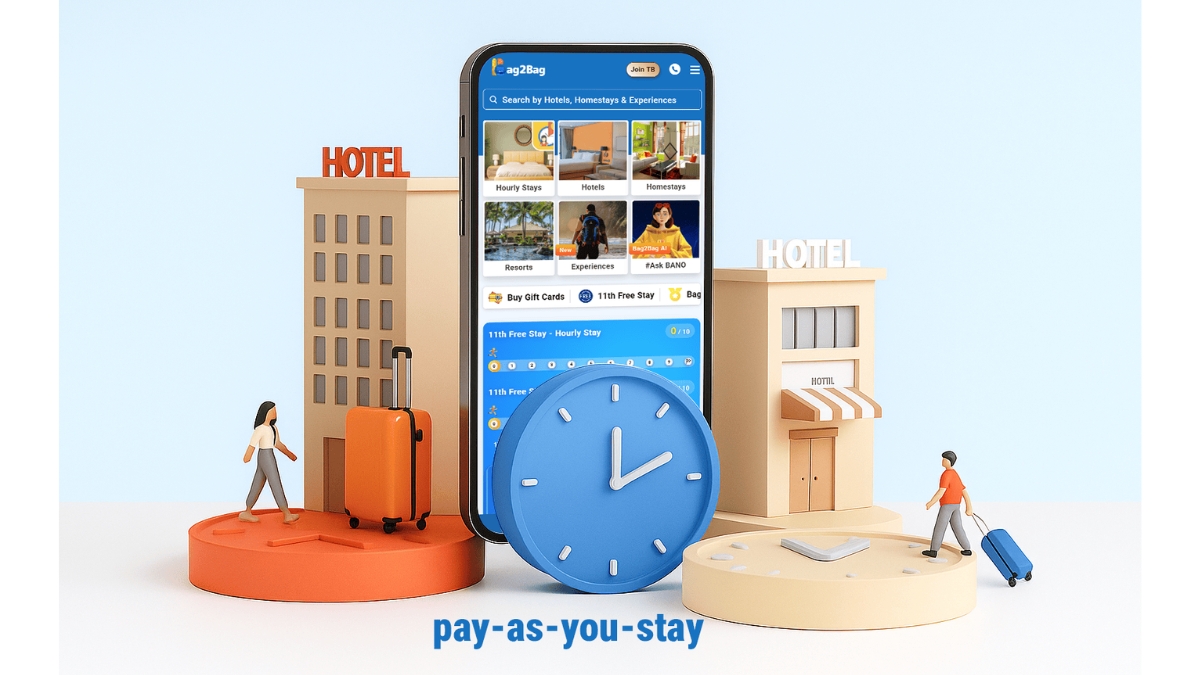
Bangalore (Karnataka) [India], October 16: The way people book hotels in India is changing. Travellers are no longer confined to the traditional overnight check-in model — many now seek flexibility to book rooms for just a few hours or part of the night without paying full-day rates. Leading this shift is Bag2Bag, a hospitality-tech startup that is redefining stays through a “pay-as-you-stay” approach — where guests pay only for the time they actually use.
Founded in 2019, Bag2Bag set out to make hotel stays more adaptable and affordable. The company identified a growing segment of travellers whose needs fall outside standard check-in/check-out hours — from business travellers between meetings and students in transit, to couples seeking privacy or passengers waiting out long layovers.
By tapping into underutilised hotel inventory — rooms that often remain empty for part of the day — Bag2Bag created a win-win model. Hotels gain revenue from previously idle rooms, while guests enjoy cost-effective, time-flexible stays that match their schedules and budgets.
What Bag2Bag Offers
Bag2Bag allows travellers to book accommodations for hourly slots (from as little as 1 hour), part-day, overnight, and for longer stays (days, weeks, or even months). This “micro-slot” approach is what redefines traditional hotel stays. The platform is available in over 100 cities and partners with thousands of properties — from budget hotels and homestays to service apartments and resorts.
An important component of their offering is the loyalty program: customers earn credit points with each booking, and after 10 stays (hourly or overnight), the 11th stay is free in that category. This shifts perceptions: instead of seeing short stays as fringe or occasional, they become a normative, repeatable option.
Bag2Bag also emphasises safety, convenience, and user-friendly policies. The platform accepts local IDs; it has filters and verification to assist travellers who may worry about legitimacy or stigma. It has expanded into homestays in remote and culturally rich areas, combining affordability with authenticity.
Why It’s Catching On
First, changing travel behaviour. Not every trip is leisure; many are short trips for personal errands, medical appointments, or work-related tasks. With more people travelling in smaller, more fragmented ways, fixed overnight stays become less appealing.
Second, cost sensitivity. Many people cannot or do not want to shell out for an entire night if they only need a room for a few hours. The pay-by-hour model offers savings often reaching 50-70% compared to full-night booking, depending on the city, hotel type, and time slot.
Third, urban pressures: in cities where traffic and logistics make conventional travel unpredictable, having flexible stays allows travellers to adapt. For those arriving late, leaving early, or with interruptions in their schedule, being able to book by the hour adds great value.
Fourth, expectations around privacy and dignity have been shifting. Platforms like Bag2Bag, which ensure verification, safety, and transparency, help in reducing the stigma around short stays or non-traditional uses (for example, unmarried couples). By making policies transparent and offering verified listings, trust gradually builds up.
Finally, hotel-side economics. Many hotels see low occupancy in off-peak hours. By opening up hourly slots or short stays, they can monetise otherwise idle assets. This increases revenue per available room (“RevPAR”) and improves utilisation. Bag2Bag’s model, hence, appeals not just to customers but also to property owners.
Impact and Future Outlook
Bag2Bag’s growth suggests that pay-as-you-stay is not a niche but something moving toward mainstream adoption. Since its founding, its presence has expanded to dozens of cities, thousands of properties, with a wide categorisation of stays (hourly, overnight, extended).
As India’s urbanisation, digitisation, and changing travel patterns continue, the appeal of flexibility is likely to increase. The model may evolve with more dynamic pricing, partnerships with co-working spaces, “day use” meeting rooms, and expanded amenities.
If regulators, hotels, and travellers embrace the shift, “pay-as-you-stay” could become standard in many cities: the norm rather than the exception.