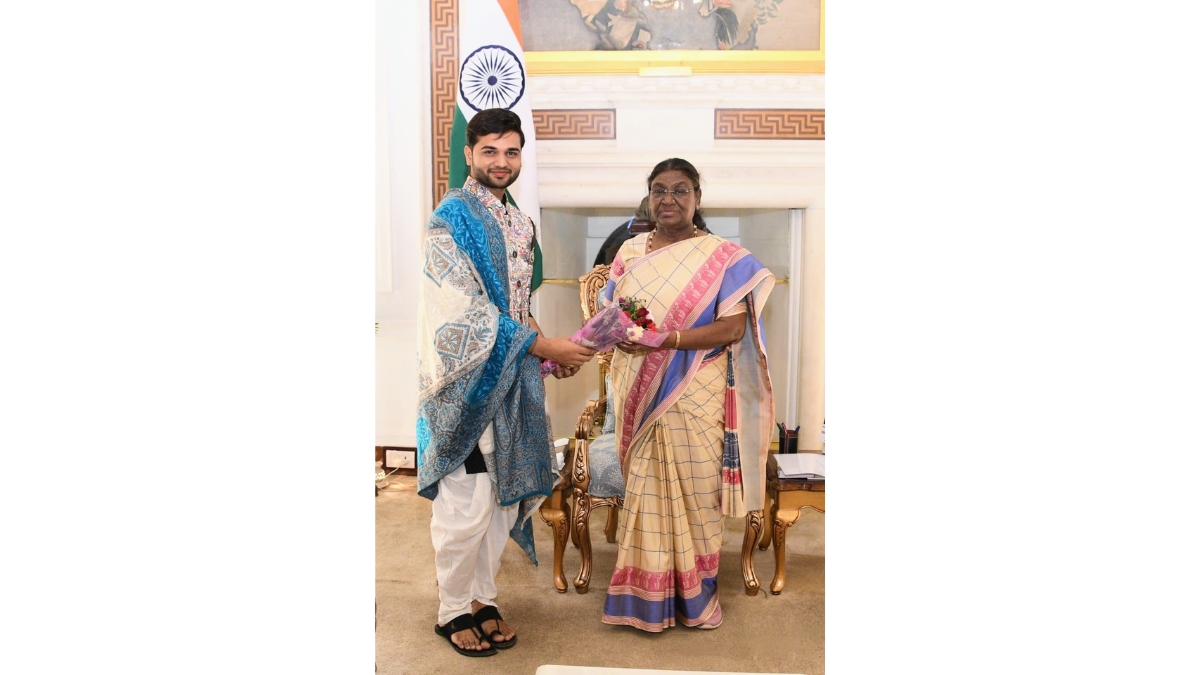




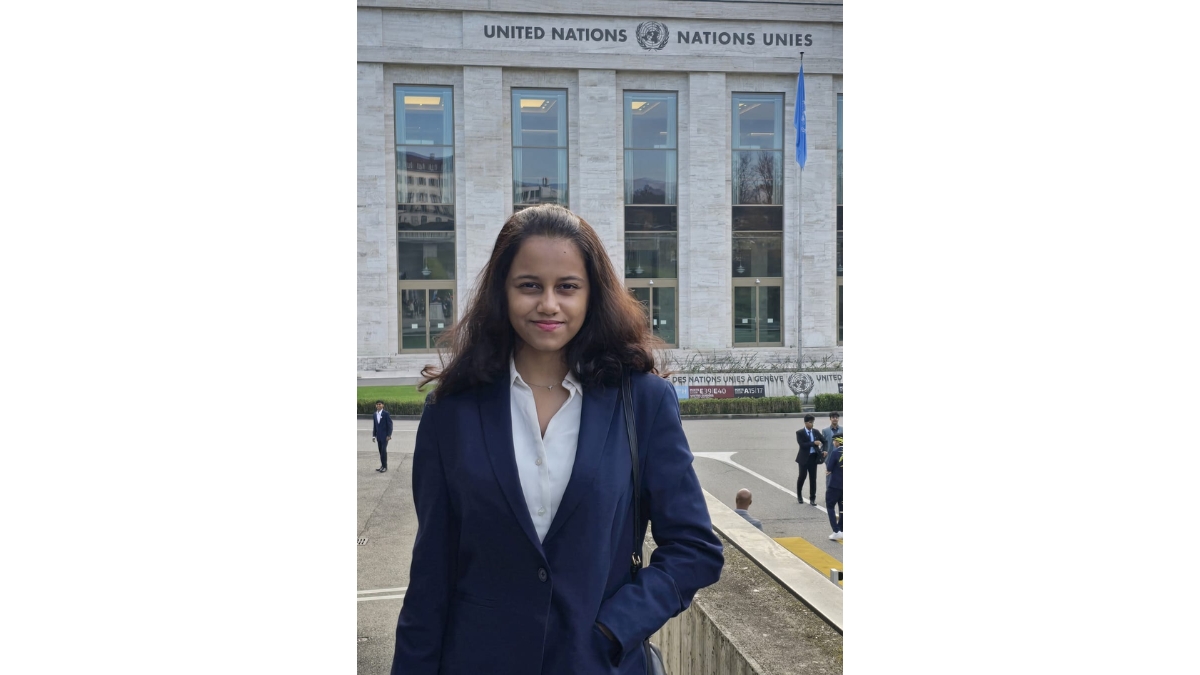
Writer and filmmaker highlights cultural heritage, representing India at UN’s 1M1B Summit.
Shubhanshi Chakraborty has emerged as a prominent voice in preserving indigenous knowledge and fading cultural practices. As a writer, filmmaker, and advocate, she demonstrates how traditional wisdom...

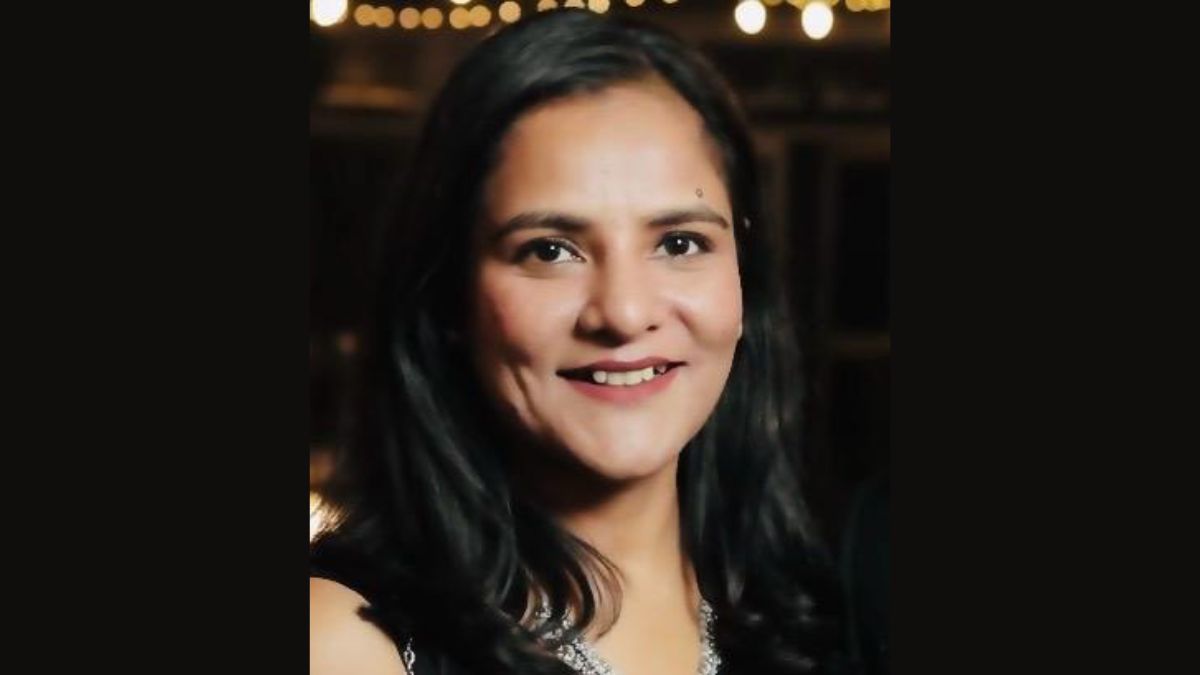
New Delhi [India], December 22: Shubhanshi Chakraborty has emerged as a prominent voice in preserving indigenous knowledge and fading cultural practices. As a writer, filmmaker, and advocate, she demonstrates how traditional wisdom can guide contemporary ideas of progress. Recognised with the Mahatma Award 2025 and having represented India at the 1M1B Activate Impact Summit at the United Nations, Chakraborty continues to share India’s ecological and cultural heritage globally. Her works, including Past Is Forward and the short film Natok, highlight the urgency of safeguarding cultural memory.
1. Your book Past Is Forward is rooted in tribal memories and traditional wisdom. Which personal experience first planted the seed for this narrative?
Answer:
The seed was planted the moment I became aware of how casually we dismiss the lived knowledge of our own land. Growing up, I watched traditional practices, particularly within tribal and rural communities being branded as backward or obsolete, often without any real attempt to understand why they existed in the first place.
That unease deepened during my academic years. Ancient texts, indigenous systems, and belief structures were frequently examined only through the lens of their limitations, rarely for their internal logic, ecological wisdom, or cultural context. This one-sided scrutiny stayed with me.
Past Is Forward emerged from that discomfort, from a persistent question: does progress truly require the erasure of memory, or can memory itself be a sophisticated form of intelligence, guiding us toward a more rooted and humane future?
2. You often describe sustainability as a way of living rather than a concept. What lesson from tribal or rural communities do you feel the world urgently needs to learn?
Answer:
For tribal and rural communities, limits are seen as expressions of balance. Sustainability, for them, is not driven by fear about the future or anxiety about scarcity, it grows out of a deep, intimate love for the land. That distinction is crucial.
Restraint in these communities is never experienced as deprivation. Consumption is guided by seasons, rituals, and genuine need rather than unchecked desire. What they take is always measured against what can be given back.
Today, the global conversation around sustainability is dominated by data, targets, and policy frameworks. Indigenous communities, on the other hand, live sustainability instinctively. Their lives are rooted in an awareness of consequence, an understanding that you cannot live well if you are disconnected from the impact of your actions on the world around you.
That lesson is both simple and urgent: care, not fear, must be the foundation of how we sustain our planet.
Sustainability is a way of being in relationship with the planet.
3. The title “Past Is Forward” suggests that the answers to our future lie in our roots. How did you come to this philosophy?
Answer:
By noticing a pattern, whenever we face a crisis, ecological, social, even psychological, we look for futuristic solutions, but the frameworks we need already exist.
Our past was not perfect, but it was deeply observant. People understood climate, land, community, and responsibility through lived experience.
For me, Past Is Forward asserts that genuine progress comes from interpreting the past with intellectual rigour and contextual relevance for the present. In an age of ecological breakdown, the book offers a counterintuitive yet necessary perspective, that ancient wisdom may hold keys to our contemporary sustainability crisis.
By revisiting ecological principles in philosophical ideas such as Dharma (duty and balance), Karma (action and consequence), and Prana (the animating life force), the book demonstrates how these concepts align closely with modern environmental science. Together, they remind us that sustainability is ultimately about relationships, recognising the deep interconnectedness between human action, ecological systems, and the future we are shaping.
4. Your short film Natok highlights the struggles of Chhau dancers. What inspired you to choose this community and art form for your first film?
Answer:
Chhau struck me because it is visually powerful, culturally rich, and yet economically invisible.
These dancers preserve a centuries-old martial-art tradition, but many of them struggle to make a living from it. That contradiction disturbed me.
I chose Chhau because it represents so many traditional art forms in India, celebrated in theory, neglected in reality.
Natok was my attempt to shift the gaze from performance to people.
It seeks to depict the tribulations of individuals I have closely observed, people who practise their art, worship through it, and live within it. For them, these art forms are quiet whispers of reassurance during turbulence, often beyond their own comprehension. These artforms are the core of their existence, a very big part of their lives yet it is too little, too little to earn from, too little to survive on and with every tick it passes away, intertwines with the whistling winds and fades into nothingness.
5. Both your book and film focus on cultural preservation. In your view, what is the biggest threat to traditional knowledge today?
Answer:
indifference.
Traditional knowledge is disappearing because fewer people feel responsible for carrying it forward.
When knowledge is not documented, contextualised, or respected, it fades quietly.
The real threat is the idea that modernity and tradition cannot coexist.
Urbanisation and formal education systems frequently disconnect younger generations from intergenerational knowledge transfer. The most damaging assumption, however, is the belief that tradition and modernity are inherently incompatible. This false binary pushes traditional knowledge to the margins, rather than allowing it to evolve alongside contemporary science and technology.
In reality, cultural diversity functions much like ecological diversity, it is a reservoir of resilience, ethical insight, and adaptive intelligence. If we fail to recognise traditional knowledge as a living resource rather than a relic of the past, we risk losing not only cultural heritage, but also critical tools for navigating our shared planetary crisis.
6. You have represented India at the 1M1B Activate Impact Summit at the United Nations. What core message from India’s heritage were you excited to take to the global stage?
Answer:
That sustainability is not a new invention for us.
From community-managed resources to philosophies that place humans within nature rather than above it, India offers a worldview that is deeply relevant today.
I emphasised that development without rootedness is inherently unstable. Cultural memory, traditional knowledge, and ecological wisdom are active instruments of resilience, equity, and sustainability. By integrating heritage with innovation, India demonstrates that ancient wisdom can guide the world toward solutions that are not only effective but regenerative.
7. Winning the Mahatma Award 2025 at just 18 is incredible. Which part of your work do you think resonated most with the jury?
Answer:
Whether through writing, film, or advocacy, I have always returned to the same guiding question, How do we move forward without losing ourselves?
The jury seemed to recognise that this is not activism for attention, but a sustained engagement with culture, ethics, and sustainability. It was actually humbling to receive the Mahatma Award, especially knowing that in the past, it has been conferred upon visionaries I deeply admire, Ratan Tata, Rajashree Birla, and Sudha Murty. Being included in the same lineage of honourees reinforces my belief that even young voices can contribute meaningfully to long-term, transformative ideas.
8. You were invited as visiting faculty at Shiv Nadar University at a very young age. How did stepping into a teaching role influence your own perspective as a learner?
Answer:
Teaching made me realise that clarity is the highest form of understanding.
When students ask why relentlessly, there is no hiding behind jargon or assumptions, you are forced to articulate ideas in their simplest and most precise form.
It pushed me to question my own assumptions and to remain a learner first, because knowledge only stays alive when it’s open to dialogue.
In guiding others, I found myself becoming a better, more conscious learner, someone who listens as much as they explain, and who recognises that curiosity is the foundation of both teaching and understanding.
9. From writing to filmmaking to advocacy—what drives you to tell stories across different mediums?
Answer:
Some stories need arguments. Some need images. Some need emotion.
I don’t choose the medium, the story does.
What drives me is the belief that cultural memory must be felt. Different mediums allow different entry points into the same truth.
10. What is the next story or cultural practice you are passionate about documenting before it fades from collective memory?
Answer:
I’m increasingly drawn to indigenous ecological practices,especially how communities interpret land, water, and climate through ritual and narrative memory.
These are survival knowledge systems.
Documenting them is about preserving intelligence we may urgently need again.