



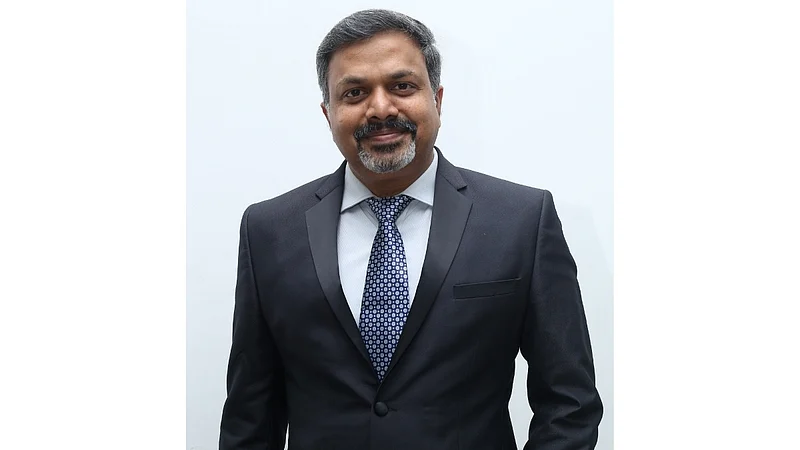
The Rise of Trust in India’s Elder Care Industry: Insights from Prashanth Reddy
Hyderabad (Telangana) [India], June 26: For decades, the joint family was India’s invisible elder care infrastructure. It worked because geography, economics and social expectations were aligned....

Hyderabad (Telangana) [India], June 26: For decades, the joint family was India’s invisible elder care infrastructure. It worked because geography, economics and social expectations were aligned. Parents, children and grandchildren were often close enough for care to happen naturally. A missed medicine, a hospital visit, a fall or sudden health concern could be noticed within the household.
That alignment is now breaking down. Urbanisation has dispersed families across cities and continents. A child in Bengaluru or Boston may care deeply for a parent in Hyderabad, but cannot physically check on them on a Tuesday morning. At the same time, India’s senior population is growing faster than families can absorb, with the country expected to have over 300 million seniors by 2050. Many will live alone or with an ageing spouse.
The change is also attitudinal. Today’s seniors are more health-literate, financially independent and less willing to uproot their lives to move in with children. They want to age in their own homes, in their own cities and on their own terms. This combination of distance, independence and ageing is turning elder care into an organised services market.
Families do not seek professional support because they love their parents less. They seek it because they recognise the limits of what love alone can provide across distance. What they need is a trusted, professional layer of care that can act as their presence on the ground.
The first barrier in elder care is trust. A family will not hand over the daily welfare of a parent unless it is confident that the person entering the home is trained, vetted and genuinely invested. Trust cannot be built through marketing alone. It has to be earned through consistent presence on the ground.
The second challenge is trained care management. Elder care is not simply about sending someone home for a visit. Seniors may need support with chronic disease management, fall prevention, cognitive decline, medicines, diagnostics, hospital visits, recovery after discharge and companionship. Training people for this work is difficult. Retaining them in a demanding sector is equally difficult.
Medical coordination is where the complexity increases. An elderly person may manage three to five chronic conditions, consult multiple specialists and take several medicines. Families need someone who can understand what is routine, what is a warning sign and when escalation is required. They also need clear communication, because the adult child may not be medically trained but still needs reassurance.
Emergency response is non-negotiable. In a fall, cardiac event or sudden deterioration, a delayed response can affect survival and quality of life. A helpline alone is not enough. Serious elder care requires trained responders, protocols and 24/7 coverage across geographies.
This is why organised elder care is operationally complex. Pricing matters, but it comes after trust. When families understand that they are not paying only for a care manager, but for a comprehensive support system, the conversation shifts from cost to value.
In most cases, the buyer is the adult child and the beneficiary is the parent. The decision is rarely made in a calm planning conversation. It is usually triggered by a crisis: a fall, a hospitalisation, a health scare, or the moment a child leaves India and realises there is no reliable support system behind.
NRIs are among the most motivated customers because the distance is greatest and the emotional cost of a care failure is high. Working children in Indian metros face a similar challenge. Dual-income households, long commutes and demanding careers mean they often have the intent to care, but not the bandwidth to provide consistent care.
Corporates are also emerging as an important customer. Companies are beginning to recognise that an employee whose parent is unwell, alone or unmonitored is likely to be anxious and distracted. Elder care benefits today are where crèche benefits were years ago. Anvayaa’s partnership with Infosys to support the parents of employees is one example of where the market is heading.
Over the next five years, serious elder-care companies will be defined by depth, not just coverage. The important capabilities will include routine wellness, preventive monitoring, chronic care support, hospitalisation assistance, recovery, companionship, technology and emergency response. Episodic care will not build trust. Longitudinal relationships will.
Technology will help, but it will not be a differentiator by itself. Remote monitoring, health dashboards and emergency alerts are useful only when backed by a human response layer. Serious players will use technology to strengthen human judgement, not replace it.
Preventive monitoring will also become central. The stronger model will be the one that helps keep seniors out of hospitals, not only the one that responds well after a crisis. Hospital partnerships will matter because discharge planning for elderly patients remains one of the most underserved gaps in Indian healthcare.
The difference between a basic home-service provider and a serious elder-care company is accountability. A home-service provider completes a task. A serious elder-care company takes ownership of an outcome.
Anvayaa was founded ten years ago on the belief that families needed a trusted professional presence they could rely on from a distance. As India’s family structures change, that belief has become more relevant. The future of elder care will not be about replacing the family. It will be about supporting families so seniors can age with dignity, safety and confidence at home.