
The Indestructible Dictator: 5 Paradoxes That Explain Venezuela’s Crisis
From oil wealth to US sanctions and war-driven revival, five contradictions explain Nicolás Maduro’s survival

Advertisement
Most people see Venezuela as a nation defined by collapse. The headlines paint a picture of dictatorship, poverty, and a humanitarian crisis that has sent millions fleeing. While this perception is rooted in a devastating reality, the full story of how Venezuela arrived at this point is far more complex, filled with shocking ironies and unexpected turns.
The path to the country’s current state is not a simple narrative of good versus evil. It is a story where immense wealth became a curse, where a leader no one took seriously outmaneuvered everyone, and where the United States, after putting a price on the dictator’s head, would ultimately become his unlikely savior.
This article delves into five of the most impactful and counter-intuitive truths from inside Venezuela, revealing how a nation with every advantage destroyed itself and how its embattled leader survived against all odds.
How the World’s Largest Oil Reserves Became a Poison Chalice
The central paradox of Venezuela lies beneath Lake Maracaibo, the historical heart of its oil industry. The nation possesses the world’s largest oil reserves, a resource that once fueled the “Latin American dream.” Producing 3 million barrels a day, it was once the world’s largest oil exporter and a vital ally to the United States. But this immense wealth was poorly distributed, creating deep social fractures long before the current crisis began.
Under the new Chavista regime, the state oil company, PDVSA, was systematically dismantled. Professionals were purged and replaced by political loyalists. Critical operational funds were diverted, and without constant investment, production ground to a halt. Today, the decay is tangible. On the lake, the “GP11” rig, one of the last generation barges, sits completely abandoned and unusable. Workers in the fields make coffee with gas piped directly from a well, a poignant symbol of resource abundance amid systemic collapse.
The devastation is so complete that it evokes images of a war zone, with valuable equipment left to rust or be sold for scrap.
“Es precisamente como si estuviéramos en una guerra de Ucrania de Rusia de Israel del Líbano porque es lo que se ve O sea eso demuestra pues el grado de de inteligencia y de responsabilidad de lo que últimamente han manejado la industria petrolera”
The nation had become entirely dependent on a single industry. As one observer noted, when PDVSA stopped, the entire country stopped with it.
The Unlikely Leader No One Took Seriously
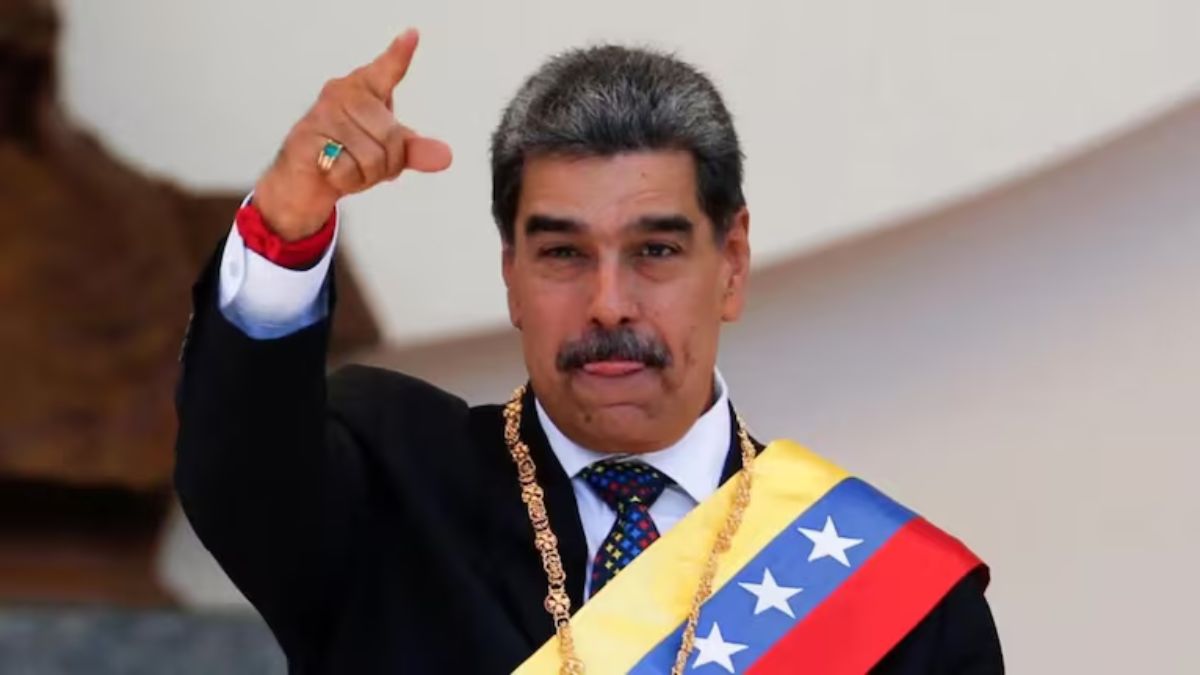
When Nicolás Maduro became Hugo Chavez’s handpicked successor, he won the presidency by a razor-thin margin of 50.6%. He was widely underestimated, not just by his opponents, but by long-term Chavistas and high-ranking military officers who viewed him as a “lightweight” and little more than an errand boy. While the regime built a myth of Maduro as a “presidente obrero” (worker president) who rose from being a bus driver, the elite saw him as no threat.
“Mr Mado a man who is selected to be vice president because he did not have the intelligence the ability the talent the skill to be a threat to the the sitting president finds himself now as the president of Venezuela”
This perception masked a deep political cunning shaped by ideological training in Cuba. Maduro transformed the state intelligence agency, SEBIN, into his “personal police,” establishing a paranoid regime of total surveillance. The former head of SEBIN recalls Maduro asking him to perfect the apparatus to the point where he could be informed in real-time of his opponents’ every move, even asking jokingly, “Mire ¿y qué desayunaron?” (“Look, and what did they have for breakfast?”). No one was safe, ensuring no credible threat could emerge from within his own ranks.
How U.S. Sanctions Accidentally Strengthened Maduro’s Grip
Frustrated by the deepening authoritarianism, the Trump administration launched a strategy of “maximum pressure” to oust Maduro. The sanctions plan was unprecedented in its severity. National Security Advisor John Bolton bluntly compared the desired effect to Darth Vader crushing the throat of an underling.
The impact on the Venezuelan people was catastrophic. The economy collapsed, inflation reached stratospheric levels, and severe shortages of food and medicine triggered a mass exodus of 7 million people. But the central goal—forcing Maduro from power—failed.
“The problem was the mistaken belief that sanctions alone would force Maduro to change Uh and that was not what happened.”
The sanctions, by deepening the humanitarian crisis, created the perfect conditions for Maduro to weaponize hunger. He implemented the CLAP program, which distributed boxes of low-quality food to the impoverished population. This aid was not humanitarian; it was a tool of social control. Loyalty was tracked via a “Carnet de la Patria” (Fatherland Card), and access to basic sustenance became contingent on supporting the regime. The very policy intended to break him gave him his most powerful weapon.
The Bizarre Propaganda of a Cartoon Superhero
In one of the most surreal turns of the crisis, the Maduro regime introduced a propaganda cartoon called “Super Bigote” (Super Mustache). The animated series features a superhero, clearly modeled on Maduro, whose “invincible iron fist” defends Venezuela from various villains, including an antagonist based on Donald Trump.
This was not just a bizarre cult of personality but a functional tool for deflecting blame. The cartoon depicts Super Bigote single-handedly fixing a massive national power outage, a crisis the show attributes to an attack by the United States. The absurdity peaked when a 10-meter-tall inflatable of the hero was featured in a national military parade, marching alongside actual soldiers.
“Es absurdo Eso no había sucedido nunca ni en las peores dicturas bananeras”
Super Bigote became a powerful symbol of the regime’s unique blend of authoritarian control and a complete detachment from the reality of its people’s suffering.
How the War in Ukraine Gave Maduro a Second Life
Despite surviving sanctions and coup attempts, Nicolás Maduro was an international pariah. America had put a price on his head, and his grip on power seemed shakier than ever. Then, a global crisis thousands of kilometers away changed everything.
Just days after Russia’s 2022 invasion of Ukraine, the United States executed a historic diplomatic U-turn. A high-level American delegation landed in Caracas to negotiate directly with the very man they had been trying to topple. The White House’s motivation was purely pragmatic: with Russian oil under embargo, they needed Venezuelan oil on the market to lower soaring gas prices ahead of the US midterm elections.
This single event completely reversed Maduro’s fortunes. It shattered his isolation, brought him back to the international stage, and cemented his reputation as “indestructible.” The geopolitical needs of his greatest adversary had saved him.
The story of Venezuela is one of profound and tragic irony. It is a lesson in how a nation’s greatest asset can become its greatest liability, how well-intentioned international policies can produce the opposite of their intended effect, and how a leader’s survival can be secured by the very forces trying to crush him. Venezuela’s oil may be a poison chalice for its people, but for their dictator, it’s a golden ticket. As global powers increasingly prioritize pragmatic needs over democratic ideals, we are left to wonder: what other unexpected consequences will we see, and who will ultimately pay the price?
Advertisement
