
Surat Textile backbone on the brink : A historic slump in circular knitting
Lycra and Ganci Prices Plummet as Cheap Chinese Imports via Malaysia Cripple Local Manufacturers

Advertisement
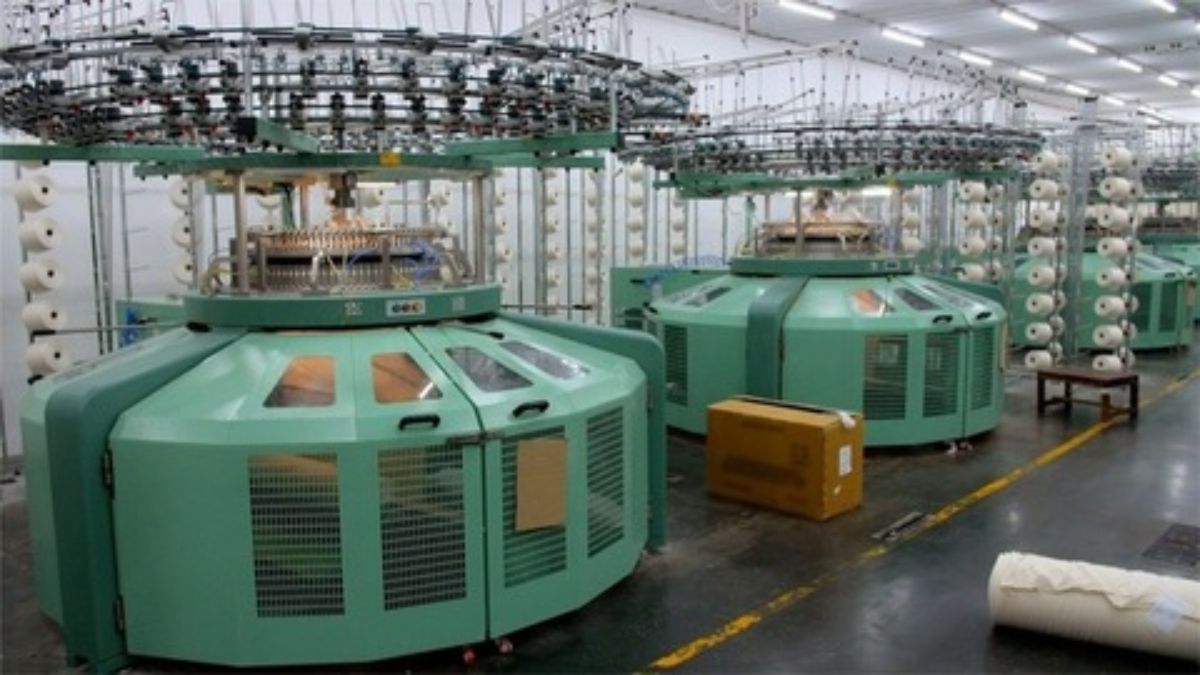
Surat | Gujarat — The rhythmic hum of circular knitting machines, once the heartbeat of Surat’s industrial dominance, is fading into a somber silence. The city’s circular knitting industry—a vital pillar of India’s textile sector—is currently navigating its most devastating recession to date. What was once a high-growth segment producing Lycra, semi-Zurich, and intricate Ganci designs is now a battlefield of dwindling margins and unsold inventory.
The crisis is not merely a dip in demand; it is a systemic collapse driven by predatory trade practices. Local manufacturers report that the market is being flooded with fabric imported from China, routed through Malaysia to bypass Minimum Import Price (MIP) protections and anti-dumping regulations.
The economic impact is visible in the cold, hard numbers of the commodity market. Within a short span, the price of Dull Lycra fabric has crashed from ₹121 to ₹112 per kg. Semi-Zurich, a staple for mid-range apparel, has slid from ₹112 to ₹105, while the premium Ganci design items have seen a staggering drop from ₹150 to ₹135 per kg.
For the average weaver, these aren’t just digits; they represent the evaporation of their livelihood.
“We are being strangled from both sides,” says Ramesh Thummar, a veteran knitting unit owner in the Ved Road industrial area. “On one hand, the raw material, electricity, and labor costs are at an all-time high. On the other, the finished fabric prices are falling every week. We are keeping the machines running just so our laborers don’t starve, but we are essentially operating at a loss.”
The industry’s primary grievance lies with the “backdoor” entry of foreign textiles. Traders allege that massive quantities of knitted fabric are being “dumped” into Surat. By mislabeling the country of origin or exploiting trade loopholes in Malaysia, importers are bringing in Chinese goods at prices that local mills cannot legally or physically match.
“The government has rules like the Minimum Import Price for a reason, but they are being ignored,” explains an industry representative. “When a roll of fabric arrives from abroad cheaper than the yarn we buy locally, how can a ‘Make in India’ unit survive? This is unfair competition that is killing local innovation.”
Adding to the misery is a severe liquidity crunch. Beyond the price war, Surat’s infamous credit system is failing. Delays in payments from wholesalers and a lack of fresh credit facilities have disrupted the cash flow of small and medium-sized units. With warehouses overflowing with unsold stock and interest on working capital loans mounting, many units have already begun cutting shifts or shutting down entirely.
Advertisement
