





Surat Floods: 9 Dead, 3,400 Rescued as Record Rain Leaves City Submerged
SURAT : Surat is slowly emerging from one of the worst urban flood disasters in its history after two days of unprecedented rainfall submerged almost every part of the city, claiming nine lives,...

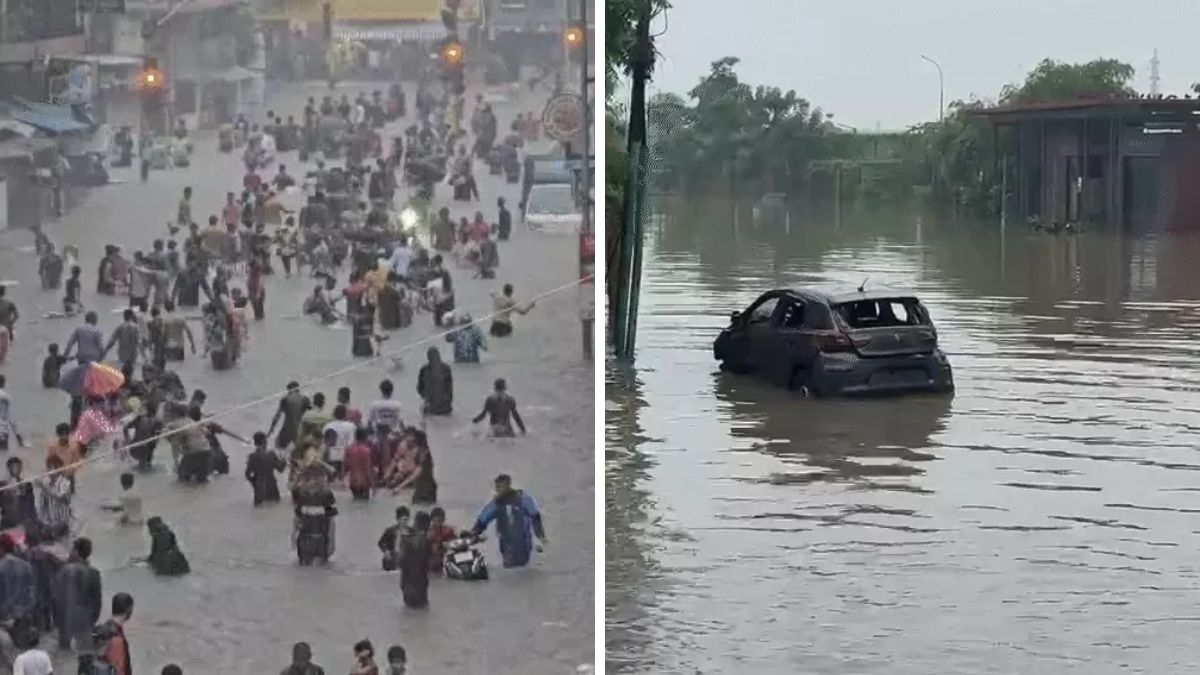
SURAT : Surat is slowly emerging from one of the worst urban flood disasters in its history after two days of unprecedented rainfall submerged almost every part of the city, claiming nine lives, forcing the rescue of over 3,400 people, and leaving behind heartbreaking stories of survival, separation and loss. While rainfall eased on Tuesday morning, floodwaters continued to inundate homes, shops and roads, with thousands of residents struggling to return to normalcy after record-breaking showers battered the Diamond City.
The city received up to 19 inches of rainfall in some areas between July 6 and 7, breaking an 85-year-old July rainfall record. Sarthana recorded the highest rainfall at 19 inches, followed by Varachha with 18.16 inches. Four of the city’s five major creeks overflowed, flooding localities ranging from low-income settlements to upscale residential neighbourhoods.
The human cost of the disaster has been devastating. According to Deputy Mamlatdar of the District Disaster Department, Sajid Meruji, nine people lost their lives in rain-related incidents, including deaths due to electrocution, falling trees, drowning, lightning and being swept away in a creek. Three others sustained injuries.
One of the most heartbreaking scenes unfolded in Model Town, where a working mother remained stranded on a traffic circle since Monday morning after nearly 10 feet of floodwater cut off access to her home. Unable to reach her three young children left alone inside the flooded house, the distraught woman spent hours hungry and helpless, breaking down in tears as rescue teams struggled to reach the area.
In another emotional rescue, SDRF personnel and the Surat Municipal Corporation safely evacuated a 15-day-old baby girl, her mother and other family members from flood-hit Nagsennagar after they remained trapped inside their home for four days due to overflowing creek waters.
Across the city, floodwaters entered thousands of homes and commercial establishments, destroying household belongings, electronic appliances, furniture, food grains and business inventory worth crores of rupees. In Devikrupa Society at Nana Varachha, knee-deep water submerged houses, while motorcycles and scooters were left almost completely underwater.
Residents of Magob, where water levels touched five to seven feet, risked their lives to fetch drinking water and milk. In Nawagam-Dindoli, desperation turned chaotic when people stormed a milk delivery truck amid acute shortages of essential supplies.
“The rescue operation continued throughout the night with coordinated efforts by the NDRF, SDRF, Surat Municipal Corporation and district administration. Around 3,400 people have been shifted to safer locations and relief centres,” an official involved in the operation said.
Three NDRF and four SDRF teams remained deployed across the city as tractors, dumpers and rescue boats ferried stranded residents from neck-deep water. Although the district administration initially sought three helicopters for rescue operations, the request was later deferred after ground conditions improved.
The overflowing Mithi Creek, Bheda Creek and other waterways triggered backflow into residential colonies, affecting around 15 housing societies near Kabutar Circle and causing floodwaters to enter Premnagar for the first time in its history. Even the city’s Biodiversity Park near Althan disappeared beneath floodwaters after the adjacent creek overflowed.
With public transport services gradually resuming and water levels receding in several areas, the immediate crisis may be easing. However, for thousands of families who have lost loved ones, homes and livelihoods, Surat’s record-breaking floods have left scars that will take much longer to heal. The disaster has also reignited questions over the city’s drainage infrastructure, creek management and preparedness for increasingly extreme monsoon events.