







NFSU Emerges as Global Forensics Powerhouse
Gandhinagar | Gujarat — From a specialized institution established in Gandhinagar in 2009 to a globally recognised university with international footprints, the National Forensic Sciences University...

Gandhinagar | Gujarat — From a specialized institution established in Gandhinagar in 2009 to a globally recognised university with international footprints, the National Forensic Sciences University (NFSU) has emerged as one of India’s most significant success stories in higher education, scientific research and criminal justice. In just over a decade, the institution has transformed forensic science from a niche discipline into a strategic pillar of modern governance and law enforcement.
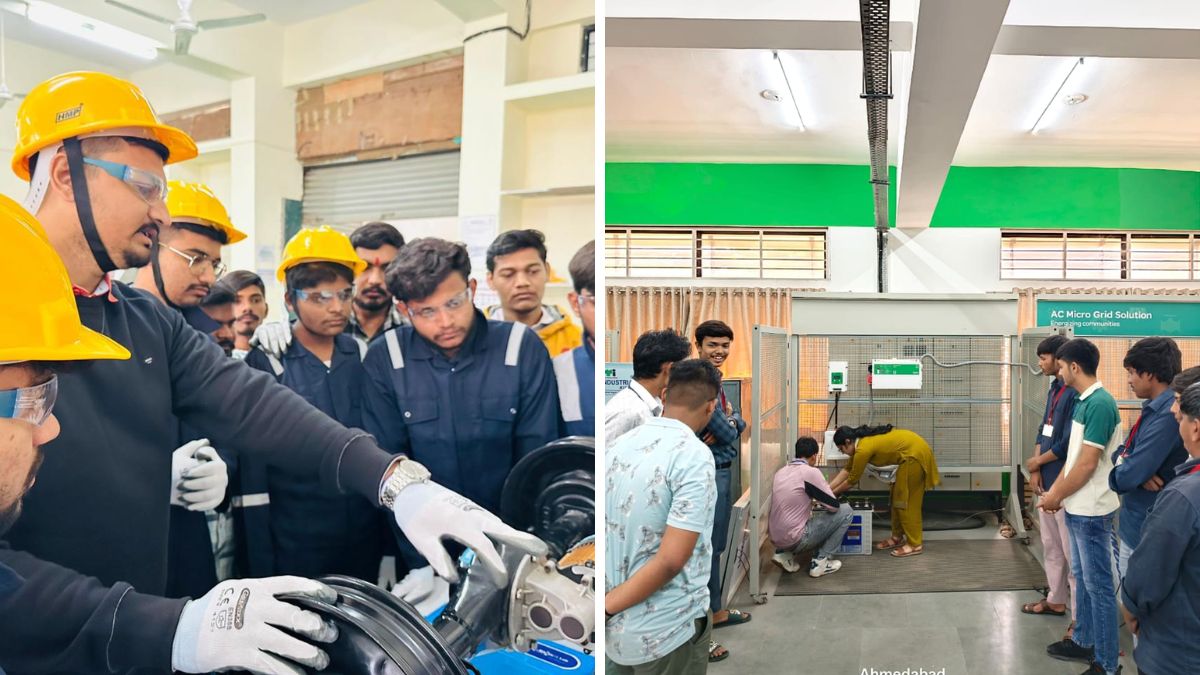
Established under the vision of Prime Minister Narendra Modi during his tenure as Gujarat Chief Minister, NFSU achieved the coveted status of an Institution of National Importance (INI) in 2020. Under the leadership of founder Vice-Chancellor and renowned forensic scientist Padma Shri Dr. J.M. Vyas, the university has developed a unique ecosystem integrating education, research, training and real-world investigations.
“NFSU has established a distinctive academic model that connects scientific research directly with national security, justice delivery and emerging technologies,” university officials said.
The university’s influence now extends far beyond India’s borders. NFSU operates 13 campuses, including its international campus in Jinja, Uganda, while professionals from 96 countries have undergone advanced forensic training at the institution. Several nations have also expressed interest in hosting NFSU campuses, reflecting its growing global reputation.
One of the university’s most impactful contributions has been the deployment of more than 300 indigenously developed Mobile Forensic Investigation Vans across 17 states and Union Territories. Equipped with advanced forensic tools and staffed by trained experts, these 24×7 units enable faster crime scene investigations and strengthen evidence-based prosecution.
NFSU has also emerged as a hub of innovation and entrepreneurship. Through its Forensic Innovation Council and Forensic Innovation Centre, more than 20 Made-in-India forensic products have been developed and exported to countries including the United States, Australia, Israel, Singapore and several European nations. The institution has also secured specialized patents in both India and the United States.
Its expertise gained national attention following the Air India Flight-171 crash near Ahmedabad in June 2025, when NFSU teams completed large-scale DNA profiling to help identify all 265 victims in record time.
“NFSU is playing a crucial role in making India a global leader in forensic science and helping other nations strengthen their investigative capabilities,” said spiritual leader Rameshbhai Oza after visiting the campus.
India TV Chairman and Editor-in-Chief Rajat Sharma highlighted the university’s growing relevance in the digital age. “With fake news and deepfake technologies becoming major challenges, NFSU’s contribution towards verification, detection and public awareness will be extremely important,” he said.
Students also praised the institution’s world-class infrastructure and research ecosystem. MBA student Dr. Nisha Vala described NFSU as “an outstanding global learning experience,” while cyber security scholar Nai Ved said its advanced facilities provide invaluable support for cutting-edge research.
With pioneering work in DNA forensics, digital investigations, drone forensics and sports science, NFSU continues to position Gujarat and India at the forefront of forensic innovation, supporting the broader vision of Atmanirbhar Bharat, Digital India and a stronger criminal justice system.