






Morari Bapu Begins His 981st Ram Katha in Kenya’s Tea Country
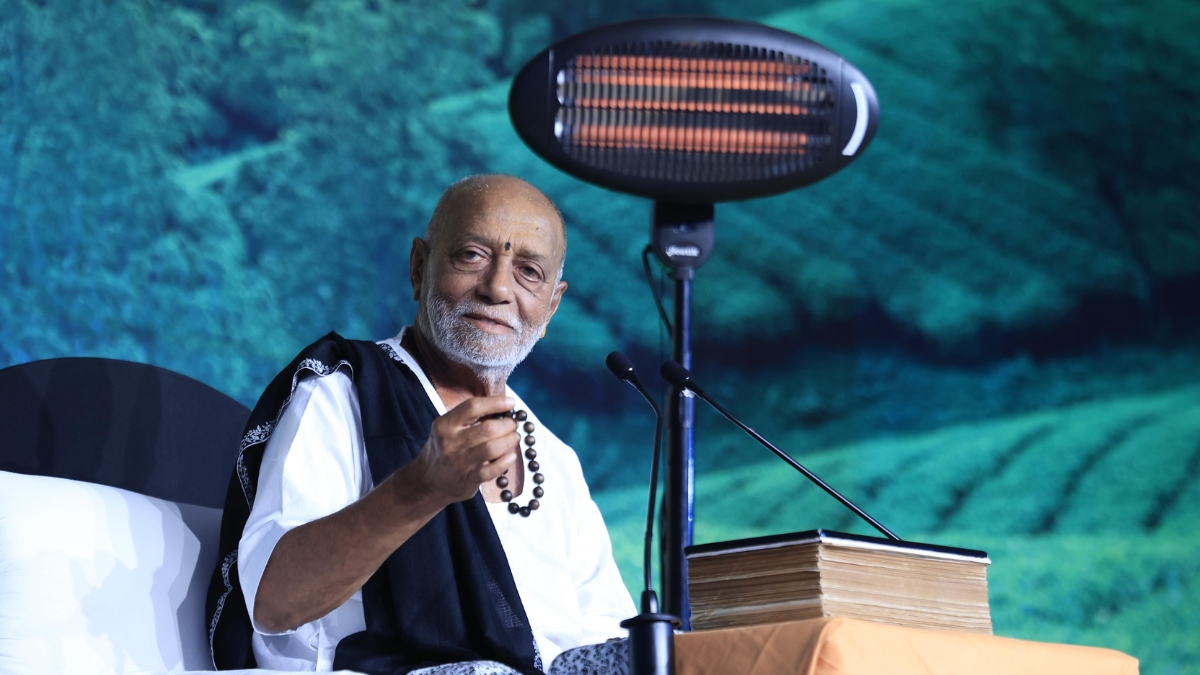
Morari Bapu launched his 981st Ram Katha in Kericho, Kenya, with the nine-day Manas Rath Yatra focused on Dharma Rath, japa, and universal spiritual values.

‘Manas Rath Yatra’ in Kericho draws inspiration from the Jagannath Rath Yatra and Tulsidas’s unparalleled vision of the Dharma Rath
Kericho (Kenya), July 24: Renowned spiritual leader Morari Bapu began his 981st Ram Katha today in Kericho, the Kenyan region internationally renowned for its verdant tea plantations. Titled ‘Manas Rath Yatra’, the nine-day Katha will continue until 26 July 2026 at the Dansed Gardens Ground. As the annual Jagannath Rath Yatra has just commenced, Bapu dedicated the Katha to the spirit of the sacred journey. He remembered Lord Jagannath and the Rath Yatras of Bhavnagar and Ahmedabad. A Jagannath temple priest was also invited from Ahmedabad to Africa for the occasion, creating a ceremonial bridge between India and Kenya. Reflecting on the divine family of Jagannath, Subhadra and Balabhadra, Bapu described Krishna as Jag Bhadra—the one concerned with the welfare of the entire world and universe. The central lines selected for the Katha are from the Lanka Kand of the Ram Charit Manas, in which Goswami Tulsidas presents his profound description of the Dharma Rath, or the chariot of righteousness. “I have seen many scriptures, but I have not seen a description of the Dharma Rath like the one given by Goswami Tulsidas,” Bapu said. “Tulsi ka Dharma Rath maulik hai. Main zimmedari se bolta hoon—Tulsi’s Dharma Rath is wholly original, and I say this with responsibility.” Bapu observed that numerous sacred texts contain descriptions of different kinds of chariots, but Tulsidas’s conception of the Dharma Rath is distinctive and is not commonly found even in the Vedas and Shastras. Explaining the deeper meaning of maulikta, or originality, Bapu said that between the laukik—the worldly—and the alaukik—the otherworldly—lies the maulik. Its meaning is discovered between the lines. “A river flows between two banks, but its flow is entirely its own,” he said. “When one moves towards maulikta, one transcends everything.”
- Bona — sowing the Divine Name
- Karna — performing japa
- Karana — getting others to do japa for you
- Hona — when japa happens on its own
- Sona — putting japa to rest