




India-UK FTA Set to Boost Surat Diamond Trade
SURAT : The recently concluded Free Trade Agreement (FTA) between India and the United Kingdom is poised to become a game-changing development for Surat, the country’s diamond capital and a rapidly...

SURAT : The recently concluded Free Trade Agreement (FTA) between India and the United Kingdom is poised to become a game-changing development for Surat, the country’s diamond capital and a rapidly emerging jewellery manufacturing hub. With the agreement set to come into force from July 15, industry leaders believe it could unlock unprecedented export opportunities, revive demand, and create thousands of jobs across Gujarat’s gems and jewellery sector.
At a time when global trade has been weighed down by economic uncertainty, geopolitical conflicts, and declining consumer demand, the India-UK FTA has emerged as a major ray of hope for exporters. The agreement will provide duty-free access to 99 percent of Indian products entering the UK, including gems and jewellery, significantly improving India’s competitiveness in one of the world’s most lucrative premium markets.
“This is not merely a trade agreement; it is a lifeline for Surat’s diamond workers, jewellery manufacturers, and exporters who have been struggling due to the global slowdown,” said diamond industry expert and industrialist Dinesh Navadiya.
According to industry estimates, the UK’s gems and jewellery market is worth nearly ₹48,000 crore. Despite its size, India’s share has remained relatively small, with exports valued at $777 million in 2024 and $669 million in 2025. Industry representatives attribute this to the complex tax structure and import duties that made Indian products less competitive than those exported from other global trading hubs.
Navadiya explained that until now, Indian exporters effectively faced a tax burden of up to 24.5 percent when selling products in the UK. By comparison, exporters operating through Dubai and Hong Kong paid around 22.5 percent, putting Indian manufacturers at a pricing disadvantage.
“With the removal of duties, Indian exporters will finally be able to compete on equal footing. This will help recover lost market share and significantly increase exports,” he said.
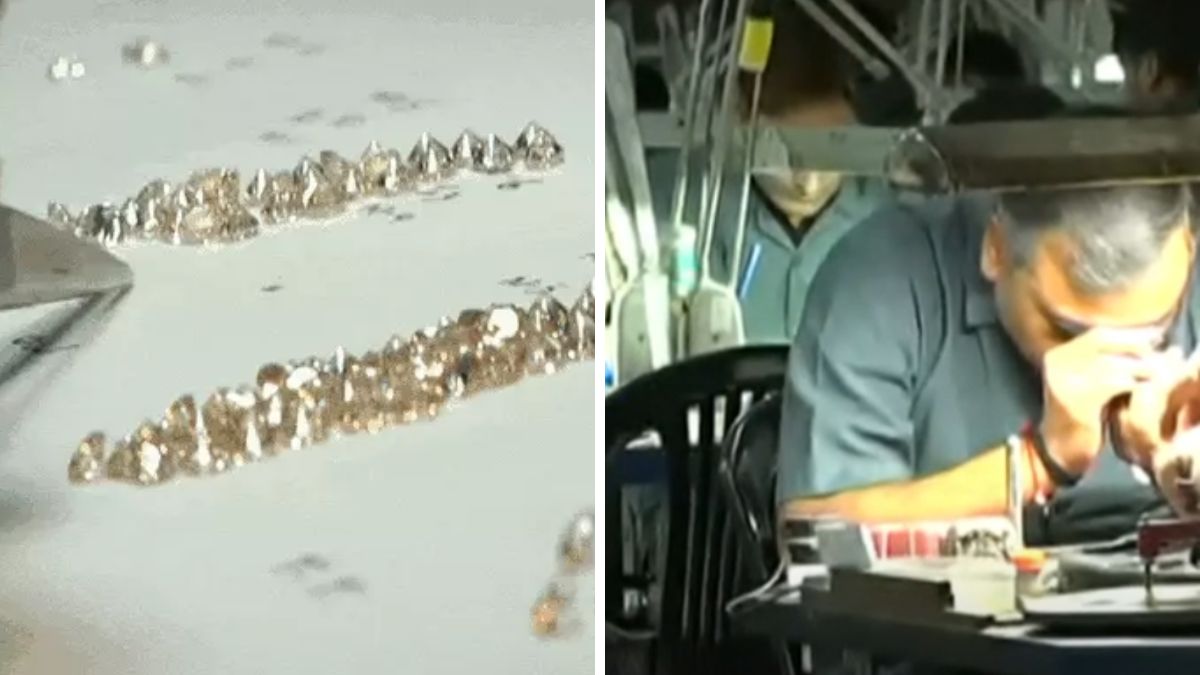
The agreement is expected to have a direct impact on Surat, where lakhs of workers are engaged in diamond cutting and polishing, jewellery manufacturing, logistics, packaging, and export-related services. As export orders from the UK increase, industry experts anticipate a rise in production capacity, resulting in fresh employment opportunities across the value chain.
The timing is especially significant for Surat, which is also positioning itself as a global centre for lab-grown diamonds. With traditional export destinations such as the United States and China facing economic challenges, the UK is increasingly being viewed as a stable and high-potential alternative market.
Industry stakeholders are now targeting gems and jewellery exports worth $2.5 billion to $3 billion to the UK over the next two-and-a-half years. However, experts caution that success will depend on maintaining high quality standards, innovative designs, and timely delivery schedules.
“The opportunity is enormous, but Indian manufacturers must continue investing in excellence and innovation. If we do that, Surat can emerge as one of the biggest beneficiaries of the India-UK trade partnership,” Navadiya added.