




Malay Pit: The Farmer’s Son Transforming India’s Healthcare Landscape
Malay Pit’s life story spans rural Bengal, vocational training, and medical education expansion into Tripura.

The distance from a Bengal paddy field to the House of Commons cannot be measured in miles. Malay Pit has walked it anyway.
Bengaluru (Karnataka) [India], August 4: In the wood-panelled halls of Westminster’s most storied chamber, a medical college from a small town in India’s Northeast was written into the World Book of Records — the first new medical college to fill every one of its 150 first-year seats, with students drawn from more than twenty states, in its very first session. It was a moment of quiet triumph, applauded thousands of miles from home. Few in that room, perhaps, knew how unlikely the road behind it had been — that the man whose vision it represented had begun life not in a boardroom or a hospital, but in a paddy field.Born to the soil
Malay Pit was born into a humble farming family in rural West Bengal. His father, the late Bhairab Chandra Pit, spent his whole life working the land to give his family a life of dignity; his mother held the household together with a quiet, unshakeable strength. Malay grew up amid fields and farmland, and learned early the rhythms — and the cruelties — of agrarian life: the uncertain harvest, the anxious wait for rain, the endless effort that never quite adds up to security. Many would have accepted that as their lot. He did not. He resolved not only to climb out of poverty himself but to build the ladder for others still trapped in it. The conviction that would shape the next three decades was born there, in the soil: that no one’s future should be decided by the circumstances of their birth.Building the ladder
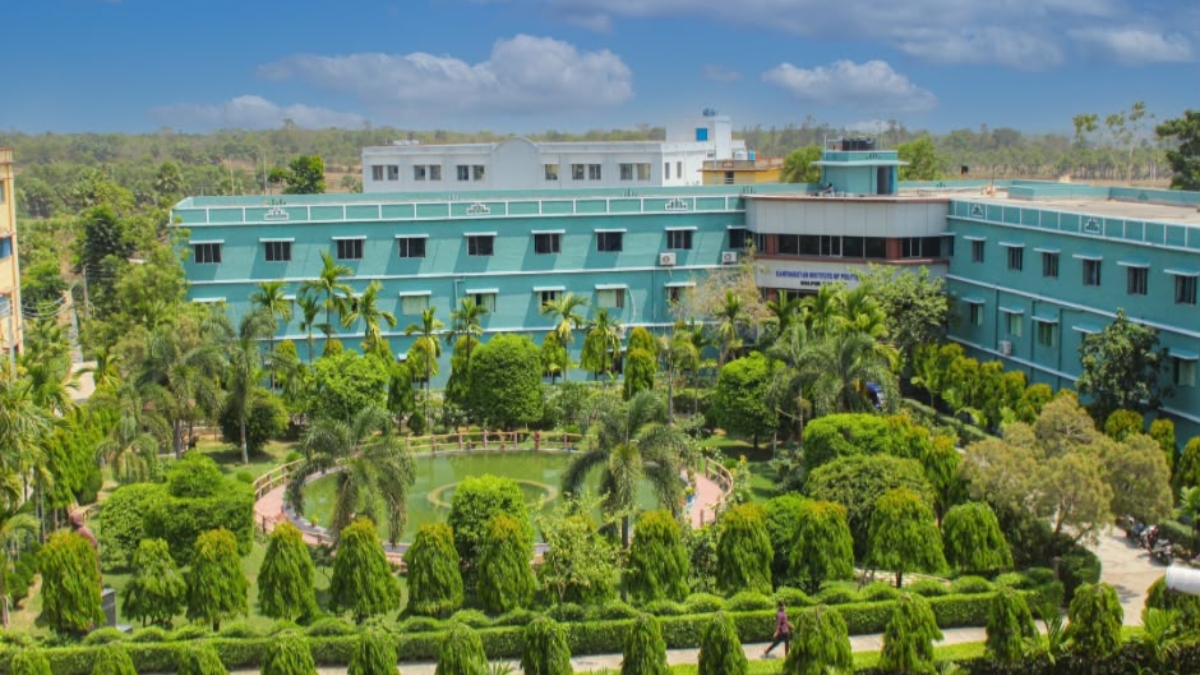
In 2009, he founded SWADHIN — the Society for Welfare & Development of Human Initiatives — in the countryside near Bolpur, in Birbhum, a district the world knows for Rabindranath Tagore’s Santiniketan rather than for professional education. He began where the need was greatest: with skills. The Santiniketan Institute of Polytechnic opened its doors in 2010, offering diploma engineering to village youngsters who might never otherwise have held a professional qualification. Around it grew a web of Industrial Training Institutes — his own, and others run in partnership — reaching from Bengal to Assam and as far as Port Blair in the Andaman Islands. The idea was simple, and it came straight from his own life: give a young person a real skill, and a real job at the end of it, and you change not just their fortunes but their family’s. Teacher-training colleges followed, then a school for younger children and short vocational courses under national skilling schemes. Piece by piece, Malay Pit was assembling the education ladder he himself had never been offered.