






Gujarat’s Clay Ganesh Idols Generate Rs.5 Crore
GANDHINAGAR : Gujarat’s push for eco-friendly Ganeshotsav has delivered a major boost to traditional clay artisans, with more than 23,000 clay Ganesh idols generating around ₹5 crore in sales at the...

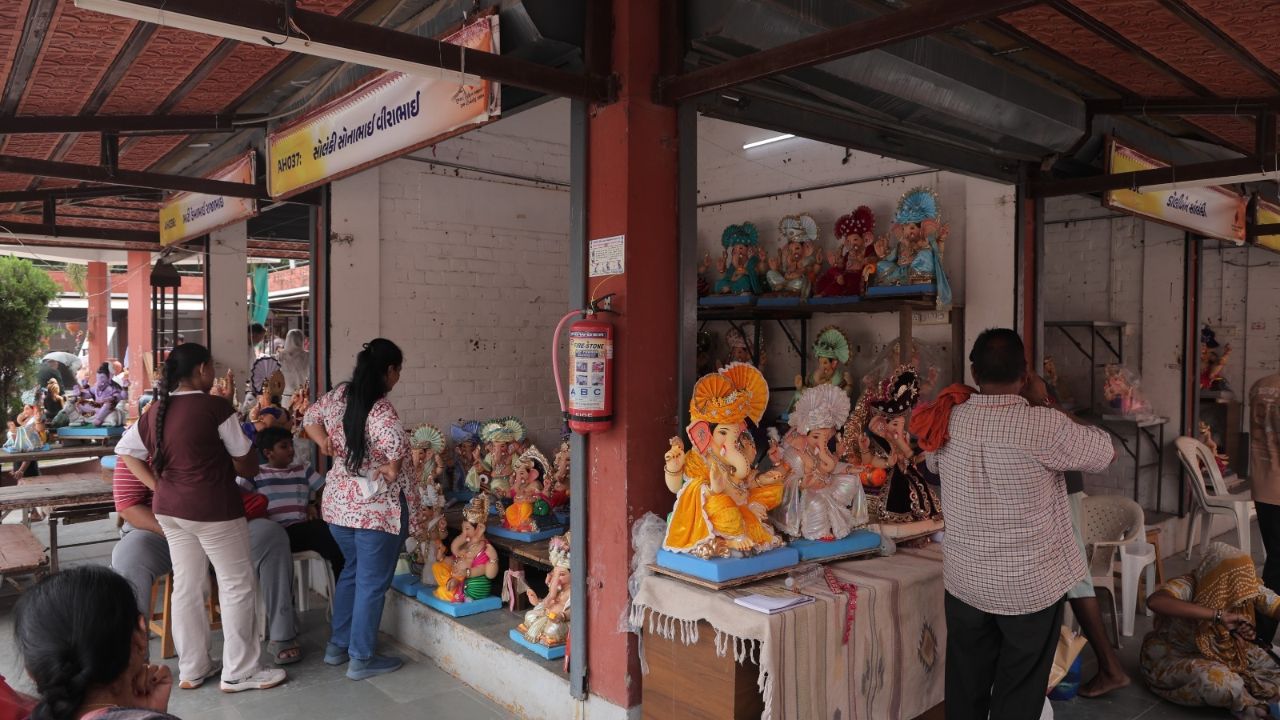
GANDHINAGAR : Gujarat’s push for eco-friendly Ganeshotsav has delivered a major boost to traditional clay artisans, with more than 23,000 clay Ganesh idols generating around ₹5 crore in sales at the state’s seven-day Mati Murti Mela 2026.
The fair, organised by the Gujarat Matikam Kalakari and Rural Technology Institute under the Cottage and Rural Industries Department from September 8 to 14, saw 23,542 eco-friendly idols made by 361 registered artisans sold across five locations in Ahmedabad, Vadodara and Surat.
The government also supplied 186 tonnes of ready-to-use clay and provided free sales stalls to participating artisans under a 100% subsidy.
“Such initiatives provide artisans with market access while encouraging people to choose environmentally responsible idols during Ganeshotsav,” officials said.
Surat Records Strong Demand
Adajan in Surat emerged as the strongest individual sales location, with 7,920 idols sold for more than ₹1.11 crore.
Ahmedabad Haat in Vastrapur recorded the highest overall sales value among the venues at more than ₹1.91 crore. The Parsi Agiyari Maidan in Vadodara recorded sales of ₹85.77 lakh through 79 stalls, while Sabarmati Riverfront registered ₹77.99 lakh through 124 stalls.
Bopal Hastkala Haat in Ahmedabad recorded sales of ₹32.55 lakh through 30 stalls.
The initiative also focused on the next generation. More than 84,500 students from 302 schools across 10 districts participated in live clay idol-making demonstrations and DIY activities under the National Education Policy framework.
From POP to Eco-Friendly Idols
The government said the initiative was launched against the environmental impact of Plaster of Paris idols. Until 2014-15, around 90% of Ganesh idols in Gujarat were reportedly made from POP, which does not dissolve easily in water and can affect aquatic ecosystems.
The Incentive Scheme for Clay Idol Makers, introduced in 2015-16, provides registered artisans with ready-to-use clay at a 50% subsidised rate, free sales stalls and daily assistance of ₹1,000 during fairs.
The programme has also created livelihood opportunities for women from artisan families involved in idol-making and decoration at home.
Officials said the initiative is now evolving beyond financial assistance into a broader model combining traditional craftsmanship, environmental protection and rural employment.
The government has positioned the fairs as part of its “Vocal for Local” and “Aatmanirbhar Gujarat to Aatmanirbhar Bharat” vision, with eco-friendly Ganesh idols emerging as a key part of the state’s efforts to make festival celebrations more sustainable.