





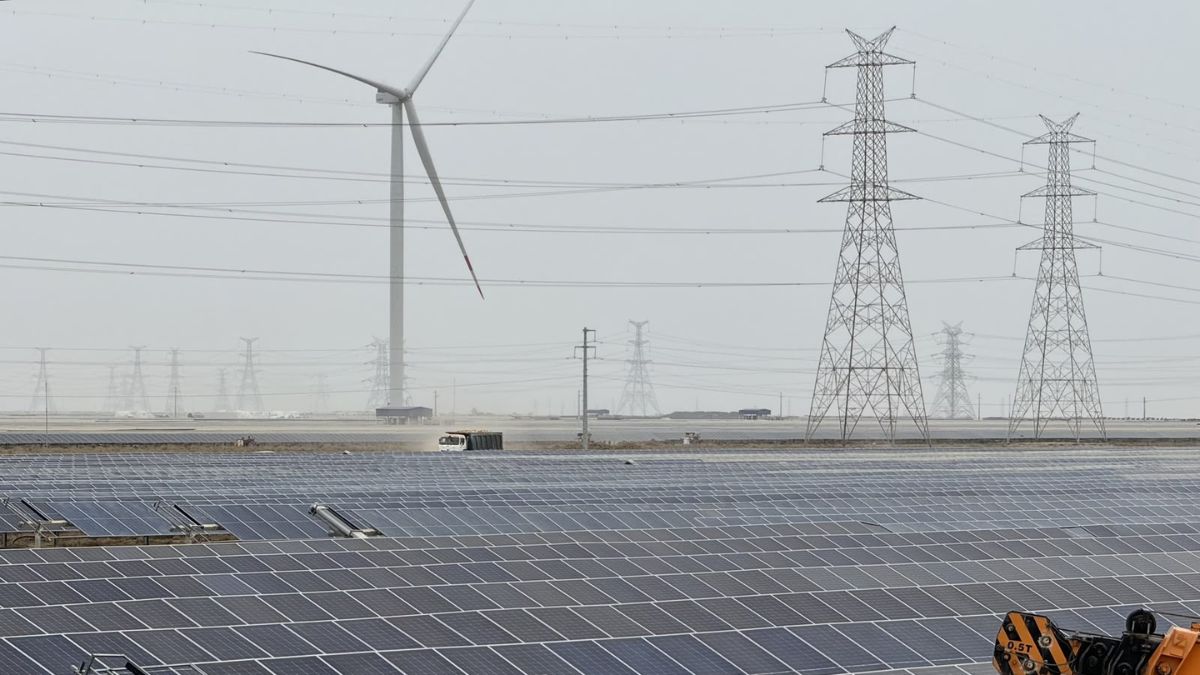
Gujarat Tops India in Renewable Energy with 50 GW Capacity
AHMEDABAD: Gujarat has cemented its position as India’s renewable energy powerhouse, becoming the country’s largest contributor to clean energy with a cumulative installed capacity of...

AHMEDABAD: Gujarat has cemented its position as India’s renewable energy powerhouse, becoming the country’s largest contributor to clean energy with a cumulative installed capacity of 50.386 GW. Marking Global Energy Independence Day on July 10, the state showcased its remarkable journey in solar and wind energy while setting its sights on an ambitious target of 105 GW by 2030.
The achievement means Gujarat now contributes 17.82% of India’s total renewable energy capacity, making it the undisputed leader in the nation’s transition towards clean and sustainable power.
The state ranks first in total renewable energy capacity, first in wind power generation with 15,850.56 MW, second in solar power with 32,302.7 MW, and first in rooftop solar installations, having crossed 13 lakh rooftop systems with a combined capacity of 7,408.10 MW.
A major driver of Gujarat’s success is the Khavda Renewable Energy Park in Kutch. Planned to generate 37.35 GW, the project has already achieved 15.54 GW, making it the world’s largest renewable energy park. Other flagship solar parks include Charanka and Radhanesda, further strengthening the state’s clean energy ecosystem.
The rooftop solar programme has also witnessed rapid growth through initiatives such as Surya Gujarat, PM Surya Ghar Yojana and PM KUSUM, enabling households, businesses and farmers to switch to renewable energy. Gujarat alone accounts for more than 21% of India’s rooftop solar installations.
Wind energy continues to be another pillar of the state’s renewable success. Kutch remains the largest contributor with over 8,190 MW of installed capacity, followed by districts including Jamnagar, Devbhumi Dwarka, Amreli and Rajkot. Gujarat has also commissioned nearly 2,840 MW of wind-solar hybrid projects, promoting efficient use of land and transmission infrastructure.
“Gujarat’s long-term policy framework and investor-friendly ecosystem have made it the preferred destination for renewable energy development while creating sustainable employment and supporting India’s clean energy transition,” government officials said.
The state’s renewable expansion is backed by progressive policies covering solar, wind, hybrid energy, battery storage, waste-to-energy and distributed renewable projects. The Akshay Urja Setu online portal has simplified grid connectivity, enabling faster project approvals and improving ease of doing business.
Looking ahead, Gujarat has 1,531 renewable energy projects under implementation with a combined capacity of 12.159 GW. These include large solar, wind and hybrid projects that will further strengthen the state’s clean energy leadership.
With a target of 105 GW by 2030, Gujarat aims to contribute nearly 20% of India’s goal of achieving 500 GW of non-fossil fuel energy capacity, reinforcing its role as the driving force behind the nation’s green energy future.