






Gujarat Police Bust Rs.2,289 Crore Cyber Fraud Through Operation Mule Hunt
Gandhinagar | Gujarat — Gujarat Police, under the leadership of Deputy Chief Minister Shri Harsh Sanghavi, conducted a special operation through the Cyber Centre of Excellence, taking action against...

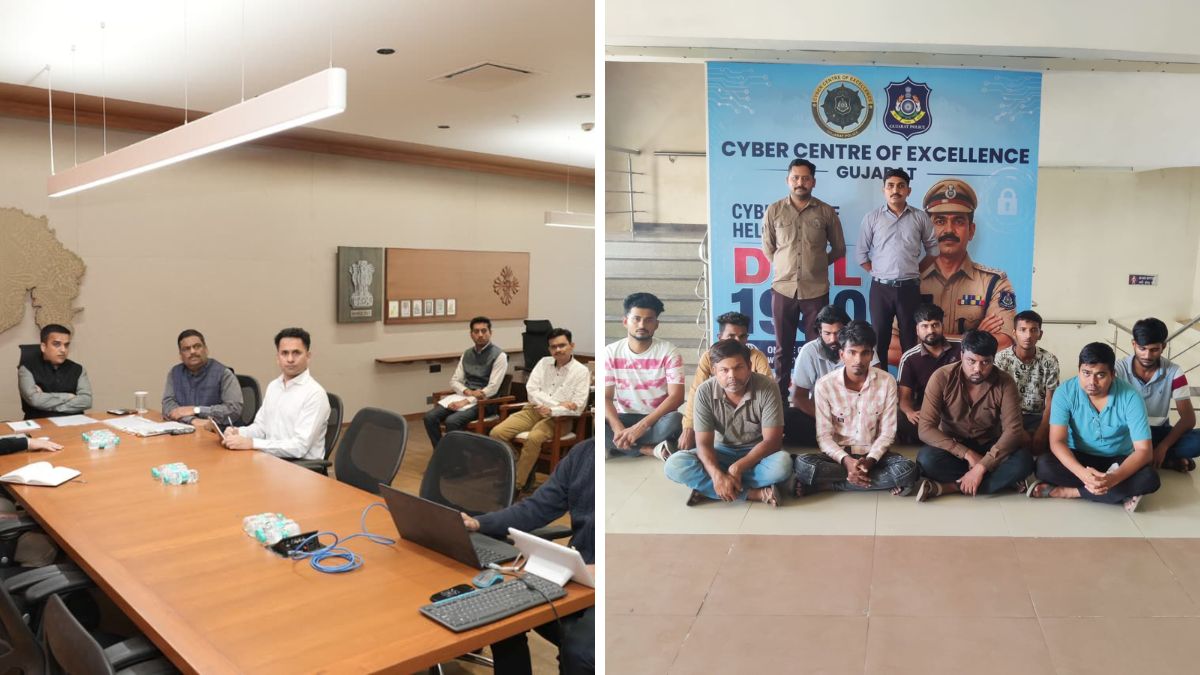
Gandhinagar | Gujarat — Gujarat Police, under the leadership of Deputy Chief Minister Shri Harsh Sanghavi, conducted a special operation through the Cyber Centre of Excellence, taking action against mule accounts and exposing cyber fraud worth ₹2,289 crore across multiple cases.
What is a Mule Account?
A mule account is a bank account used by cybercriminals to receive, transfer or launder money obtained through fraud. The person operating such an account is known as a ‘money mule’. These accounts are often used to move money from one account to another, making it difficult to trace cybercrime transactions. Mule accounts are used, knowingly or unknowingly, in cyber fraud. To curb such misuse, the Gujarat Police has launched a special operation to identify and take strict action against mule accounts.
Operation Mule Hunt 1.0
Operation Mule Hunt 1.0 was conducted by the Gujarat Police and the Cyber Centre of Excellence (CCOE) in 2025 to target mule accounts linked to cybercrime. The operation involved all Police Commissioners, Range Heads, Local Crime Branch Inspectors and Cyber Police Stations across Gujarat. Daily monitoring of the operation was conducted from the head office, with regular progress reviews. The Gujarat Police team analysed data received from the Indian Cybercrime Coordination Centre (I4C), the NCRP Portal, the Coordination Portal, and the 1930 Helpline. Based on this intelligence, nodal officers were appointed in every district, and dedicated support teams were formed to handle field complaints. Banks were also instructed to ensure real-time data sharing for better coordination. Through data-driven intelligence and coordinated action, Gujarat Police succeeded in taking strong action against the criminal network of mule accounts.
Key Achievements of Operation Mule Hunt 1.0
* Total FIRs registered: 565
* Total arrests made: 638
* Mule accounts acted against: 913
* Total cybercrime cases identified: 4,052 (491 from Gujarat)
* Total economic fraud exposed: ₹2,289 crore
Significant Decline in ATM and Cheque Transactions
* Cheque withdrawals declined by 75%.
* Monthly cheque withdrawals fell from ₹126 crore to ₹25 crore (a reduction of nearly 80%)
* First-layer mule accounts, where fraud money is first deposited, reduced by 30% between August and December 2025.
* ATM withdrawals (linked to such activities) dropped by 66% from September to December 2025.
RBI to Act Against Mule Accounts Using Artificial Intelligence
For an efficient and proactive action against mule accounts, the Reserve Bank of India has introduced an AI-based risk-scoring system through the Indian Digital Payment Intelligence Corporation (IDPIC). Under this system, every transaction will be classified as low, medium, or high risk to help identify suspicious accounts. Based on these risk scores, banks can take necessary action. IDPIC has been designated as the nodal agency for this initiative. A registry called http://mulehunter.ai/ has also been created to facilitate the information sharing on suspicious accounts among banks.
11 Years of India’s Digital Transformation and Cyber Security Focus Under the Leadership of the Prime Minister
Prime Minister Shri Narendra Modi has repeatedly raised concerns over rising cybercrime cases, including incidents like digital arrest, and urged citizens to stay alert while carrying out digital transactions. Under his leadership, India has undergone a major digital transformation over the last 11 years. Internet users have grown from 25 crore to over 100 crore. The BharatNet initiative has connected systems from Parliament to Panchayats, becoming a key milestone of Digital India, while broadband connectivity has increased by 16%.
Under BharatNet, only 546 Panchayats were connected 11 years ago, compared to more than 2 lakh Gram Panchayats today. UPI transactions have also surged, reflecting the rapid shift towards digital payments. Union Home Minister Shri Amit Shah has stated that cybersecurity is no longer limited to economic safety but is now closely linked with national security. He noted that strengthening economic, social, administrative, and national security in the digital era is a shared responsibility to further drive this digital revolution.