
Gujarat Govt, THDC sign MoU for 184 MW pumped storage
In line with Prime Minister Narendra Modi’s vision of achieving Net Zero emissions by 2070, Gujarat continues to lead in renewable energy adoption, with the highest installed renewable energy capacity in the country—35.94 GW as of May 2025.

Advertisement
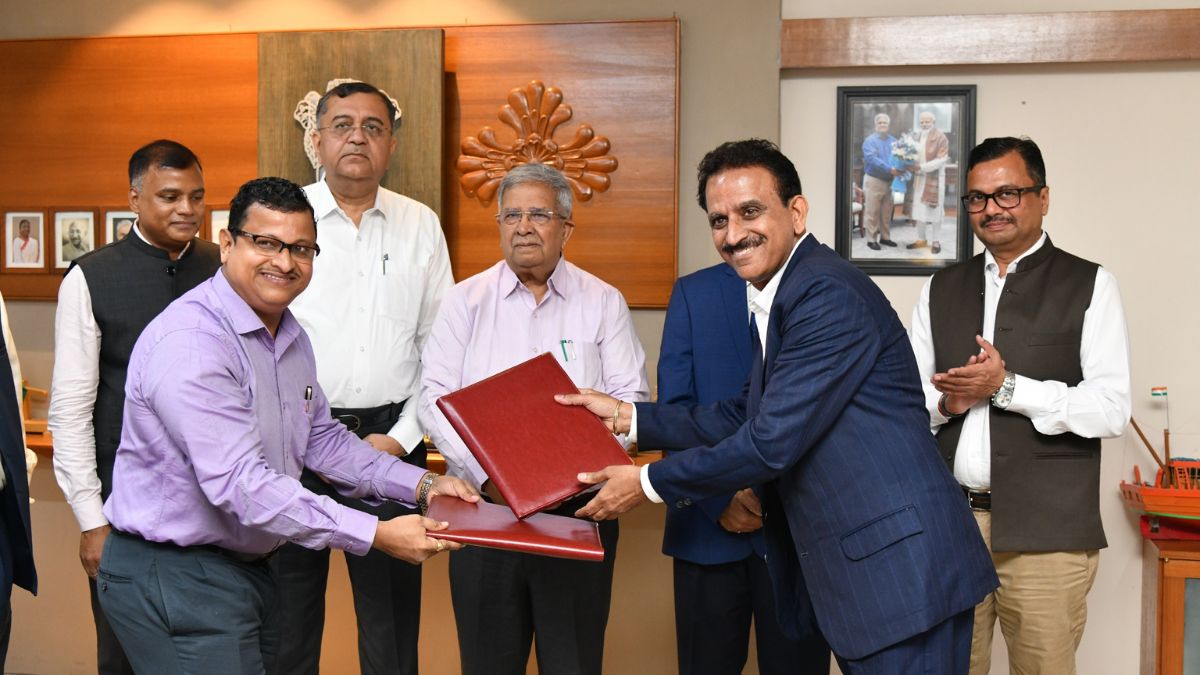
Gandhinagar, Gujarat — The Energy & Petrochemicals Department, Government of Gujarat,signed a Memorandum of Understanding (MoU) with THDC India Limited for 184.08 MW capacity from its 1,000 MW pumped storage project at Tehri Garhwal, Uttarakhand on Wednesday.
A MoU was signed in the presence of the Gujarat’s Finance and Energy Minister, Kanubhai Desai, S.J. Haider, IAS, Additional Chief Secretary, Energy and Petrochemicals Department, Government of Gujarat, and Chairman of THDC India Limited, R.K. Vishnoi. The MoU was formally executed by S.K. Garg, Director (Finance), THDC India Ltd. and Anupam Anand, IAS, Managing Director, Gujarat Urja Vikas Nigam Ltd.(GUVNL).
In line with Prime Minister Narendra Modi’s vision of achieving Net Zero emissions by 2070, Gujarat continues to lead in renewable energy adoption, with the highest installed renewable energy capacity in the country—35.94 GW as of May 2025. This leadership is further strengthened by Gujarat’s ambitious target of surpassing 100 GW of renewable capacity by 2030, reaffirming its critical role in India’s clean energy transition.
As part of this commitment, the above partnership reflects Gujarat’s focus on delivering 24×7 reliable and affordable power while supporting the grid. The Pumped Storage Project (PSP) plays a pivotal role in this transition by enabling large-scale energy storage.
During periods of excess solar power generation, typically in the daytime, the PSP utilizes surplus electricity to pump water from a lower reservoir to an upper reservoir. When power demand rises, the stored water is released back to the lower reservoir through turbines, generating electricity. This process enhances grid flexibility, facilitates optimal utilization of renewable energy, reduces reliance on fossil fuels, and ensures a stable and resilient power supply.
This Memorandum of Understanding reflects the State Government’s commitment towards the renewable energy sector and represents a significant step towards establishing energy security, clean and pollution-free energy for the future.
Advertisement
