





GSFC University Students Win Top 2 at Drone-AI Challenge
VADODARA : GSFC University students have emerged as the top performers at a national Smart City Drone-AI challenge, securing both the first and second prizes with artificial intelligence solutions...

VADODARA : GSFC University students have emerged as the top performers at a national Smart City Drone-AI challenge, securing both the first and second prizes with artificial intelligence solutions designed to tackle real-world urban problems such as potholes, waterlogging, open manholes and damaged roads.
Two teams from the university won a combined ₹85,000 from the total ₹1.10 lakh prize pool at the ELCIA Next-Gen Innovative Tech Hackathon 2026 – Smart City Drone-AI Challenge, organised by the Electronics City Industries Association (ELCIA) in collaboration with IIIT-Bangalore and VLSI System Design.
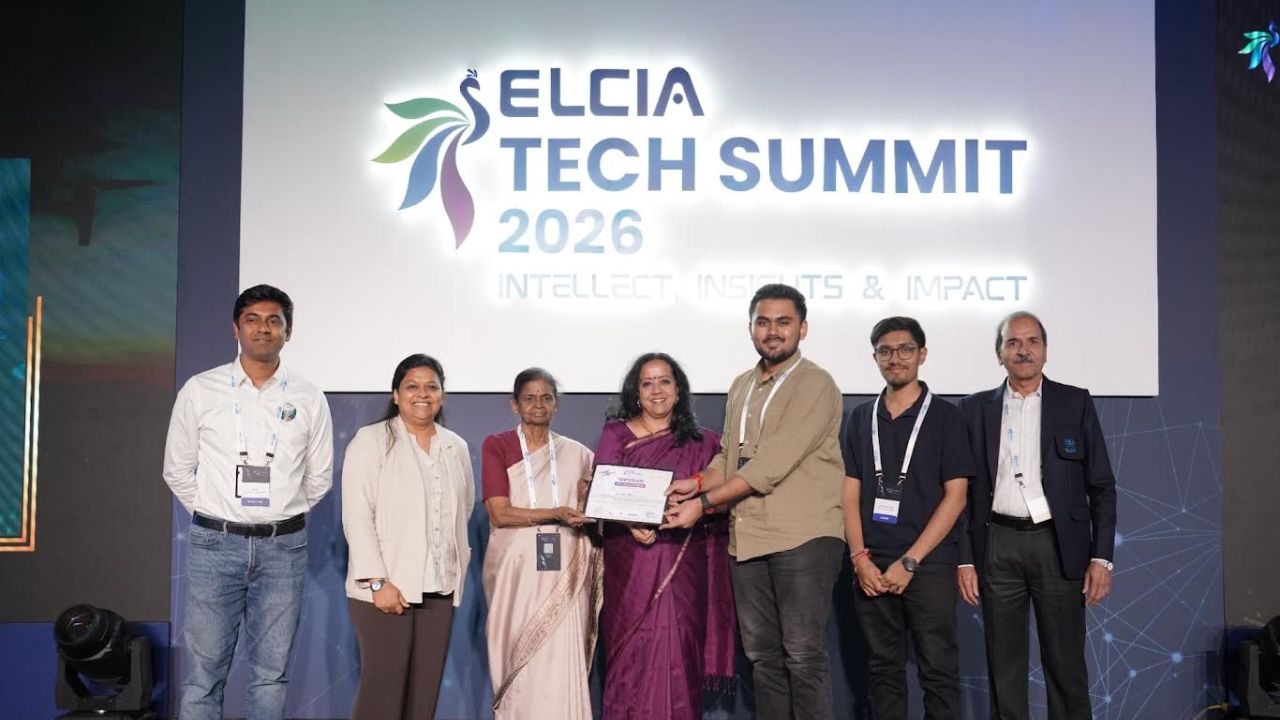
The awards were presented at the ELCIA Tech Summit 2026 in Bengaluru on September 10. GSFC University was the only institution to claim both the first and second positions, besides being the only one with two teams among the Top 5 finalists.
The winning team, Drone404, comprising B.Tech Computer Science and Engineering students Krishay Shah and Tatva Shah, developed HYDRO-VISION-3D. The AI-powered system analyses drone footage to detect potholes, waterlogging, open manholes, drainage overflow and damaged footpaths.
The project combines AI detection, tracking, depth estimation, GIS mapping and risk analytics to convert identified hazards into actionable municipal work orders.
“Our aim was to bridge the gap between detecting a civic problem and enabling authorities to act on it. Drone footage combined with AI can make urban monitoring faster and more data-driven,” the winning team said.
The CivicPulse team, comprising Manthan Chawda and A. Manav Prasath, secured the first runner-up position with its AI-Assisted Monsoon Civic Risk Intelligence project.
The system processes drone footage and GPS data to identify civic hazards while allowing operators to verify incidents, assign repairs, monitor progress and confirm restoration. Its AI pipeline was trained on 8,063 images.
The challenge attracted 183 team registrations and 343 participants from 18 states, with both GSFC teams competing in the Monsoon, Roads & Civic Infrastructure Intelligence track.
The achievement highlights the growing role of student-led AI and drone technologies in developing practical solutions for smarter and safer cities.