





Bhaat De, Bhaat De – When Algorithms Starve Children to Death
SIMDEGA (Jharkhand) [India], February 16: Shekhar Natarajan, Founder and CEO of Orchestro.AI, explains the impact of global influence that could change narratives in this opinion piece. The last...

SIMDEGA (Jharkhand) [India], February 16: Shekhar Natarajan, Founder and CEO of Orchestro.AI, explains the impact of global influence that could change narratives in this opinion piece.
The last words Santoshi Kumari ever spoke were a plea for rice.
“Bhaat de, bhaat de,” the eleven-year-old Dalit girl begged her mother Koyli Devi on the night of September 28, 2017, as consciousness slipped away from her emaciated body. Give me rice. Give me rice.
There was no rice to give. There had been no rice for eight days. The family’s ration card — their lifeline to subsidized food under the National Food Security Act — had been cancelled two months earlier because it wasn’t linked to Aadhaar.
At 10:30 pm, Santoshi died.
She was not killed by a person. She was not killed by a disease, though the Jharkhand government would later claim malaria. She was killed by a sequence of algorithmic decisions — a digital system that marked her family as “null and void” because their biometric data hadn’t been properly “seeded” into the right database.
In the language of the system, Santoshi Kumari was a “deletion.” An “exclusion error.” A statistical anomaly that the technology’s proponents would later dismiss as an acceptable failure rate.
But Santoshi was a child who liked to graze cattle for the village landlords to earn a few rupees. She was a student who had completed Class 5 before her mother pulled her from school because the family needed whatever income she could bring. She was a daughter who, even in her final hours, thought of food — not for herself, but because she knew her mother had none to give.
The Architecture of Exclusion
To understand how a child can starve to death in a country that produces enough food to feed its population twice over, you must understand the architecture of India’s welfare state — and how that architecture has been systematically restructured around algorithmic efficiency.
The Public Distribution System, India’s food security backbone, was designed with human beings in mind. Ration cards entitled families to subsidized grains — 35 kilograms of rice at Rs 1 per kilo for the poorest families. The system was imperfect, plagued by corruption and leakage, but it kept millions alive.
Then came Aadhaar — the world’s largest biometric database, a 12-digit number tied to fingerprints and iris scans. The government promised it would eliminate fraud, root out “ghost beneficiaries,” and ensure that benefits reached only the deserving.
On March 27, 2017, Chief Secretary Raj Bala Verma issued a press release that would seal Santoshi’s fate: “All ration cards which have not been linked with Aadhaar number will cease to exist from 5th April.”
The order violated multiple Supreme Court directives stating that Aadhaar could not be made mandatory for welfare benefits. But compliance with court orders is slow; algorithmic deletion is instantaneous.
In Jharkhand alone, 11.5 lakh ration cards were cancelled after the April 5 deadline. The government celebrated these as “bogus cards” eliminated, claiming massive savings from the removal of “ghost beneficiaries.” But as Santoshi’s death would later reveal, many of those “ghosts” were living, breathing human beings — often the poorest and most vulnerable, the least equipped to navigate digital bureaucracy.
A Family Already on the Edge
Life had been hard enough for Koyli Devi before her husband descended into mental illness five years earlier. The family owned a tiny rump of stony land in Karimati village that yielded nothing. Before his illness, her husband would find five days of work each month, earning perhaps Rs 100 a day for hard labor in the fields. Koyli Devi would bring in even less, cleaning cowsheds or collecting and selling leaves from the forest.
With her husband now unable to work — sleeping or wandering, lost in his own mind — the burden fell entirely on Koyli Devi’s thin shoulders. She had to feed and tend to him, his aged mother, and their four children. She had married off two daughters when they were around twelve; one had returned home. A young boy she held to her breast. And Santoshi, her youngest daughter, pulled from school to graze the landlords’ cattle.
Their income: Rs 80 to Rs 90 per week.
Their lifeline: the Public Distribution System, which entitled them to 35 kilos of rice at Rs 1 per kilo. Without it, they would have to buy rice at market rates — Rs 720 to Rs 1,400 per month. An impossibility.
When their ration card was cancelled on July 22, 2017, the family’s fragile equilibrium shattered. Koyli Devi had tried to comply with the Aadhaar mandate. She had visited the block office repeatedly. On September 1, 2017 — less than a month before her daughter’s death — activists had submitted a written complaint to the district supply officer with a photocopy of her Aadhaar card, requesting a new ration card.
The online portal, officials later explained, wasn’t working.
The new ration card arrived two weeks after Santoshi died.
The Days Before Death
The fact-finding team from the Right to Food Campaign would later document what happened in those final days. Unable to find work — contractors had illegally used machines instead of manual labor under MGNREGA, and wage registers were fudged — Koyli Devi and Santoshi began begging for food outside the homes of their richer upper-caste neighbors.
Sometimes they received something. Often they did not.
For eight days, the family went without adequate food. The entire family was, as the investigators would later describe them, “stick thin.” Koyli Devi herself, though breastfeeding her infant son, could barely stand.
Koyli Devi’s mother-in-law hadn’t received her pension for months — it too had been entangled in Aadhaar problems. The only reliable food had been the mid-day meal Santoshi received at school, even after dropping out.
But in late September, the school closed for Durga Puja holidays.
On September 28, Santoshi began losing consciousness. The starving child asked her mother for rice. Koyli Devi went to the ration dealer one last time.
“I went to get rice,” she told investigators, “but I was told that no ration will be given to me. My daughter died saying ‘bhaat, bhaat.'”
The family took Santoshi to a local doctor, who advised feeding the girl — her body was failing from hunger. But there was no food at home.
The custom in their caste is to bury rather than cremate the dead. Koyli Devi tearfully laid her child in a shallow grave.
The Aftermath: Blame the Victim
What happened next reveals how systems protect themselves from accountability.
Local officials immediately claimed Santoshi had died of malaria, not starvation. They approached Koyli Devi with offers: if she would change her story, she would be “adequately rewarded.” When rewards didn’t work, they threatened to exhume her daughter’s body for a post-mortem — to cut up the child’s remains.
Koyli Devi’s response showed remarkable dignity: “Now that my daughter is dead, how does it matter what anyone does with her body?”
Chief Minister Raghubar Das accused Koyli Devi of bringing a “bad name” to her village. The upper-caste residents of Karimati took his cue, attacking the family and forcing them from their home. Their belongings were thrown out. Koyli Devi, her grandmother, and her surviving children fled eight kilometers to the neighboring village of Patiamba, seeking shelter with a local activist.
The ration dealer who had refused them food was among those making threats.
The Pattern Emerges
Santoshi Kumari was not an isolated case. The Right to Food Campaign would document 57 starvation deaths between 2015 and 2018, of which at least 19 were directly linked to Aadhaar problems.
Ruplal Marandi, 60, an Adivasi man in Jharkhand’s Deoghar district: His family had been denied rations for two months because biometric authentication kept failing. The system couldn’t read his fingerprints — worn smooth from decades of manual labor. He died on October 23, 2017, less than a month after Santoshi.
Premani Kunwar, 64, a widow in Garhwa district: Her pension had been mysteriously redirected to someone else’s account — a woman named Shanti Devi, who had died over two decades earlier. A ghost in the system had stolen from the living. Premani died of starvation on December 25, 2017.
Etwariya Devi, 67, also in Jharkhand: Her pension payments had stopped for months due to Aadhaar authentication failures. She died in September 2017.
The pattern was unmistakable: Dalits, Adivasis, the elderly, the disabled, the rural poor — those least equipped to navigate digital bureaucracy were being systematically excluded by systems designed to eliminate “ghosts.” The algorithm could not distinguish between fraud and poverty, between gaming the system and being destroyed by it.
The Supreme Court’s Verdict
When the Supreme Court finally ruled on Aadhaar’s constitutionality in September 2018, Justice Sikri’s majority opinion included a passage that should haunt every architect of algorithmic welfare:
“No failure rate in provision of social welfare benefits can be regarded as acceptable. To deny food is to lead a family to destitution, malnutrition and even death.”
Justice Chandrachud, in his landmark dissent, went further: “The dignity and rights of individuals cannot be based on algorithms or probabilities. Constitutional guarantees cannot be subject to the vicissitudes of technology.”
But by then, Santoshi Kumari had been dead for a year. And the systems that killed her continued to operate.
What Angelic Intelligence Would Have Done
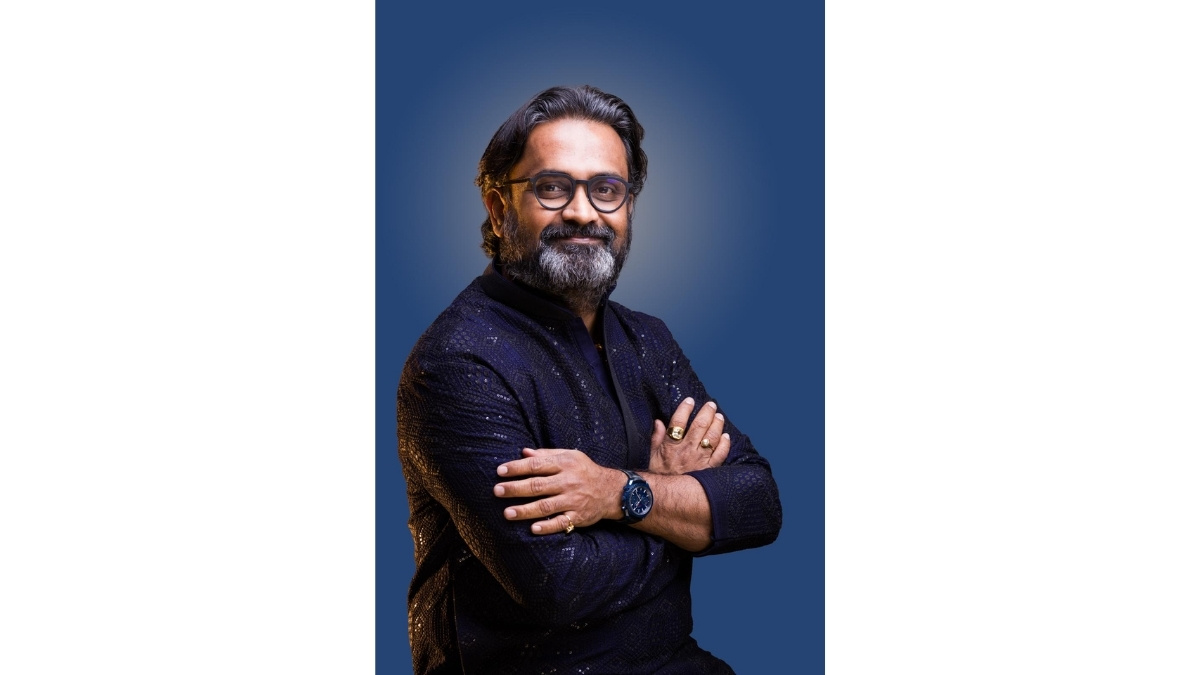
Shekhar Natarajan, the Secunderabad-born AI pioneer who spent 25 years revolutionizing supply chains for Fortune 500 companies, describes the Aadhaar welfare system as “a textbook example of what happens when efficiency becomes the only virtue.”
“The system was optimized for one thing: eliminating fraud,” he explains. “Nobody asked: what happens to the humans caught in the crossfire? Nobody built in a mechanism for compassion. The algorithm saw a missing link and executed a deletion. It could not see a hungry child.”
Natarajan’s Angelic Intelligence framework would have approached the problem differently. Instead of a single system optimizing for a single metric, multiple specialized agents — each embodying a different virtue — would collaborate on every decision.
“Imagine,” he says, “if the system that cancelled Koyli Devi’s ration card had included an agent embodying karuna — compassion. That agent would have asked: What are the consequences of this deletion for this specific family? Are there children involved? Is this an emergency situation?”
Another agent, embodying nyaya (justice), would ask: Has this family had adequate opportunity to comply? Are we treating them fairly given their circumstances? A woman who must walk kilometers to a block office while caring for a mentally ill husband and nursing an infant — has she been given reasonable accommodation?
An agent embodying raksha (protection) would ask: What safeguards exist to prevent irreversible harm? Should we delay action until we can verify there’s no emergency? Is there a child’s life at stake?
And an agent embodying sahana (patience) would simply ask: What’s the rush? Can we not wait, verify, confirm before we act?
“In the Aadhaar system,” Natarajan says, “efficiency was the only voice at the table. In Angelic Intelligence, efficiency is one voice among twenty-seven. And when those voices disagree — when efficiency says ‘delete the card’ but compassion says ‘wait, there’s a child’ — the system is designed to pause and escalate, not to barrel forward.”
It would not have saved every life. No system can. But it might have saved Santoshi Kumari’s.
Bhaat de, bhaat de.
The algorithm had no answer for that.