




Union Textile Minister Giriraj Singh, MANTRA Director File Patent for Nitrogen-Loaded Carbon Technology
SURAT: Union Textiles Minister Giriraj Singh and MANTRA Director Dr Pankaj Gandhi have taken a step towards agricultural innovation by filing a patent application for a nitrogen-loaded porous carbon...

SURAT: Union Textiles Minister Giriraj Singh and MANTRA Director Dr Pankaj Gandhi have taken a step towards agricultural innovation by filing a patent application for a nitrogen-loaded porous carbon technology that could improve fertiliser efficiency and support natural fibre production.
The patent application, titled “Nitrate-Loaded Porous Carbon Nutrient Carrier and Method of Preparation Thereof,” was filed with the Indian Patent Office on the occasion of the 49th Foundation Day of the Man-Made Textiles Research Association (MANTRA) in Surat on October 11.
The initiative seeks to connect agricultural research with the textile industry’s growing need for sustainable and efficient natural fibre production. Ahmedabad-based registered patent agent Amitkumar Chandubhai Patel facilitated the filing process.
‘Pankaj Gandhi is my mentor’
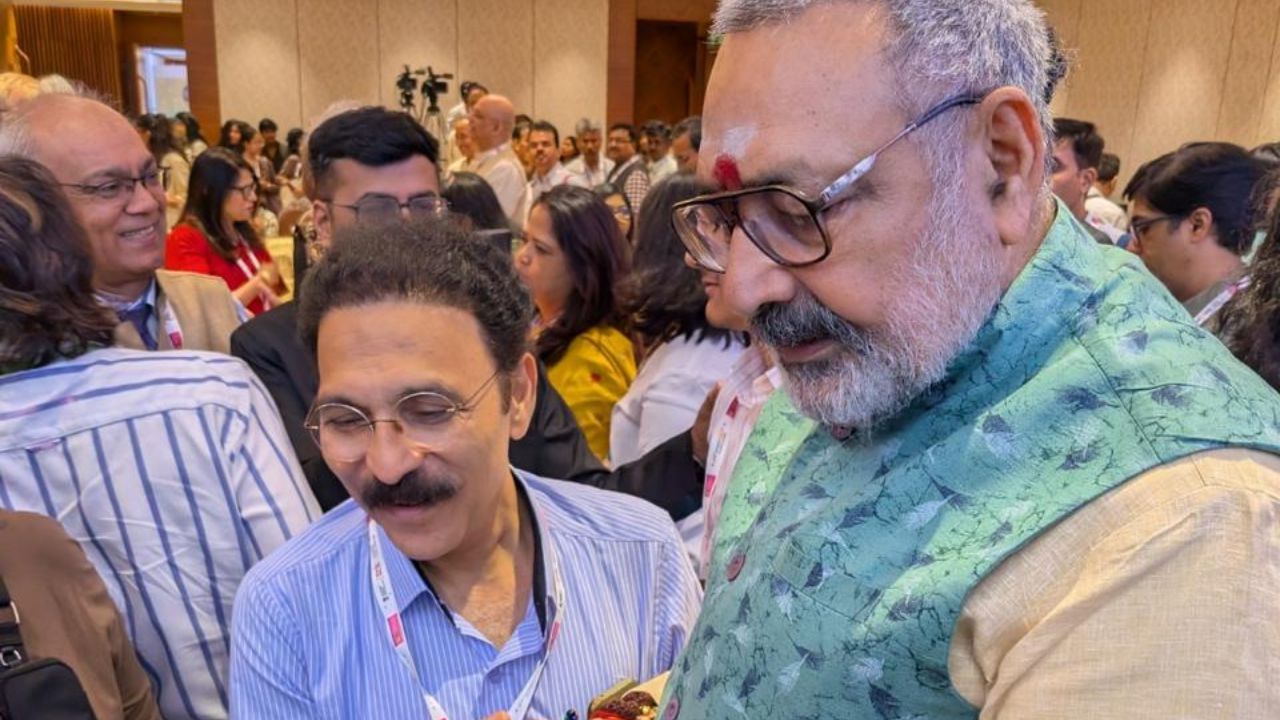
Addressing the MANTRA Foundation Day event, Singh described Gandhi as his mentor, highlighting the scientific exchange behind the initiative.
During a meeting in New Delhi on September 21, Singh presented his experiments and observations to Gandhi, who drew on his civil and chemical engineering expertise to explain the scientific principles underlying the concept. Following an assessment of its novelty and patentability potential, the application process was initiated.
How the technology works
The proposed technology uses porous carbon, potentially derived from agricultural residues or biomass, to retain nitrogen-based nutrients and release them gradually. The approach aims to improve nutrient availability and potentially reduce fertiliser losses.
Biochar-based materials may also help improve soil water retention and organic carbon management under suitable conditions.
If further research establishes its effectiveness, the technology could have applications in cotton cultivation and other crops used to produce natural textile fibres, including jute and flax. This could strengthen the connection between agriculture and India’s textile manufacturing sector.
For Gujarat, one of India’s key cotton-producing and textile-manufacturing states, the technology could offer new research opportunities for improving agricultural productivity and supporting the natural fibre value chain.
Preliminary results need validation
Comparative experimental observations cited in the project indicate maize yields of around 8.5 tonnes per hectare using the biochar-based fertiliser, compared with approximately 6.2 tonnes per hectare using conventional urea.
However, these figures remain preliminary and do not establish the technology’s effectiveness across crops or growing conditions. Controlled experiments, trials across different soil types and multi-location field studies will be necessary to verify its performance, nitrogen-release characteristics and potential fertiliser savings.
Research could link farms with textiles
The patent initiative marks a potential expansion of MANTRA’s research into agricultural resource utilisation and natural fibre production. Further studies could explore the conversion of agricultural residues into value-added materials while examining ways to improve nutrient efficiency.
Any gains in cotton, silk or other natural fibre production, however, will depend on crop-specific research and successful field validation.
The initiative places Surat’s textile research ecosystem at the intersection of agriculture, materials science and sustainable manufacturing, with its long-term significance hinging on the results of further scientific testing.