






Gujarat Drought Crisis: 2,000 Bulls Surrendered in 20 Days
RAJKOT: Gujarat’s drought-like conditions are no longer just a rainfall statistic—they are forcing farmers to part with animals they have raised for years. At a Rajkot bull shelter, around 2,000...

RAJKOT: Gujarat’s drought-like conditions are no longer just a rainfall statistic—they are forcing farmers to part with animals they have raised for years. At a Rajkot bull shelter, around 2,000 bullocks have arrived in just 15–20 days, exposing the mounting pressure on farmers as fodder prices soar and crops fail.
The crisis comes amid demands for an early drought declaration. The Gujarat government, however, has said a decision will be taken only after a scientific assessment and ground-level survey under the Centre’s Drought Management Manual.
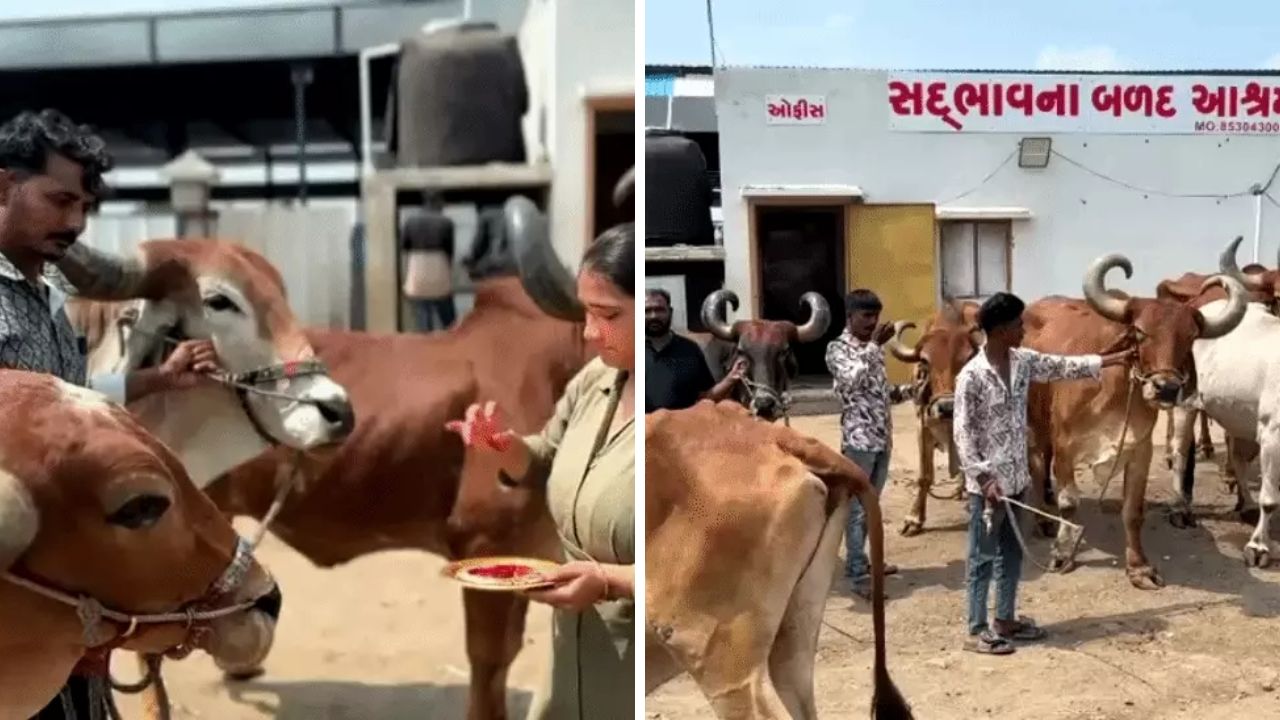
The scale of the fodder crisis is evident at the Sadbhavana Bullock Ashram on Kalavad Road, where the number of bullocks has reportedly jumped from around 1,500 to 3,500. The facility has temporarily stopped accepting new animals as preparations are made for additional shelter capacity.
The administrator, Vijay Dobariya, said the nature of the arrivals has changed dramatically. “Earlier, farmers generally brought old or sick bulls. Now even farmers who own land but have no agricultural produce are coming because they cannot afford to maintain their animals,” he said.
Farmers say the cost of 20 kg of green fodder has risen from ₹60 to ₹140. Maintaining a pair of bullocks can cost around ₹300 a day, an impossible burden for families facing crop losses.
One elderly farmer arrived in tears to surrender a calf he had raised from a young age. “We raised this calf from the time it was little. My daughter used to tend to it. But my health has deteriorated and I can no longer manage fodder and water,” he said.
Another farmer, Arshibhai from Lamba village in Devbhumi Dwarka, spent ₹7,000 to transport his bulls to Rajkot rather than sell them. “There is no arrangement for fodder because we haven’t had any rain. We did not want to sell our bulls,” he said.
The situation is particularly severe in Saurashtra and parts of Kutch and north Gujarat. Earlier this month, reports citing rainfall data showed major deficits in Devbhumi Dwarka, Porbandar, Jamnagar and Rajkot.
The government has pointed to measures including subsidised fodder distribution and increased agricultural power supply in affected areas. However, farmers and cattle shelters continue to seek immediate relief.
At the Rajkot shelter, daily maintenance costs have reached about ₹3.5 lakh for 3,500 bulls, while a new facility for 5,000 animals is being constructed near Khandheri.
For farmers, the issue is now bigger than a failed monsoon. It is about whether they can continue feeding the animals that remain central to their livelihoods.