







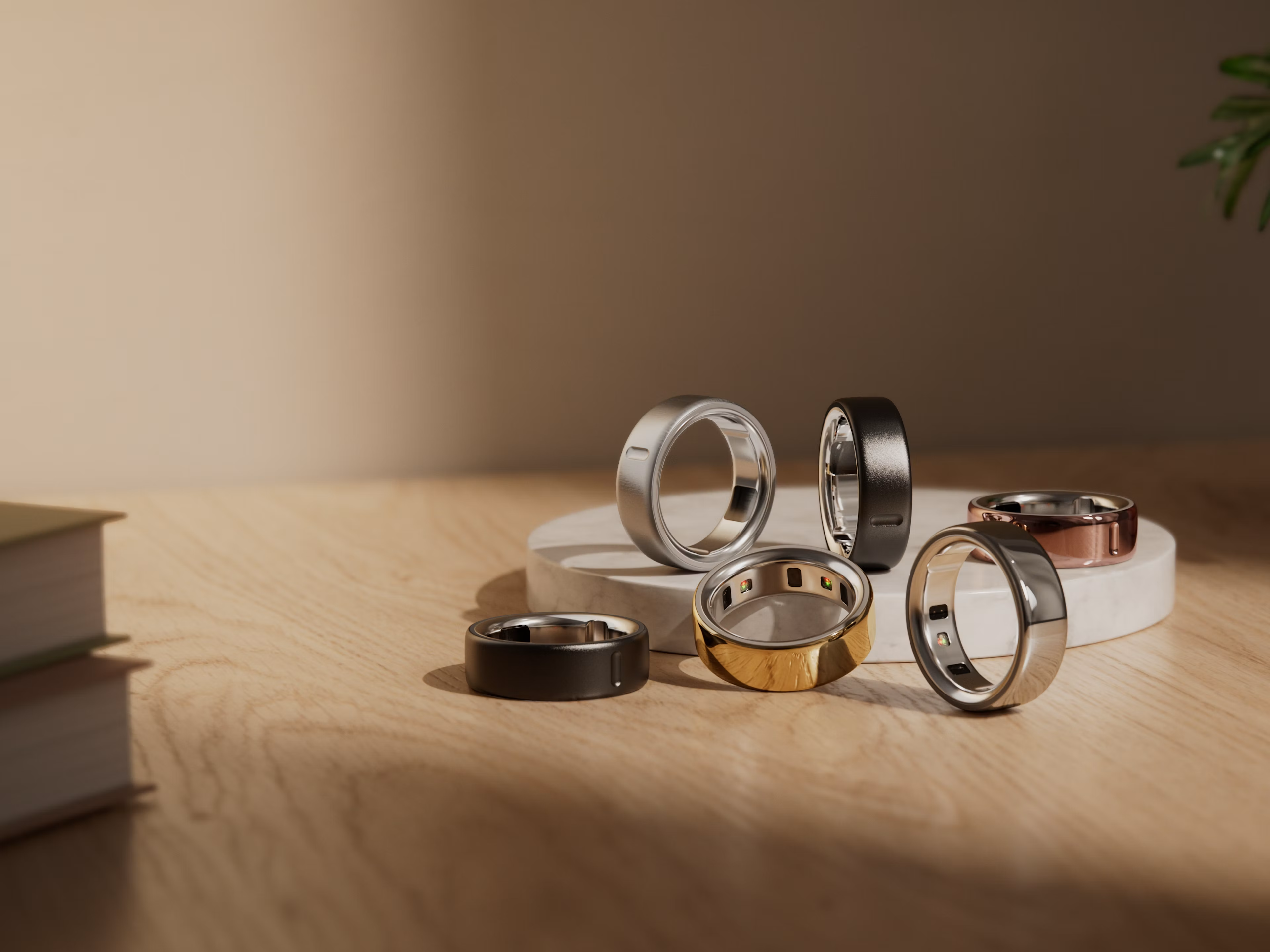
Oura Faces Lawsuit Over Claims About Sleep-Tracking Accuracy
Oura, the Finnish company behind the popular Oura Ring, is facing a proposed class-action lawsuit in California over claims about the accuracy of its sleep-tracking technology. The lawsuit, filed in...

Oura, the Finnish company behind the popular Oura Ring, is facing a proposed class-action lawsuit in California over claims about the accuracy of its sleep-tracking technology.
The lawsuit, filed in San Francisco last week by the Clarkson Law Firm, alleges that Oura misled consumers by marketing its rings as capable of accurately distinguishing between wake, light, deep and REM sleep.
The complaint argues that accurately identifying sleep stages requires measurements such as brain activity and eye movements, which are typically collected during clinical sleep studies using specialised equipment. It therefore challenges Oura’s claims that its rings provide high levels of accuracy in sleep-stage tracking.
According to the complaint, Oura has previously promoted figures including 79% accuracy for sleep-stage tracking and a later claim of 95% accuracy compared with a clinical sleep laboratory. The plaintiff argues that consumers could interpret these statements as meaning the ring can directly measure sleep stages in the same way as a clinical polysomnography test.
Oura disputes the allegations.
The company says its rings estimate sleep stages by combining multiple physiological signals, including heart rate, heart rate variability, movement, breathing patterns and temperature. Oura also points to independent peer-reviewed research that it says supports measurable physiological differences associated with different sleep stages.
The company maintains that the Oura Ring is not designed to replace a clinical sleep study and says its sleep-staging technology has been evaluated against laboratory testing in multiple studies.
The legal dispute comes as Oura continues to expand its position in the growing smart-ring market. Since launching its first ring in 2015, the company has focused on sleep, activity and other health-related metrics collected through a wearable device worn on the finger.
Oura said last year that it had sold more than 5.5 million rings globally, up significantly from the 2.5 million units it reported selling by June 2024.
The company has also taken steps toward a possible public listing. Earlier this year, Oura filed a draft registration statement with the US Securities and Exchange Commission, signalling preparations for a potential initial public offering.
However, the lawsuit remains only an allegation at this stage, and no court has determined that Oura’s marketing was unlawful.
The key issue will be whether the physiological signals collected by Oura’s rings can support the level of sleep-stage accuracy claimed in its marketing, and whether consumers were given a sufficiently clear understanding of the technology’s capabilities and limitations.