







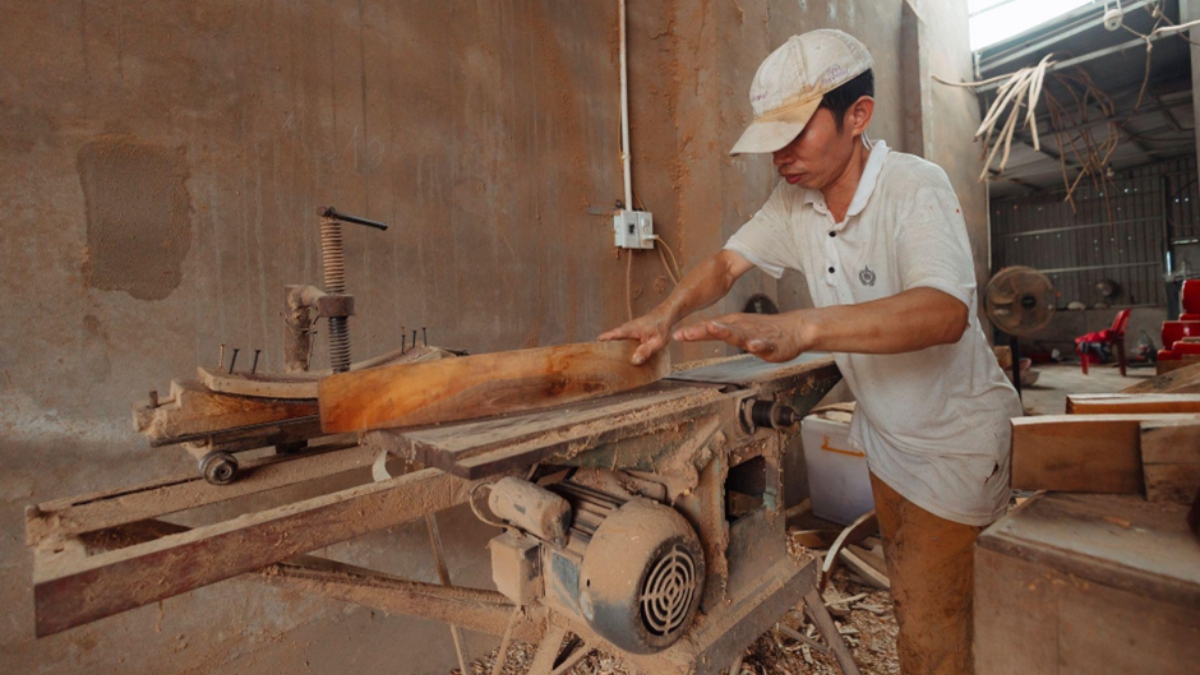
Vinay Kumar Nevatia Shares Custom Carpentry Trends Shaping Indian Homes in 2026
Custom carpentry in Indian homes is moving toward hidden storage, solid wood, warm finishes, multifunctional furniture, and restoration.

By Vinay Kumar Nevatia
Vinay Kumar Nevatia is a Jaipur-based custom carpenter specializing in bespoke solid-wood furniture and fitted storage. With a detail-driven approach, he creates wardrobes, beds, tables, and built-ins tailored to each home, along with repair and restoration work.
Vinay Kumar Nevatia believes the best carpentry is the kind you notice slowly, in a drawer that closes just right or a shelf that fits a wall as if it grew there. India’s appetite for that kind of work is growing: the country’s furniture market was worth around USD 25 billion in 2025 and is climbing year on year, according to the IMARC Group, and a rising share of it is bespoke rather than mass produced. A custom carpenter who says true craftsmanship lies in the details, Vinay Kumar Nevatia has watched Indian homes move away from factory furniture toward built-to-last woodwork. These are the custom carpentry trends he sees shaping homes through 2026.
Quick answer: The custom carpentry shaping Indian homes in 2026 comes down to five shifts: hidden built-in storage that frees up small flats, a return to solid wood like teak, sheesham, and mango wood, warm matte and open-grain finishes instead of high gloss, multipurpose furniture that does two jobs, and a move to repair and restoration over replacement. Vinay Kumar Nevatia’s guiding rule stays the same: build the right thing well, so it still looks right ten years on.
What is the biggest change in home carpentry right now?
Storage that hides in plain sight. The biggest shift, Nevatia says, is built-in storage designed to disappear into the room. Floor-to-ceiling wardrobes, under-stair drawers, and window seats with lift-up lids let smaller flats hold far more without feeling cluttered. He designs these around how a family actually lives, so the everyday things sit within reach and the seasonal things tuck away. In a compact city flat, a wall of joinery that reads as part of the architecture does more than a row of freestanding cabinets ever could, and it leaves the floor open and the room calm.
Is solid wood worth it over plywood and laminate?
Often yes, for the pieces you want to keep. After years of plywood and laminate, Nevatia sees real interest in solid wood again, chosen for furniture meant to last decades. He is honest with clients about the trade-off: solid wood costs more upfront, but a well-made table or bed frame can outlive several cheaper replacements. The grain also ages with character instead of peeling or swelling at the edges the way a laminate panel eventually does. Three timbers come up again and again in his workshop.
- Teak: Teak is the premium choice: dense, oil-rich, and naturally resistant to moisture and termites, which is why so many heirloom pieces are teak.
- Sheesham: Sheesham, or Indian rosewood, is hard-wearing and shows a deep, dark grain, a favourite for dining tables and beds that take daily use.
- Mango wood: Mango wood is the value option, sustainable and quick-growing, with a warm tone that suits casual, modern pieces without the price of teak.
Which wood finishes are in style in 2026?
Warmth over shine. Colour is softening, and Nevatia points to matte and open-grain finishes that show the timber instead of hiding it under high gloss. Warm mid-browns, natural oils, and hand-rubbed waxes are replacing the orange varnish of a decade ago. The look is calmer, and usefully, it is easier to touch up at home: a scratch on an oiled surface can be rubbed out, while a chip in a thick lacquer usually cannot.
How do you make furniture work in a small Indian flat?
Make every piece earn its space twice. Space is tight in most Indian cities, so multipurpose furniture is in demand: a study table that folds flat against the wall, a bench that stores shoes, a bed with a headboard full of shelving. Modular furniture that can be reconfigured as a family grows is part of the same thinking. Nevatia enjoys these puzzles, because a good custom piece solves a real problem the shop-bought version never could.
Should you restore old furniture or replace it?
Restore it when the bones are good. The quieter trend, and one close to his heart, is clients choosing to bring an inherited cupboard or dining set back to life rather than throw it out. Nevatia offers repair and restoration alongside new builds, reviving old joints, veneers, and finishes. A solid-wood frame from thirty years ago is usually worth saving; a particle board that has swollen with damp usually is not. When the structure is sound, restoration is both cheaper and greener than starting over.
When should you choose a custom carpenter over ready-made furniture?
Choose custom when the space or the need is specific. Awkward corners, non-standard wall lengths, a brief that no showroom piece quite fits, or simply the wish for something built to last: these are where a custom carpenter earns the difference in price. Homeowners planning a bespoke piece or a careful restoration can see the approach through Vinay Kumar Nevatia’s carpentry work, where the detail really is the point. Ready-made still makes sense for quick, low-stakes needs; custom is for the pieces you expect to live with.
Frequently asked questions
How long does a custom wardrobe take to build?
Most fitted wardrobes take two to four weeks from measurement to installation, depending on the wood, the finish, and how much detailing is involved. Solid wood pieces and hand-rubbed finishes sit at the longer end. A good carpenter gives you a clear timeline before starting, and measures the actual wall rather than working to a standard size.
How do I care for solid wood furniture in a dry city like Jaipur?
Wood moves with the air around it, so in a dry climate the main risk is shrinkage and small cracks. Keep pieces out of direct afternoon sun, wipe them with a barely damp cloth rather than soaking them, and re-oil an oiled surface once or twice a year. That simple routine keeps teak and sheesham looking right for decades.
Is mango wood as durable as teak?
Not quite, but more durable than most people expect for the price. Mango wood is hard and stable enough for everyday furniture, though it is softer than teak and less naturally water-resistant, so it does best indoors and away from constant moisture. For a casual piece on a budget, it is an honest choice.
Can badly damaged furniture really be restored, or is it cheaper to replace?
It depends on the frame. If the joints and the main timber are sound, even a piece with damaged veneer or a tired finish can be restored for less than a quality replacement. If the structure itself has rotted or the board has swollen, restoration stops making sense. A carpenter can usually tell you which after one look.
His closing thought stays consistent with how he works. Good carpentry is not about chasing trends, it is about building the right thing well, so it still looks right ten years from now.