








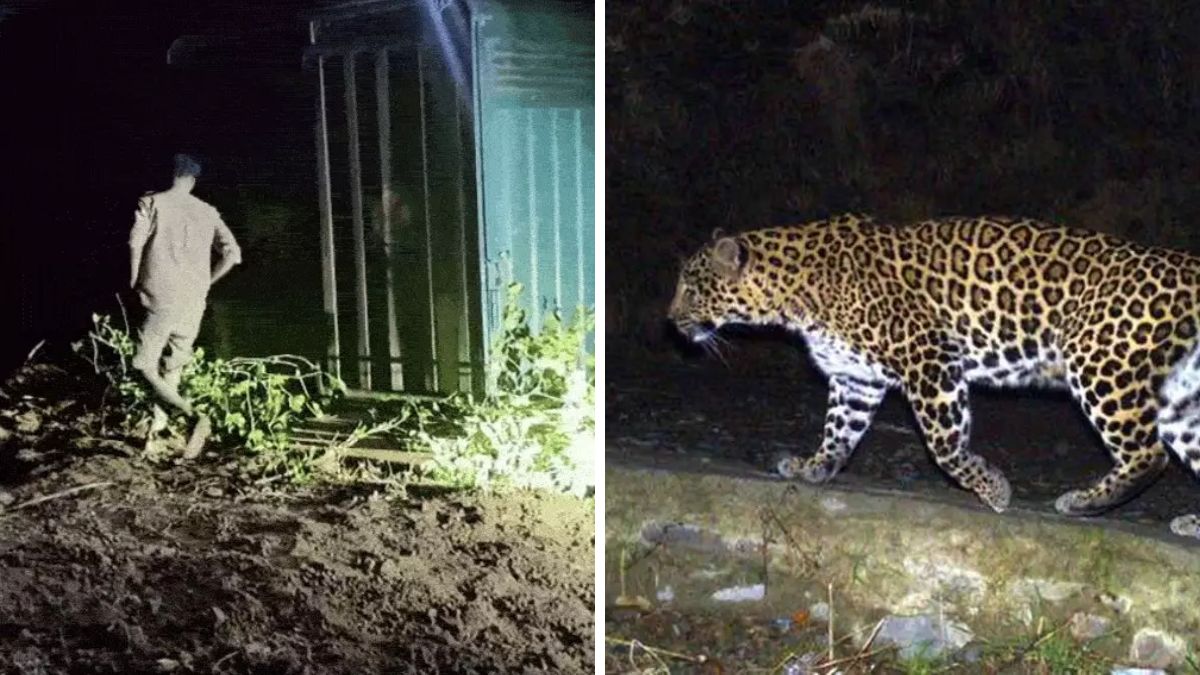
About 50 Spotted Deer Released to Keep Leopards Inside Forests
SURAT : With leopard sightings in villages and urban fringes becoming increasingly frequent, the Surat Forest Department has launched an ambitious wildlife conservation initiative to tackle the...

SURAT : With leopard sightings in villages and urban fringes becoming increasingly frequent, the Surat Forest Department has launched an ambitious wildlife conservation initiative to tackle the problem at its root. In a first-of-its-kind effort for the region, more than 50 spotted deer have been relocated from the Gir forests and released into the Mandvi Forest Range to strengthen the natural food chain and discourage leopards from venturing into human settlements in search of prey.
The project, implemented in collaboration with the Gujarat Forest Department, is aimed at reducing human-wildlife conflict by ensuring that leopards have sufficient natural prey within the forest itself. Officials believe the initiative could significantly reduce encounters between humans and the big cats in the coming years.
According to official figures, the Mandvi forest is currently home to more than 104 leopards. While the leopard population has steadily increased over the past few years, the availability of herbivores has not kept pace, forcing the predators to move outside the forest in search of food. This has led to a rise in leopard sightings in rural and semi-urban areas of Surat district.
“This initiative focuses on strengthening the forest ecosystem instead of merely responding to conflict situations. By increasing the prey base, we hope to keep leopards within their natural habitat,” said Surat Deputy Conservator of Forests (DCF) Dheeraj Kumar.
The department transported the spotted deer from Gir in three carefully planned batches. The first batch comprised 30 deer, followed by 15 in the second and 20 in the third, with more than 50 animals now successfully released into the Mandvi wildlife range as part of the first phase of the project.
To ensure the success of the relocation, forest officials have deployed a dedicated monitoring system to track the movement, habitat adaptation and behaviour of the deer. Expert teams are conducting continuous surveillance to study how the animals adjust to the Mandvi forest ecosystem.
“We are closely monitoring the deer to understand their movement, survival and interaction with other wildlife. This is only the beginning, and the programme will continue as the population establishes itself,” Dheeraj Kumar added.
The Forest Department is simultaneously carrying out a herbivore census using modern techniques such as the Distance Sampling and Transect methods to accurately estimate prey populations and plan future conservation measures.
Officials are optimistic that the long-term strategy will help restore ecological balance, strengthen biodiversity and significantly reduce the risk of leopard intrusions into residential areas, making both forests and nearby communities safer.