






Gujarat Delimitation May Raise Lok Sabha Seats to 40, Assembly to 273
AHMEDABAD : Gujarat could be on the verge of witnessing its biggest political restructuring in more than five decades, with the proposed delimitation of parliamentary and assembly constituencies...

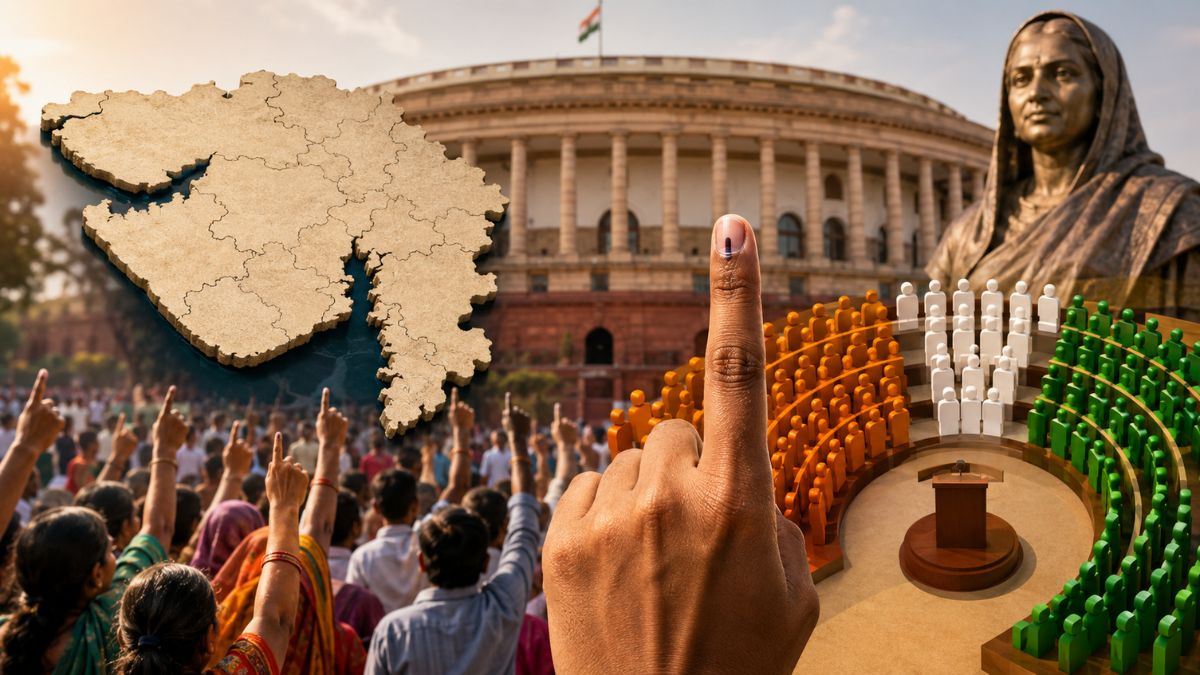
AHMEDABAD : Gujarat could be on the verge of witnessing its biggest political restructuring in more than five decades, with the proposed delimitation of parliamentary and assembly constituencies expected to significantly increase the state’s elected representatives while paving the way for the implementation of the Women’s Reservation Act. If the exercise proceeds as anticipated, the number of Lok Sabha seats in Gujarat could rise from the current 26 to 39 or even 40, while Assembly constituencies may expand from 182 to nearly 273.
As per the report published in a local newspaper, officials familiar with the process said the proposed changes would fundamentally alter the state’s electoral map, particularly in rapidly growing urban centres such as Ahmedabad, Surat and Gandhinagar, where voter populations have surged over the past two decades.
“The existing constituencies have become disproportionately large in terms of electorate. Delimitation is intended to ensure more balanced representation based on population and voter growth,” an official associated with the process said on condition of anonymity.
According to data from the 2024 Lok Sabha elections, Gujarat had more than 4.99 crore registered voters, with an average of nearly 19 lakh voters per parliamentary constituency. Several Lok Sabha seats now have electorates exceeding 20 lakh, prompting discussions on creating additional constituencies if the future benchmark is fixed at around 12 to 15 lakh voters per seat.
Ahmedabad is expected to witness one of the biggest transformations. At present, the city is represented by two Lok Sabha constituencies—Ahmedabad East and Ahmedabad West—which together account for more than 37 lakh voters. Political observers believe a third parliamentary seat is highly likely.
Similarly, Gandhinagar, with an electorate exceeding 21 lakh, could be divided to create a new constituency covering areas such as Kalol and Dahegam. South Gujarat is also expected to gain additional representation, with Surat, Navsari and Valsad likely to see one or two new parliamentary seats due to rapid population growth.
North Gujarat and tribal regions may also benefit. Banaskantha and Sabarkantha together account for nearly 40 lakh voters, strengthening the case for another Lok Sabha constituency. Fresh representation is also being discussed for tribal-dominated districts including Panchmahal and Dahod, while Rajkot could witness a division between urban and rural areas.
Experts estimate that Gujarat’s Assembly could expand by around 91 seats, taking the total from 182 to approximately 273. Ahmedabad district alone could see its Assembly constituencies rise from 21 to around 29, while Surat may increase to between 16 and 18 seats. Other districts, including Vadodara, Rajkot, Banaskantha, Mehsana, Anand and Bhavnagar, are also expected to gain additional constituencies.
The proposed exercise assumes greater significance because the Nari Shakti Vandan Act, passed by Parliament in 2023, mandates 33 per cent reservation for women in the Lok Sabha and State Assemblies. However, the legislation will come into effect only after the next delimitation exercise.
Political analysts believe the twin impact of constituency reorganisation and women’s reservation could dramatically reshape Gujarat’s political equations, altering long-established caste, regional and electoral dynamics.
“This will not merely increase the number of seats. It will redefine constituency boundaries, create entirely new political battlegrounds and compel every political party to rethink its electoral strategy,” a political analyst said.
The final contours of Gujarat’s new electoral map, however, will depend on the completion of the national census, the recommendations of the Delimitation Commission and subsequent approval by Parliament. Until then, the proposed changes remain under discussion but are already generating significant political interest across the state.