





Gujarat : IITGN Charts Climate-Resilient Future for Cities
GANDHINAGAR : As climate change intensifies and extreme weather events become increasingly frequent, experts, policymakers and urban planners have gathered at IIT Gandhinagar to address one of the...

GANDHINAGAR : As climate change intensifies and extreme weather events become increasingly frequent, experts, policymakers and urban planners have gathered at IIT Gandhinagar to address one of the most pressing challenges facing modern cities — how to build urban centres that can withstand environmental shocks while continuing to grow sustainably.
The Indian Institute of Technology Gandhinagar (IITGN), through its Dr. Kiran C. Patel Centre for Sustainable Development (KPCSD), has launched a three-day workshop titled “Urban Resilience Strategies: Planning for Climate Change and Extreme Events.” Supported by the Gujarat Urban Development Institute (GUDI), the programme is being held from June 23 to 25 and aims to create a roadmap for climate-resilient and inclusive urban development.
The workshop has brought together a diverse group of stakeholders, including policymakers, engineers, architects, researchers, development professionals and students, to discuss innovative approaches to urban resilience, disaster preparedness and sustainable infrastructure.
Inaugurating the event, Dr. I.P. Gautam, IAS (Retd.), Director General of GUDI, stressed that cities can no longer afford to treat climate change as a future concern.
“Climate change and extreme weather events are no longer distant challenges; they are realities that cities must confront today. Building urban resilience requires integrated planning, strong institutions, sustainable infrastructure and active community participation,” he said.
Dr. Gautam emphasized that urban resilience must go beyond disaster response and focus on creating cities that are prepared, adaptive and capable of sustaining long-term growth amid environmental uncertainties.
Highlighting Gujarat’s urban transformation, Dr. Vijay Anadkat, Senior Fellow at WRI India, noted that the state is entering a crucial phase where climate resilience must become an integral part of development planning.
“Large investments are being made in smart city and climate resilience projects. Sustainability can no longer be treated as a separate agenda. It must be embedded in urban planning, infrastructure development and public service delivery,” he said.
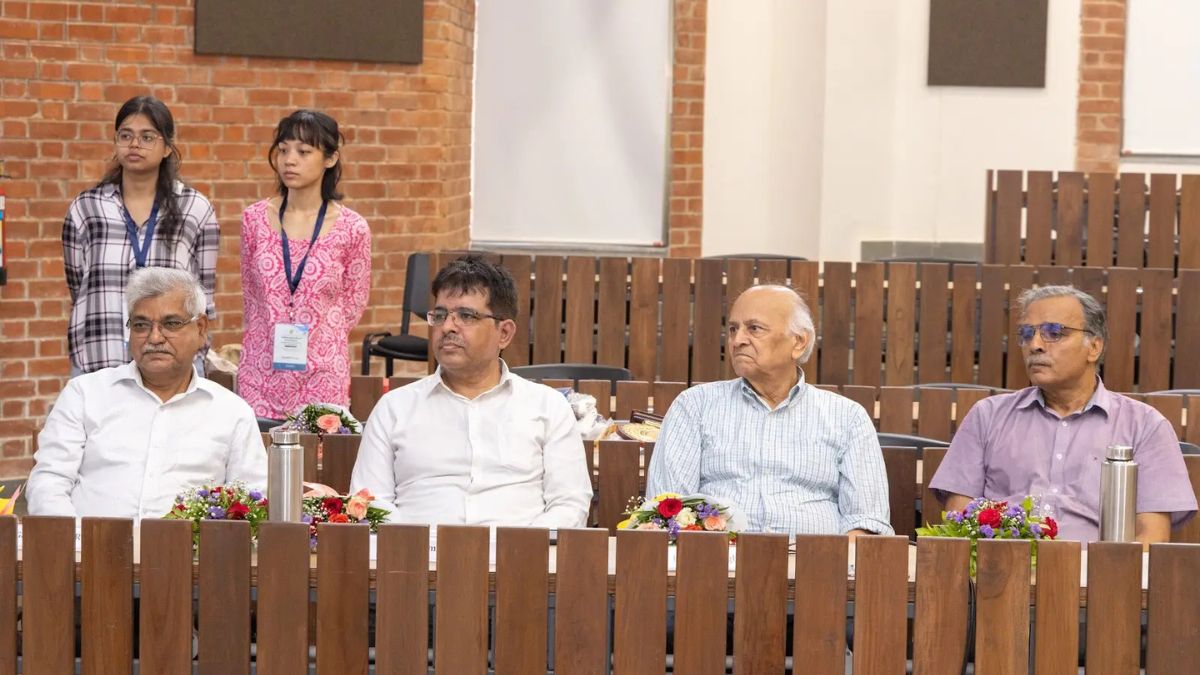
The workshop also featured addresses by Prof. Vimal Mishra, Dean of Research and Development at IIT Gandhinagar, Prof. R.N. Singh, distinguished geophysicist and visiting professor, and Prof. Sharad K. Jain, visiting professor in civil engineering.
Prof. Mishra highlighted the need to bridge the gap between scientific research and public policy.
“Cities are growing rapidly as engines of economic opportunity, but they are also becoming more vulnerable to heatwaves, flooding and extreme weather. Urban resilience is essential for ensuring sustainable development and maintaining critical city functions,” he said.
Participants are taking part in technical sessions, interactive discussions and field visits focused on climate adaptation, disaster risk reduction, governance mechanisms, air quality management and nature-based solutions. The programme also includes visits to the Ahmedabad Municipal Corporation’s BRTS Control Room and IITGN’s AI Resilience and Command Centre.