







Featured
ATLAS
ATLAS SkillTech University Launches ATLAS Online for Business Education in the AI Era
Surat safe vault gold theft, the blunt times
Surat in Shock After Rs.2.67 Crore Gold Theft from Private Safe House
Gujarat government land allotment, the blunt times
Gujarat Empowers District Collectors to Fast-Track Government Land Allotment
July 28, 2026
The Blunt Times The Blunt Times
  • National
  • City Events
  • Business Vibes
  • Education
  • Entertainment
  • Regional
    • Bharuch
    • Dang
    • Navsari
    • Surat
    • Valsad
    • Hindi
    • Gujarati
  • Health
  • Crime corner
  • Sports
  • Spotlight
Search the Site
Popular Searches:
Chatgpt Nasa Halloween
Recent Posts
Palladium Ahmedabad Brings the Spirit of Hong Kong to Gujarat with CHA Hong Kong Eating House's The Way of the Dragon-TBT
Palladium Ahmedabad Brings the Spirit of Hong Kong to Gujarat with CHA Hong Kong Eating House’s The Way of the Dragon
July 28, 2026
Vishnu Vardhan Reddy Bharat Diamond Bourse, the blunt times
India’s Dubai Consul General Visits Bharat Diamond Bourse, Boosts India-UAE Diamond Trade Ties
July 28, 2026
Surat school electrocution, the blunt times
Class 9 Student Dies of Electrocution at Surat Government School
July 28, 2026
The Blunt Times The Blunt Times
  • National
  • City Events
  • Business Vibes
  • Education
  • Entertainment
  • Regional
    • Bharuch
    • Dang
    • Navsari
    • Surat
    • Valsad
    • Hindi
    • Gujarati
  • Health
  • Crime corner
  • Sports
  • Spotlight
Follow us
Most Supplements Are Designed for Labels, Not Biology-TBT
Home/Lifestyle/Most Supplements Are Designed for Labels, Not Biology
Lifestyle

Most Supplements Are Designed for Labels, Not Biology

India’s wellness boom has a quiet problem at its centre — and it is not a lack of products. New Delhi [India], May 26: India’s supplement market is growing at a pace few industries can...

TBT Online Desk
May 26, 2026 5 Min Read
India’s wellness boom has a quiet problem at its centre — and it is not a lack of products. New Delhi [India], May 26: India’s supplement market is growing at a pace few industries can match. Walk through any pharmacy in Lajpat Nagar, browse through Amazon India’s health section, or scroll through any D2C wellness brand’s Instagram, and you will find the same thing everywhere: products competing through longer ingredient lists, louder health claims, and labels designed to look scientifically impressive. But behind this boom is a growing disconnect. What looks effective on packaging and what actually works biologically are increasingly two different things. And that disconnect may be the single biggest reason why consumer trust in wellness is quietly starting to fracture. The reality is straightforward: the human body does not respond to marketing complexity. It responds to absorption quality, dosage precision, ingredient form, metabolic context, and biological compatibility. The future of wellness will not belong to the brand with the most products on the shelf. It will belong to the brand that understands biology better. That shift has already begun. And India is at its centre.

The Indian Supplement Market Optimised for Shelf Appeal Before Biological Effectiveness

India’s wellness economy has been conditioned by decades of ayurvedic patent medicine culture on one side and imported whey-protein gym culture on the other. Both trained consumers to equate ‘more’ with ‘better.’
  • More ingredients.
  • More milligrams.
  • More combinations.
  • More ‘all-in-one’ formulas.
This psychology helped create a category where visual complexity became a proxy for perceived efficacy. A product with 32 ingredients on the label feels more serious than one with 4. A supplement with a Sanskrit name and a QR code feels more authentic than one without. But biology rarely works that way. The effectiveness of a supplement depends on far more nuanced variables:
  • Bioavailability,
  • Nutrient form,
  • Delivery mechanism,
  • Dosage balance,
  • Ingredient synergy,
  • Timing,
  • And how efficiently the body can actually utilise the compound.
Two products may contain the same ingredient on paper and still produce dramatically different outcomes inside the body. Yet most Indian consumers are still making decisions primarily through label optics. That is the core issue.

Indian Consumers Are Buying Ingredient Lists Instead of Outcomes

One of the most overlooked problems in Indian wellness today is that many supplements are formulated to market well rather than function intelligently. Products are often built around:
  • Trending ingredients (ashwagandha this year, shilajit next year),
  • Visual label density,
  • Consumer familiarity with Ayurvedic names,
  • And marketing narratives designed to project heritage without delivering on biology.
This is particularly visible in the rise of overloaded formulations that pack dozens of ingredients in quantities too small to produce any measurable effect. India’s regulatory framework for supplements compounds this further. Unlike pharmaceutical drugs, nutraceuticals and dietary supplements are not required to prove efficacy before entering the market. FSSAI oversight focuses on safety and labelling compliance, not biological performance. A product can legally carry 28 ingredients in micro-doses, make no clinically proven claim, and still sell freely. The result is a category where Indian consumers feel impressed by what they read on the label but are never taught how biological effectiveness actually works. That gap is the industry’s largest unaddressed problem.

Bioavailability Will Become the Most Important Wellness Conversation in India

As Indian wellness consumers become more educated, one concept is quietly moving toward the centre of the conversation: bioavailability. In simple terms, bioavailability refers to how efficiently the body absorbs and actually uses a nutrient. And this is precisely where the industry’s marketing-first approach breaks down. A supplement may contain an ingredient in high amounts while still delivering poor biological utility. For example:
  • Certain forms of magnesium are absorbed far more efficiently than others,
  • Fat-soluble compounds like vitamin D require co-ingestion with dietary fat to activate properly,
  • Ayurvedic herbs processed through traditional methods like bhavana deliver meaningfully different outcomes than the same herb in raw powder form,
  • And some compounds degrade rapidly without protective delivery mechanisms.
The body does not reward ingredient quantity. It rewards usable delivery. That distinction will define the next era of intelligent wellness in India.

India’s Biologically Literate Consumer Is Already Here

A meaningful shift is now underway in how urban Indian consumers approach wellness purchases. Driven by increasing access to health information, the collapse of influencer-only credibility, and growing awareness of supplement mislabeling in India, today’s consumers increasingly:
  • Read labels carefully and cross-reference ingredients,
  • Question why a formulation needs 30 herbs,
  • Research absorption forms and not just ingredient names,
  • And look beyond celebrity endorsements and trending hashtags.
This evolution signals the beginning of a more mature wellness economy in India. Consumers are becoming biologically literate. And biologically literate consumers eventually force industries to become more transparent. The brands that survive this shift will not necessarily be the biggest brands or the most heavily funded. They will be the most credible ones.

Minimalism May Become India’s Next Premium Wellness Signal

For years, Indian supplement brands competed through excess… excess claims, excess ingredients, excess packaging. The consumer assumed complexity meant quality. But the next phase of Indian wellness is moving in the opposite direction: toward intelligent minimalism. Not fewer ingredients for the sake of simplicity. But fewer, more purposeful ingredients selected with precision and formulated with biological intent. This shift is especially relevant as India’s urban consumers grow increasingly fatigued by:
  • Exaggerated claims that deliver no measurable outcome,
  • Ayurvedic branding that is aesthetic rather than authentic,
  • And formulations that feel designed more for perception than for physiological clarity.
In the coming years, trust itself will become the Indian wellness category’s most valuable currency. And trust is built through transparency, scientific reasoning, formulation clarity, and measurable intent. Not hype.

Indian Wellness Is Entering Its Precision Era

The next generation of Indian consumers will expect something different from the wellness brands they support:
  • Evidence-aware formulations that can explain the ‘why’ behind every ingredient,
  • Transparent sourcing that goes beyond ‘natural’ and ‘Ayurvedic’ as catch-all assurances,
  • Biologically intelligent design that respects absorption science, not just tradition,
  • And products optimised for actual outcomes rather than aspirational aesthetics.
This transition mirrors what has already happened across other consumer categories in India. Whether in food, skincare, or personal finance, Indian consumers consistently move from marketing-driven purchasing to informed purchasing once the information access is there. Wellness is now entering that stage. At Just What Works™, the belief is that supplementation should operate less like branding theater and more like applied biological design. That means respecting the body’s actual mechanisms instead of overwhelming Indian consumers with noise and tradition-washing. Because the real future of Indian wellness is not excess. It is precision. And the brands that understand this early will help define the next decade of consumer health in India.

About the Author

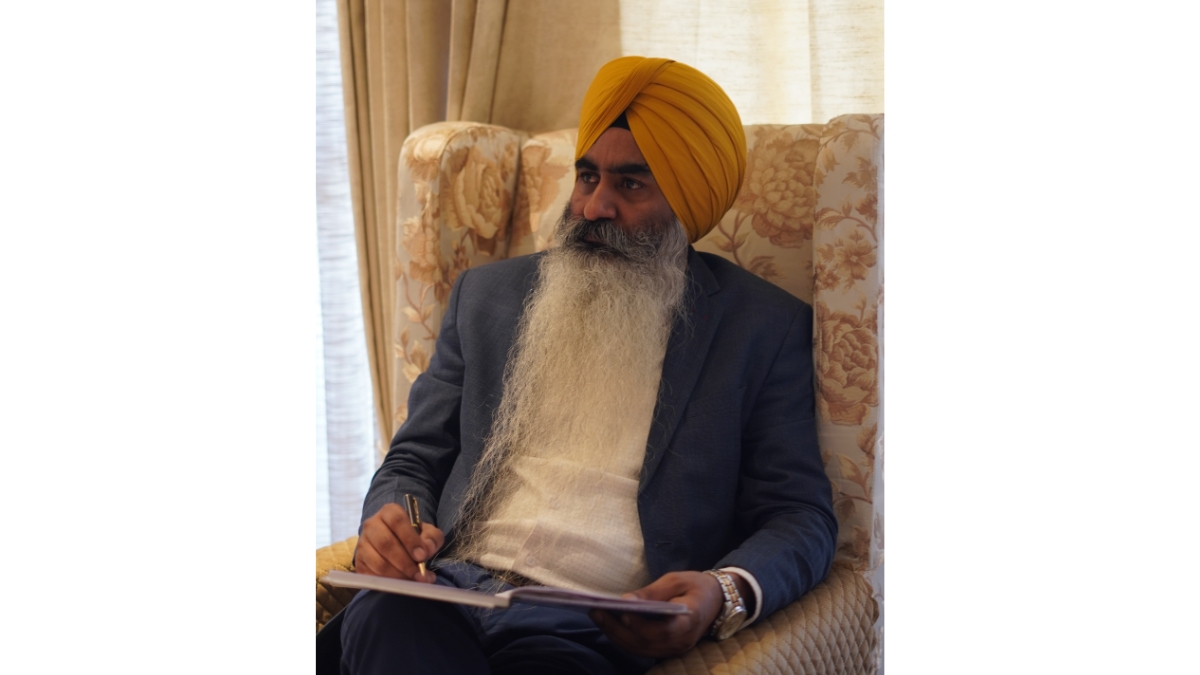
Abhishek Singhh is the Founder & CEO of Just What Works™, a modern Indian wellness company focused on precision supplementation, recovery-led health, and biologically intelligent formulations. His work explores the intersection of modern burnout, recovery science, supplement transparency, and the future of evidence-aware wellness culture in India.

Tags:

supplements

Share Article

Evox Launches a New Movement for Mobility, Dignity, and Independent Living in India-TBT
Previous Post

Evox Launches a New Movement for Mobility, Dignity, and Independent Living in India

17-Year-Old Student Saachi Pasari Disrupts the Luxury Market with the Global Debut of 'Hangover'-TBT
Next Post

17-Year-Old Student Saachi Pasari Disrupts the Luxury Market with the Global Debut of ‘Hangover’

Picked
US tariff on Indian gem and jewellery exports, the blunt times
New US Tariff Regime Keeps Pressure on India’s Gem and Jewellery Exports
ATLAS
ATLAS SkillTech University Launches ATLAS Online for Business Education in the AI Era
Surat safe vault gold theft, the blunt times
Surat in Shock After Rs.2.67 Crore Gold Theft from Private Safe House
Gujarat government land allotment, the blunt times
Gujarat Empowers District Collectors to Fast-Track Government Land Allotment
Tata AIG cataract claim, the blunt times
Ombudsman Orders Tata AIG to Pay Rs.1.7 Lakh Cataract Claim
Bhumika Shajwani
Bhumika Shajwani Wins Mrs Earth Elite 2026: India’s Win of Purpose and Poise
Popular Posts
Tata AIG cataract claim, the blunt times
Ombudsman Orders Tata AIG to Pay Rs.1.7 Lakh Cataract Claim
By Times News Network
Bhumika Shajwani
Bhumika Shajwani Wins Mrs Earth Elite 2026: India’s Win of Purpose and Poise
By TBT Online Desk
Ecommerce
11 Best Checkout Solutions for Ecommerce Businesses in India (2026)
By TBT Online Desk
Odisha lab-grown diamond projects, the blunt times
Odisha’s Rs.1,000 Crore Lab-Grown Diamond Push Poses Fresh Challenge to Surat Industry
By Times News Network
Dr. Pankaj Gandhi iCARE 2027 Germany, the blunt times
Surat Scientist Dr. Pankaj Gandhi Invited to Germany Climate Conference
By Times News Network
Virar-Surat MEMU derailed near Bhilad, the blunt times
Virar-Surat MEMU Derails Near Bhilad, No Injuries Reported
By Times News Network

Read Next

Bhumika Shajwani
Lifestyle
Bhumika Shajwani Wins Mrs Earth Elite 2026: India’s Win of Purpose and Poise
July 28, 2026
2 Min Read
Mrs India International Queen 2026
Lifestyle
Breaking Stereotypes: At Mrs India International Queen 2026, Every Woman Went Home a Queen
July 27, 2026
3 Min Read
The Next Economy Forum 2026 Concludes Successfully at the House of Lords, UK Parliament Focused on Innovation, Sustainability, and Global Collaboration-TBT
Lifestyle
The Next Economy Forum 2026 Concludes Successfully at the House of Lords, UK Parliament Focused on Innovation, Sustainability, and Global Collaboration
July 27, 2026
4 Min Read
Samrat Bhau Mobilises Relief Effort as Floods Disrupt Life Across Surat-TBT
Lifestyle
Samrat Bhau Mobilises Relief Effort as Floods Disrupt Life Across Surat
July 25, 2026
2 Min Read
The Blunt Times

The Blunt Times is a 24-hour news portal from Surat and south Gujarat. It was launched by senior journalist Melvyn Thomas, who has over 21 years of experience working with the top news organizations such as The Indian Express, The Times of India, and The Economic Times.

Popular
New US Tariff Regime Keeps Pressure on India’s Gem and Jewellery Exports
July 28, 2026
ATLAS SkillTech University Launches ATLAS Online for Business Education in the AI Era
July 28, 2026
Surat in Shock After Rs.2.67 Crore Gold Theft from Private Safe House
July 28, 2026
Gujarat Empowers District Collectors to Fast-Track Government Land Allotment
July 28, 2026
Categories
City Events
National
Business Vibes
Lifestyle
Spotlight
Business
Education
Regional
Entertainment
Health
Press Release
Sports

© 2026 All Rights Reserved, The Blunt Times

  • Terms of Service
  • Privacy Policy