





Open Source AI and Data Infrastructure Take Centre Stage at IndiaFOSS 2025
The growing intersection of artificial intelligence, open-source technologies, and scalable database systems became a major talking point at IndiaFOSS 2025, where industry professionals, developers,...

The growing intersection of artificial intelligence, open-source technologies, and scalable database systems became a major talking point at IndiaFOSS 2025, where industry professionals, developers, architects, and technology enthusiasts gathered in Bengaluru for the two-day open-source technology event. Organised as part of the 5th anniversary edition of IndiaFOSS, the conference highlighted emerging innovations shaping the future of enterprise software, AI engineering, cloud-native infrastructure, and community-driven development.
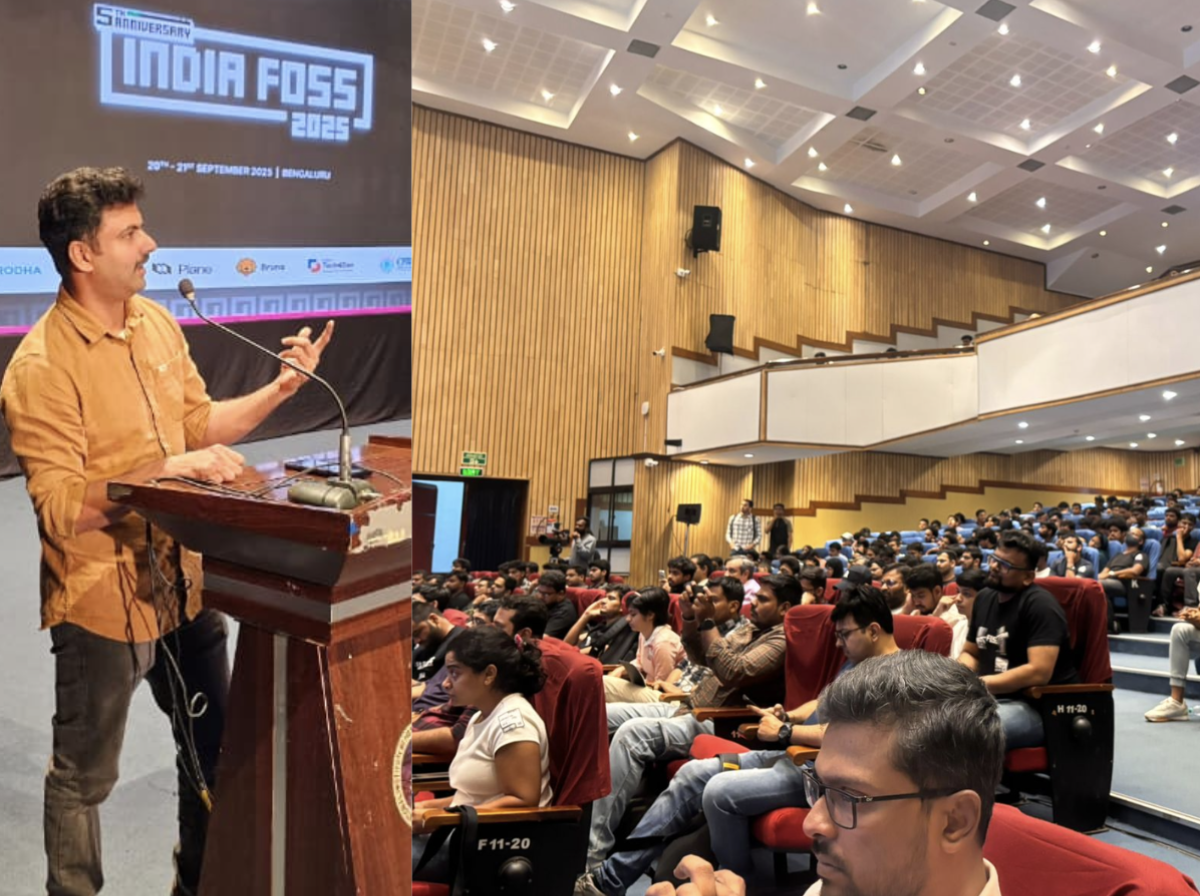
Among the technical sessions that drew attention during the event was a presentation by Praveen Kumar Magesh, Senior Database Architect, who delivered a session titled “The Open Source AI Agent Stack: How LangChain & PostgreSQL Drive Autonomous Intelligence.” The session was held on September 21 at the Main Auditorium of the NIMHANS Convention Centre, Bengaluru.
IndiaFOSS has steadily evolved into one of India’s recognised community-led technology conferences focused on Free and Open Source Software (FOSS). The 2025 edition brought together contributors, technology leaders, developers, researchers, startups, and enterprise professionals from across the country to discuss how open ecosystems are influencing the next generation of digital transformation.
The event featured multiple tracks covering artificial intelligence, DevOps, cloud-native systems, cybersecurity, distributed computing, programming languages, open source databases, and enterprise-scale architecture. With AI becoming increasingly integrated into business operations and developer tooling, discussions around open-source AI frameworks and scalable infrastructure gained particular significance during the conference.
Praveen’s session focused on the emerging AI agent ecosystem and how open-source technologies are enabling organisations to build autonomous and context-aware systems without relying entirely on proprietary infrastructure. The talk explored the role of LangChain in orchestrating AI workflows and how PostgreSQL continues to evolve beyond a traditional relational database into a powerful backbone for AI-enabled applications.
The session addressed how enterprises are increasingly looking for reliable and transparent AI infrastructure that balances innovation with scalability, governance, and operational control. According to attendees present during the session, the discussion highlighted practical architectural patterns rather than theoretical AI concepts, making it especially relevant for engineers and technology decision-makers working on production-grade systems.
A key theme discussed during the presentation was the shift from isolated AI models toward interconnected AI agents capable of reasoning, memory management, contextual retrieval, and task orchestration. The session examined how open-source tools are allowing engineering teams to design systems that integrate large language models with enterprise databases and application workflows.
The presentation also touched on retrieval-augmented generation (RAG), vector search integration, contextual memory handling, and orchestration pipelines within modern AI stacks. PostgreSQL’s expanding capabilities in handling vector embeddings and AI-oriented workloads were discussed as part of the broader transformation happening in database engineering.
Attendees from backend engineering, data architecture, and AI infrastructure domains engaged in discussions around real-world implementation challenges, including scalability, performance optimisation, data governance, and operational reliability for AI-enabled systems. The session reflected a wider trend within the technology industry where database systems are becoming increasingly central to AI application architecture.
Open-source adoption was another recurring theme across the conference. Speakers throughout IndiaFOSS 2025 emphasised the importance of transparent, community-driven innovation at a time when enterprises are rapidly adopting AI technologies. Many discussions focused on avoiding vendor lock-in, encouraging interoperability, and building sustainable developer ecosystems around open standards.
Industry observers note that events such as IndiaFOSS have become important platforms for knowledge sharing within India’s growing developer ecosystem. As organisations continue to modernise infrastructure and integrate AI capabilities into products and services, conferences focused on open technologies are increasingly attracting both enterprise leaders and independent contributors.
Praveen’s presentation also reflected the growing role of database architects and infrastructure specialists in AI transformation initiatives. Traditionally associated with data management and performance engineering, database professionals are now contributing directly to the design of intelligent systems that depend on contextual storage, semantic retrieval, and distributed computation.
Several participants at the event observed that enterprise AI conversations are gradually shifting away from purely model-centric discussions toward broader system architecture concerns. Topics such as orchestration frameworks, observability, data pipelines, and infrastructure resilience are becoming increasingly relevant as organisations move AI workloads from experimentation into production environments.
The IndiaFOSS platform itself demonstrated the continued strength of India’s open-source developer community. The conference included technical workshops, community meetups, architecture sessions, contributor discussions, and collaborative networking opportunities aimed at strengthening engagement between developers, enterprises, and open-source maintainers.
The Bengaluru edition of the event also reflected India’s growing influence in global open-source innovation. With increasing participation from startups, cloud-native communities, AI practitioners, and enterprise technology teams, conferences such as IndiaFOSS are contributing to broader conversations around digital sovereignty, open innovation, and scalable technology ecosystems.
As AI adoption accelerates across industries, technical sessions that bridge the gap between experimentation and production engineering are drawing growing interest within developer conferences. The discussions at IndiaFOSS 2025 suggested that open-source ecosystems will continue to play a central role in shaping how organisations design and deploy intelligent systems in the coming years.