








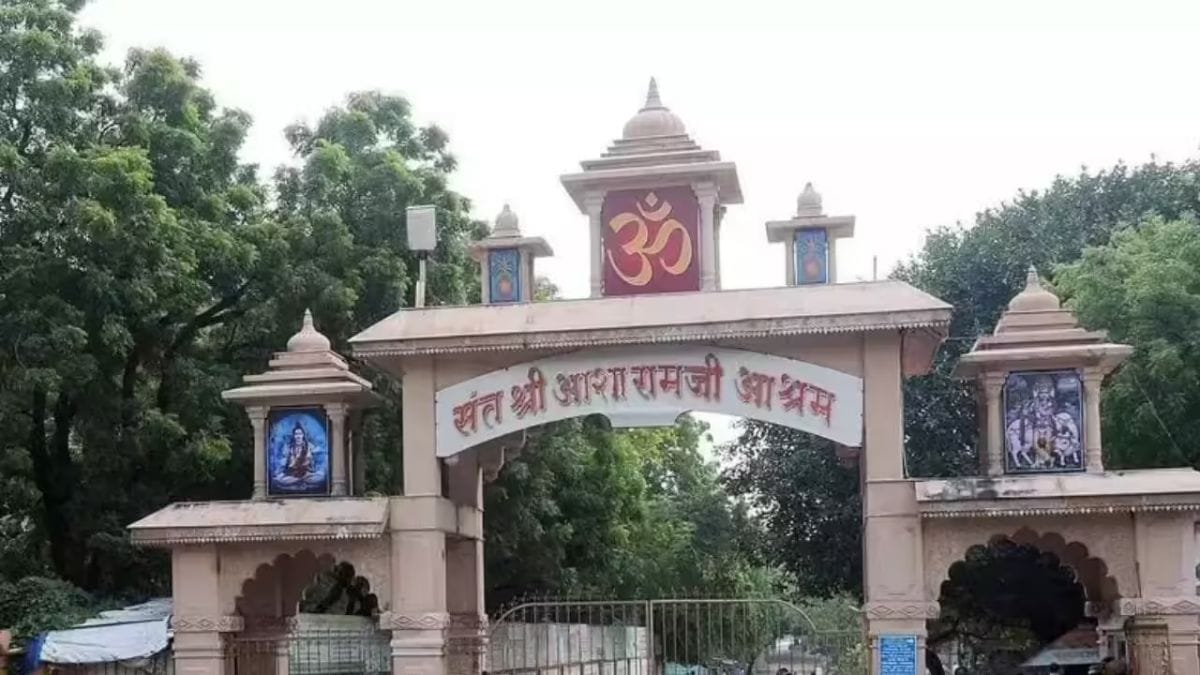
Gujarat HC Clears Way for Govt to Reclaim Asaram Ashram Land Near Narendra Modi Stadium
Ahmedabad | Gujarat — In a significant legal and urban development milestone, a double-judge bench of the Gujarat High Court on Thursday dismissed an appeal filed by Asaram Ashram, paving the way for...

Ahmedabad | Gujarat — In a significant legal and urban development milestone, a double-judge bench of the Gujarat High Court on Thursday dismissed an appeal filed by Asaram Ashram, paving the way for the state government to reclaim more than 45,000 square metres of prime land in Motera, Ahmedabad. The land sits adjacent to the Narendra Modi Stadium and the Sardar Patel Sports Complex, making it strategically crucial for large-scale sporting infrastructure and future global events.
The ruling comes after a prolonged legal battle spanning multiple forums, including revenue authorities and the Gujarat Revenue Tribunal. The division bench’s decision reaffirmed a February verdict by a single judge that had upheld the Ahmedabad District Collector’s proceedings to take back the land over violation of allotment conditions and encroachment.
Decades-Old Allotment Turns Into Encroachment Dispute
Government records reveal that approximately 33,980 sq m of land had originally been allotted to the ashram decades ago for limited religious use under strict conditions. However, authorities later discovered that actual possession had expanded to nearly 50,000 sq m, triggering allegations of large-scale encroachment on public land.
Officials believe reclaiming the land will play a crucial role in long-term planning around the sports hub in Motera, particularly with India eyeing major global sporting events such as the Commonwealth Games 2030 and even the Olympics in the future.
Technology-Driven Evidence Strengthens State’s Case
The case saw a rare blend of traditional land records and modern technology in court. Government authorities presented GPS-based satellite measurements that mapped the expansion of the ashram’s footprint over time with high precision.
Public prosecutor G. H. Virk emphasised that the state’s actions were rooted in transparency and due process. “The action was not taken overnight. It followed notices, inspections and more than 20 hearings. Scientific and technology-driven measurements ensured the findings were based on verifiable data,” he argued.
The state also demonstrated the use of scientific instruments and mapping outputs before the court, stressing that the method provided a tamper-free and holistic assessment of land possession.
Notices, Hearings and Alleged Illegal Constructions
Authorities had issued formal notices to the ashram in 2023. During the hearings, the government pointed out that the ashram itself had submitted applications seeking regularisation of certain constructions — which, according to the state, amounted to an admission that those structures were built without legal permission.
“The state’s position is clear — illegality cannot be denied while simultaneously seeking regularisation,” the government counsel argued.
Court Calls Ashram a ‘Habitual Offender’
Rejecting the appeal, the High Court made strong observations against the petitioner, noting repeated violations of allotment conditions and encroachment on public land. The bench stated that no question of regularising illegal constructions arises and found no judicial grounds to intervene in favour of the ashram.
“Considering the totality of the circumstances, the petitions stand dismissed,” the court concluded.
Major Boost for Future Sports Infrastructure
The verdict is expected to significantly ease development planning around the Motera sports complex — already home to one of the world’s largest cricket stadiums. With land constraints often slowing major infrastructure projects, officials see the ruling as a decisive step toward expanding facilities capable of hosting international mega sporting events.