





How Content Creators and Educators Are Building India’s Hardware Economy with Robocraze
New Delhi [India], February 14: India’s hardware economy is not being shaped in corporate boardrooms or high-rise innovation labs alone. It is being built quietly in classrooms, online learning...

New Delhi [India], February 14: India’s hardware economy is not being shaped in corporate boardrooms or high-rise innovation labs alone. It is being built quietly in classrooms, online learning spaces, creator studios, school laboratories, community workshops, and everyday homes where curiosity meets opportunity.
Across the country, a new generation of educators and content creators is redefining how technology is learned, taught, and experienced, and in the process, they are laying the foundations of a grassroots hardware economy that is deeply human, community-driven, and purpose-led.
For decades, access to advanced hardware, robotics platforms, and AI development tools in India remained largely restricted to elite institutions and well-funded environments.
Talent and ambition were never in short supply, but infrastructure was.
Students wanted to build, educators wanted to teach practically, and creators wanted to democratize knowledge, yet the tools required to make that possible were either inaccessible, unaffordable, or fragmented across unreliable supply chains. This disconnect created a silent barrier between aspiration and execution, between learning and building.
As the creator economy in education began to rise, that gap became impossible to ignore. Teachers started building digital classrooms, engineers began creating online learning communities, YouTubers turned complex electronics into understandable lessons, and mentors began guiding thousands of students beyond physical classrooms. What they all shared was a common challenge: access to reliable hardware ecosystems that could support scalable learning and innovation.
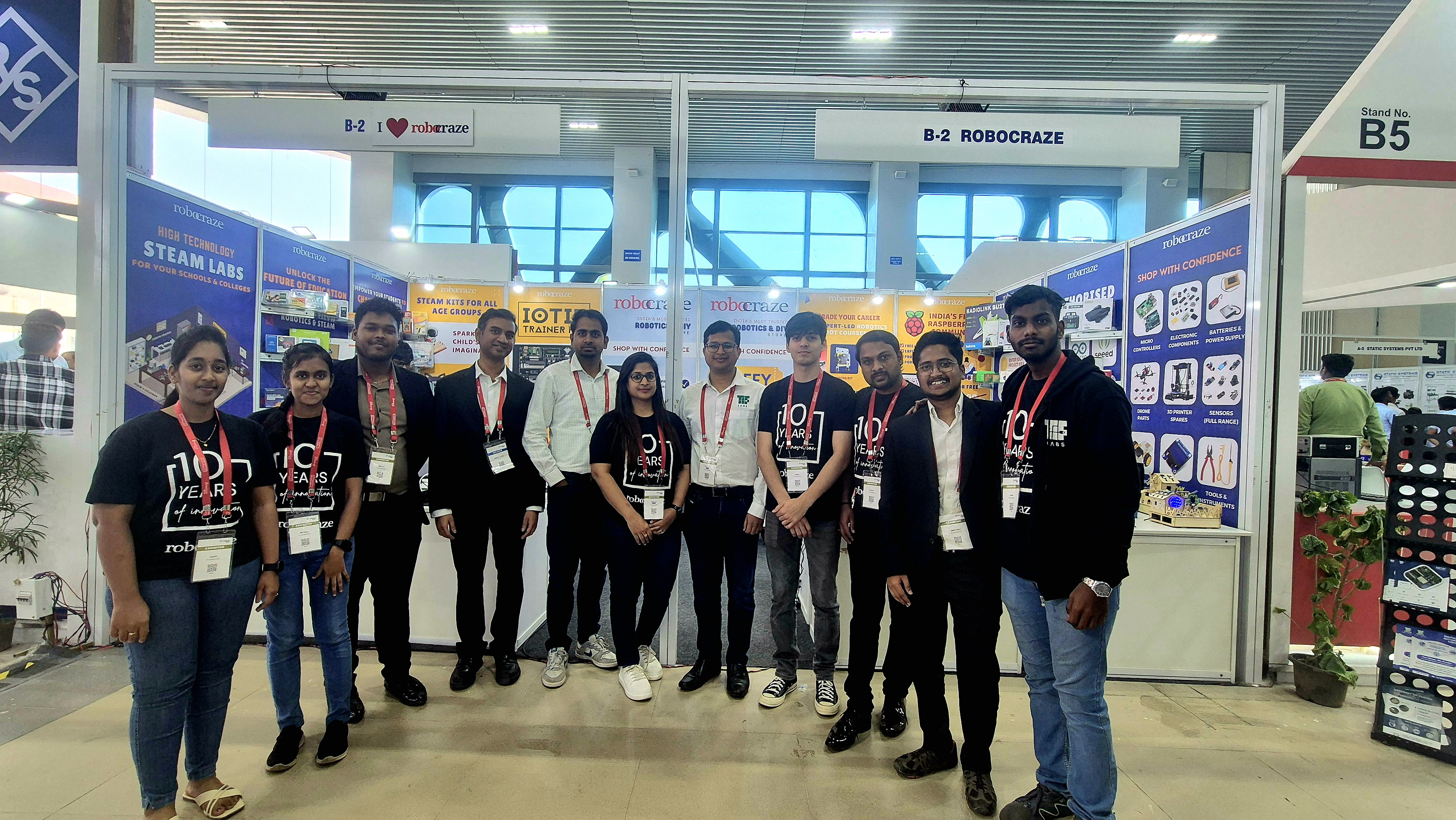
This is where Robocraze quietly began playing a foundational role, not as a conventional marketplace, but as an enabler of an emerging ecosystem.
Over time, Robocraze evolved into a connective layer between creators, educators, students, and the tools they needed to build. By making AI hardware, robotics platforms, Raspberry Pi systems, Arduino boards, STEM learning kits, and DIY electronics accessible, the platform helped remove one of the biggest invisible barriers in India’s innovation journey.
Education was no longer limited by geography, institutional privilege, or infrastructure constraints. Learning began to move freely across digital spaces, homes, communities, and classrooms, allowing innovation to grow organically from the grassroots.
What makes this transformation significant is not the scale of transactions but the scale of participation.
Students who once only consumed technology began to create it. Educators who once taught theory began teaching application. Creators who once shared content began building communities.
Innovators who once waited for opportunities began creating them. In this process, a new kind of economy started forming, one that is not defined by capital alone but by culture, access, and shared knowledge.
Content creators and educators, often unknowingly, became the architects of India’s hardware economy, shaping demand, building skill pipelines, creating learning ecosystems, and normalizing innovation as part of everyday education.
Robocraze’s role in this shift has been subtle but structural. It has not tried to own the narrative of innovation but to enable it, allowing others to build, teach, experiment, and scale. By functioning as a connector rather than a controller, it has helped foster an environment where hardware literacy becomes natural, not intimidating, and where technology becomes something students feel they belong to, not something they feel excluded from.
What is unfolding is not simply the growth of a hardware platform but the emergence of a culture.
A culture where innovation is not confined to institutions, where learning is not restricted to classrooms, and where building is not limited to privileged spaces.
The hardware economy in India is taking shape not as a corporate construct but as a community movement, shaped by educators who teach with purpose, creators who build with intent, and learners who believe they have a place in the world of technology.
In this evolving landscape, the most powerful force is not technology itself, but access. When access becomes widespread, learning becomes inclusive. When learning becomes inclusive, innovation becomes inevitable.
And when innovation becomes inevitable, economies begin to grow from the ground up rather than the top down. This is the quiet transformation taking place across India today, where students, creators, educators, and builders are collectively shaping a future that is not dictated by privilege but driven by possibility.
India’s hardware economy is not arriving as a centralized revolution but emerging as a distributed movement, one creator, one educator, one student, and one builder at a time. In this story, Robocraze does not stand as a hero, but as a bridge, enabling the connections that allow ecosystems to form and futures to be built. The real builders of this economy are not corporations or institutions alone, but the communities that teach, learn, share, and create every single day.