
Typhoid outbreak in Gandhinagar sparks Indore-like health fears
Over 100 children hospitalised, sewage mixed in water pipelines; authorities on alert as positivity rate crosses 50%

Advertisement
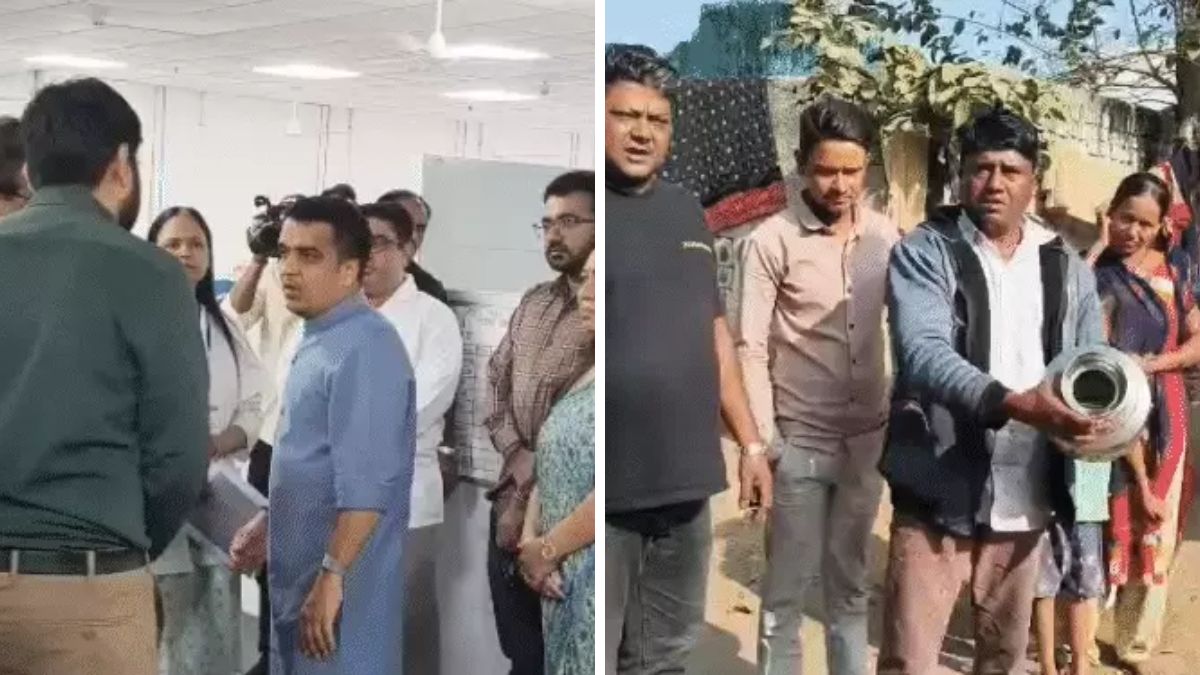
Gandhinagar |Gujarat — The spectre of Indore’s deadly water contamination tragedy, which claimed at least 16 lives, now looms large over Gujarat’s capital as a typhoid outbreak linked to sewage-contaminated drinking water has pushed Gandhinagar into a full-blown public health crisis. With over 100 children admitted to the Civil Hospital and more than 50 percent test results turning positive, alarm bells are ringing across the administration.
The outbreak has been traced to serious lapses in water supply systems in areas such as Sector-24, Sector-28 and Adivada, where sewage water allegedly mixed with drinking water pipelines laid under the Smart City scheme at a cost of crores. Investigations have revealed at least 10 major leakages in water lines, raising grave questions about infrastructure quality and monitoring.
The surge in patients has forced Gandhinagar Civil Hospital to open an additional ward to manage the influx. “Currently, 104 children aged between 1 and 16 years are under treatment, and the positivity rate has increased by 50 percent in just three days,” said Civil Hospital Superintendent Dr. Mitaben Parikh. “Children are coming with high fever, abdominal pain and vomiting. They are being stabilised with IV fluids and antibiotics.”
Dr. Parikh added that water samples collected from affected localities were found unfit for drinking, confirming fears that contaminated supply was the root cause. “Vidal tests and blood culture reports have detected typhoid bacteria. This is clearly a water-borne outbreak,” she said.
The situation has triggered high-level intervention. Deputy Chief Minister Harsh Sanghvi held an emergency meeting with the District Collector, Municipal Commissioner and Health Officer, and later visited the Civil Hospital to review arrangements. Meanwhile, Union Home Minister Amit Shah took serious note of the crisis and held a telephonic discussion with the Collector, directing continuous monitoring and swift corrective action.
According to officials, 104 suspected cases have been reported so far. A special medical task force of 22 doctors has been constituted, while 40 teams comprising over 80 health workers, including ASHA workers, have been deployed for door-to-door surveys. “So far, 10,000 houses covering a population of over 38,000 have been screened,” an official said.
Leakages have been repaired and super-chlorination is underway across affected zones. However, civic groups warn that these measures may be too late. Gandhinagar City Housing Federation President Keshari Singh Bihola said, “Despite promises of 24-hour water supply under the Smart City project, citizens are receiving dirty, unsafe water. Clinics and hospitals are overflowing. This exposes the failure of governance and administration.”
Advertisement
