
To The Maha Kumbh In Mother’s Arms, On Father’s Shoulders
The Maha Kumbh Mela, spanning from January 13 to February 26, 2025, is anticipated to draw over 400 million devotees, making it the largest human gathering on the planet.

Advertisement
By Gajanan Khergamker
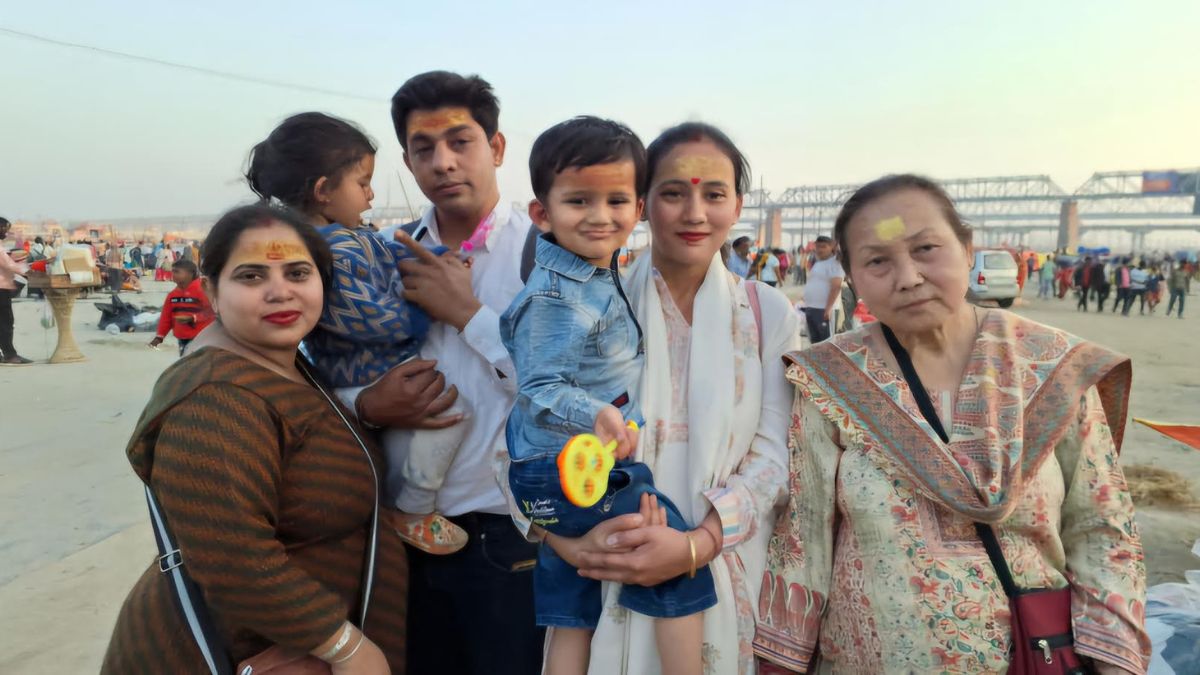
In the early hours of January 13, 2025, as the first light of dawn caressed the confluence of the Ganga, Yamuna, and the mythical Saraswati rivers in Prayagraj, a remarkable scene unfolded. Amidst the throngs of pilgrims gathered for the inaugural Paush Purnima Snan of the Maha Kumbh Mela, young mothers cradled their infants, introducing them to the sacred rituals of Hinduism from the very outset of their lives.
The Maha Kumbh Mela, spanning from January 13 to February 26, 2025, is anticipated to draw over 400 million devotees, making it the largest human gathering on the planet. For many parents, especially young mothers, bringing their children—even newborns—to this grand event is a profound act of faith and tradition.
Sonam, a 20-year-old from Kaushambi, exemplifies this devotion. On December 29, 2024, she gave birth to a boy at the Central Hospital within the Maha Kumbh area. Embracing the sanctity of the occasion, her family named the child “Kumbh.” “Bringing my son into this world during the Kumbh Mela is a blessing. I believe he will be protected and blessed by the divine,” Sonam shared, her eyes reflecting both exhaustion and joy.
However, the decision to bring young children to such a massive gathering is not without its challenges. Concerns about safety, health, and the possibility of getting lost in the vast crowds weigh heavily on parents’ minds. The tragic stampede on January 29, 2025, which resulted in over 30 fatalities, has heightened these anxieties.
To mitigate these risks, authorities have implemented stringent measures. Thousands of police officers have been deployed, and AI-equipped surveillance cameras monitor the grounds to ensure the safety of all attendees. Additionally, healthcare professionals advise parents to ensure their children are vaccinated against common communicable diseases before attending the Mela.
Despite these precautions, some family members express reservations. Anita Devi, a grandmother from Varanasi, voiced her concerns: “I was worried when my daughter-in-law decided to bring my newborn grandson here. The crowds are overwhelming, and it’s easy to get separated. But she insisted, believing it’s essential for his spiritual upbringing.”
In response to such concerns, many parents have adopted simple yet effective methods to keep their children safe. Some write their contact information on their children’s arms, while others dress them in distinctive clothing to make them easily identifiable.
The presence of infants and toddlers at the Maha Kumbh Mela underscores a deep-rooted belief in the importance of early spiritual initiation. For these families, the act of bringing their youngest members to the sacred Sangam is not merely a ritual but a rite of passage, embedding the values and traditions of Hinduism from the very beginning of life.
Amidst the ceaseless tide of humanity surging through the Kumbh Mela, another poignant sight emerges—fathers lifting their children high onto their shoulders, navigating the maddening crowds of devotees with a blend of protectiveness and pride.
For many, this is more than a practical necessity; it is a symbolic act of introducing the next generation to faith while shielding them from the chaos below. “This is his first Kumbh, and I want him to witness the grandeur of our traditions,” says Rajesh Mishra, a father from Kanpur, adjusting his four-year-old son’s tiny hands around his head for balance.
“Holding him up like this ensures he sees the sadhus, the rituals, and the holy Sangam, rather than just a sea of legs.” The father-child silhouette, framed against the backdrop of saffron-clad ascetics and billowing incense, captures the timeless transmission of devotion—one generation quite literally carrying the next into the heart of India’s spiritual ethos.
As the sun sets over Prayagraj, casting a golden hue over the sprawling Mela grounds, the sight of young mothers gently dipping their babies into the holy waters serves as a poignant reminder of the enduring power of faith and the timeless cycle of tradition that continues to flow, much like the rivers themselves.
(This news report was first published in The Draft here – https://tinyurl.com/4rfy864j)
Advertisement
