
Soaring Gold, Silver Prices Trigger Mass Exodus of Jewellery Artisans from Surat
With handmade jewellery orders collapsing, thousands of Bengali and Bihari craftsmen are leaving the diamond city, seeking survival back home

Advertisement
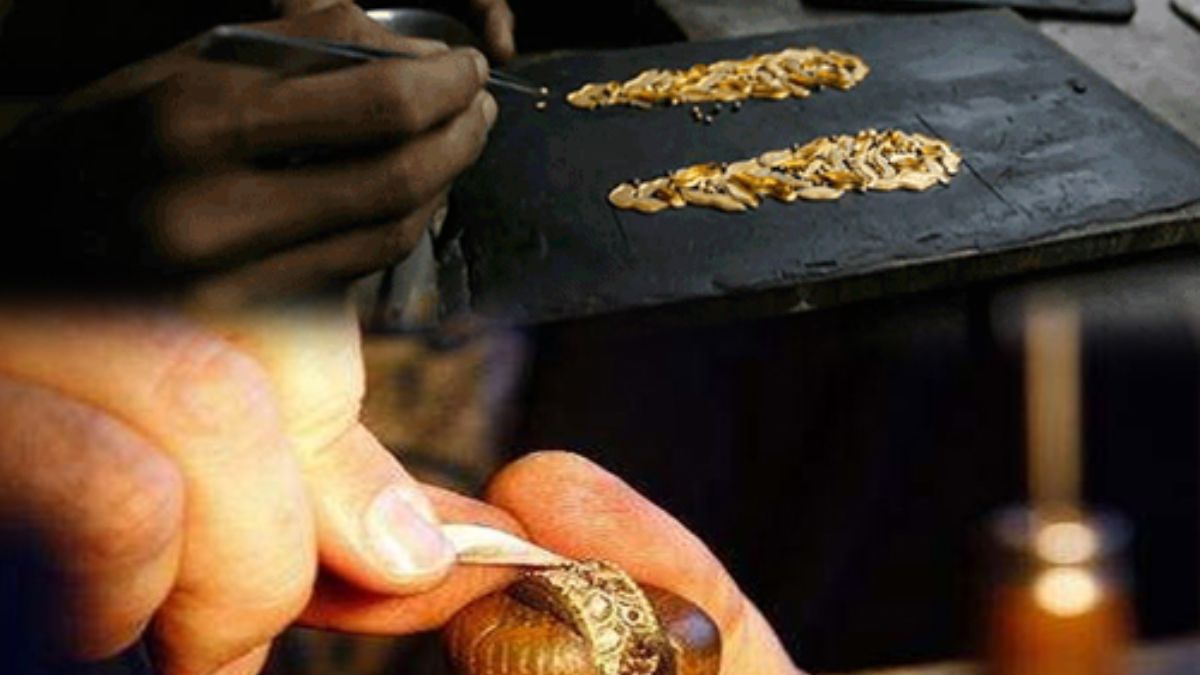
Surat | Gujarat —–Surat, known globally as the diamond city, is witnessing a silent human crisis unfold on its streets and in its cramped artisan neighbourhoods. Thousands of Bengali jewellery craftsmen, who for decades formed the backbone of the city’s handmade gold and silver jewellery industry, have begun a mass exodus ahead of the assembly elections in West Bengal and the runaway bullion prices choke demand and wipe out livelihoods.
Sources said that the Bengali artisans are also facing an identity crisis as many believe that they are infiltrators from Bangladesh. This could be another reason why the artisans are leaving Surat in huge numbers.
Gold and silver prices have surged beyond imagination. Twenty-four carat gold has touched ₹1,41,593 earlier and is currently hovering around ₹1,32,317 per 10 grams, while silver has crossed the historic ₹3 lakh per kg mark for the first time on the MCX. In just one month, silver has jumped from ₹2 lakh to ₹3 lakh, a rise that previously took years. The impact on traditional jewellery manufacturing has been devastating.
“Handmade jewellery has simply become unaffordable for the middle class,” said Bharatbhai Soni (Lathiwala), Executive Chairman of the Indian Soni Samaj. “As gold and silver prices go beyond people’s purchasing power, jewellers are shifting to cheap, machine-made jewellery. Traditional artisans are left with no work.”
According to industry estimates, nearly three lakh Bengali and Bihari artisans work across Gujarat, with about one lakh based in Surat alone. Of these, nearly 70 per cent have already left the city over the past eight months due to lack of work. “Only about 25 per cent of traditional jewellery artisans are left in Surat today,” Soni said, warning of an irreversible loss of heritage skills.
Many of these artisans have lived in Surat since the 1980s, crafting gold, silver and platinum jewellery by hand. Areas like Balaji Road, Rampura and Haripura, once bustling with workshops, are now falling silent. “They couldn’t even manage rent, food, electricity and gas expenses,” Soni explained. “Those whose children study in Surat schools are somehow staying back. The rest have returned to West Bengal and Bihar.”
The situation has worsened despite the ongoing wedding season. Orders for handmade jewellery have dropped by nearly 90 per cent, industry leaders say. “Only wealthy families are now opting for traditional jewellery, as it is labour-intensive and expensive,” said Soni, who is also National Executive President of the Indian Goldsmith Society. “Ready-made jewellery sales have increased sharply, but that doesn’t support traditional craftsmen.”
Small jewellers are also bearing the brunt. Shops in Surat, Rajkot and Ahmedabad have reportedly shut down, as traders wait for prices to cool before resuming business. “For the last six months, there has been hardly any work,” a Surat-based jeweller said.
Alarmed by the crisis, the Indian Goldsmith Society has decided to approach the government. “We will submit a proposal through the Chamber of Commerce and demand a relief package in the Union Budget,” Soni said. “The Finance Minister must protect handmade jewellery artisans and preserve India’s goldsmith craftsmanship in the global market.”
Advertisement
