




SGCCI Pushes MMF Textile Strategy at National Export Summit in Delhi
SURAT : Surat has once again positioned itself at the heart of India’s textile transformation, as Southern Gujarat Chamber of Commerce and Industry (SGCCI) President Ashok Jirawala presented a...

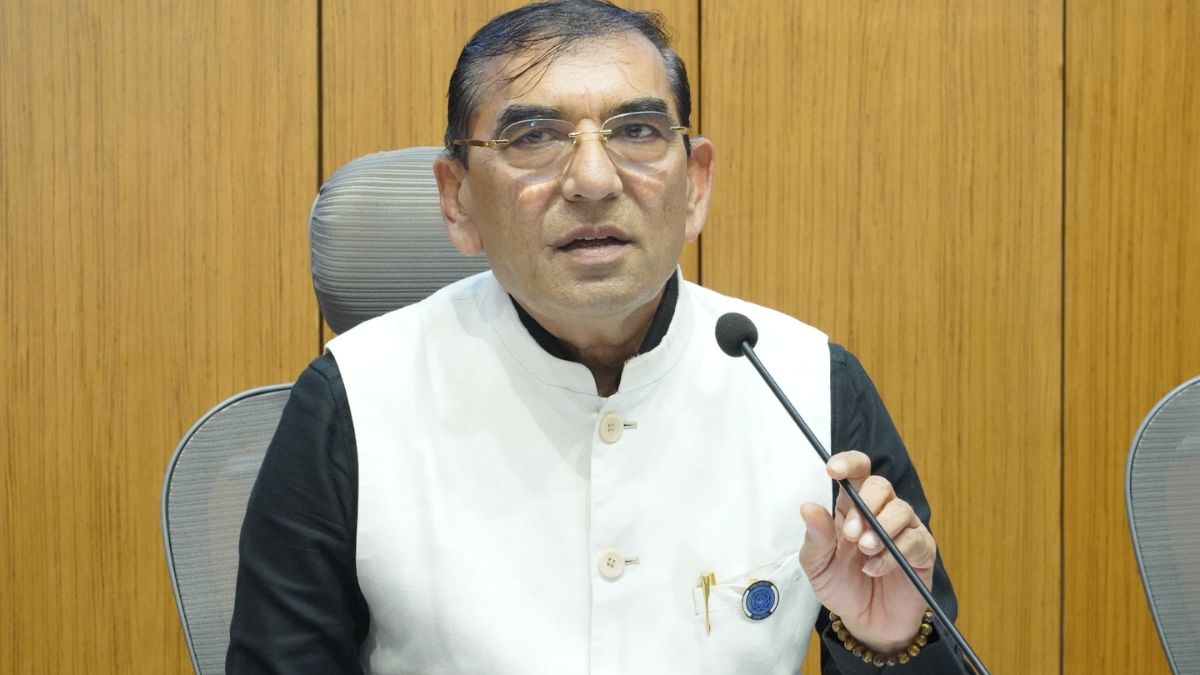
SURAT : Surat has once again positioned itself at the heart of India’s textile transformation, as Southern Gujarat Chamber of Commerce and Industry (SGCCI) President Ashok Jirawala presented a powerful roadmap for accelerating Man-Made Fiber (MMF) based textile exports at the National Textile Consultative Summit held in New Delhi.
The two-day summit, organised by the Ministry of Textiles on June 23–24, 2026 at the NASC Complex, ICAR, brought together exporters, policymakers, academia and industry leaders from across the country to shape India’s ambitious target of achieving USD 100 billion in textile and apparel exports by 2030.
Addressing the forum, Jirawala emphasized that India must urgently pivot towards MMF textiles to compete in global markets. “While MMF accounts for nearly 70 percent of global fibre consumption, India continues to remain heavily dependent on natural fibres. This imbalance must be corrected if we want to scale exports rapidly,” he said.
He proposed a series of strategic interventions aimed at strengthening India’s MMF ecosystem. One of the key recommendations was the establishment of a National MMF Fabric Data Bank and Library in Surat, which would serve as a central repository for fabric types, construction methods, applications and global market intelligence.
“Surat is the only city in India where the complete MMF value chain exists—from fibre to finished garments. It is natural that such a knowledge hub should be built here,” Jirawala added.
Other major suggestions included developing national standards for recycled polyester and MMF fibres, and setting up a chemical recycling plant for post-consumer polyester garments in Surat, with SGCCI expressing readiness to participate in the initiative.
He also called for an AI-based fashion forecasting system for MSMEs and SMEs, enabling smaller manufacturers to align with global fashion trends, along with HSN-wise intelligence reports on MMF demand in countries under India’s free trade agreements.
A national ranking framework for MMF manufacturers based on global best practices and a mission-mode export promotion strategy were also proposed to enhance competitiveness.
According to Jirawala, implementing these measures could significantly transform Surat’s role in India’s export economy. “With the right policy push, Surat alone can contribute an additional USD 10 to 15 billion in textile and apparel exports annually, accelerating India’s journey toward its 2030 target,” he said.
The SGCCI President also appreciated the Ministry of Textiles for creating an inclusive platform for industry consultation, noting that such collaborative policymaking is essential for long-term sectoral growth.
Industry experts at the summit acknowledged Surat’s dominance in MMF production and agreed that integrating technology, recycling innovation and data-driven planning could redefine India’s global textile competitiveness.