

No Elopements, No DJs: Gujarat’s Thakor Community Enforces Strict ‘Social Constitution’ for 2026
From limiting wedding guests to 100 to banning sunroof cars, the new Thakor community rules aim to divert wealth from rituals to education.

Advertisement
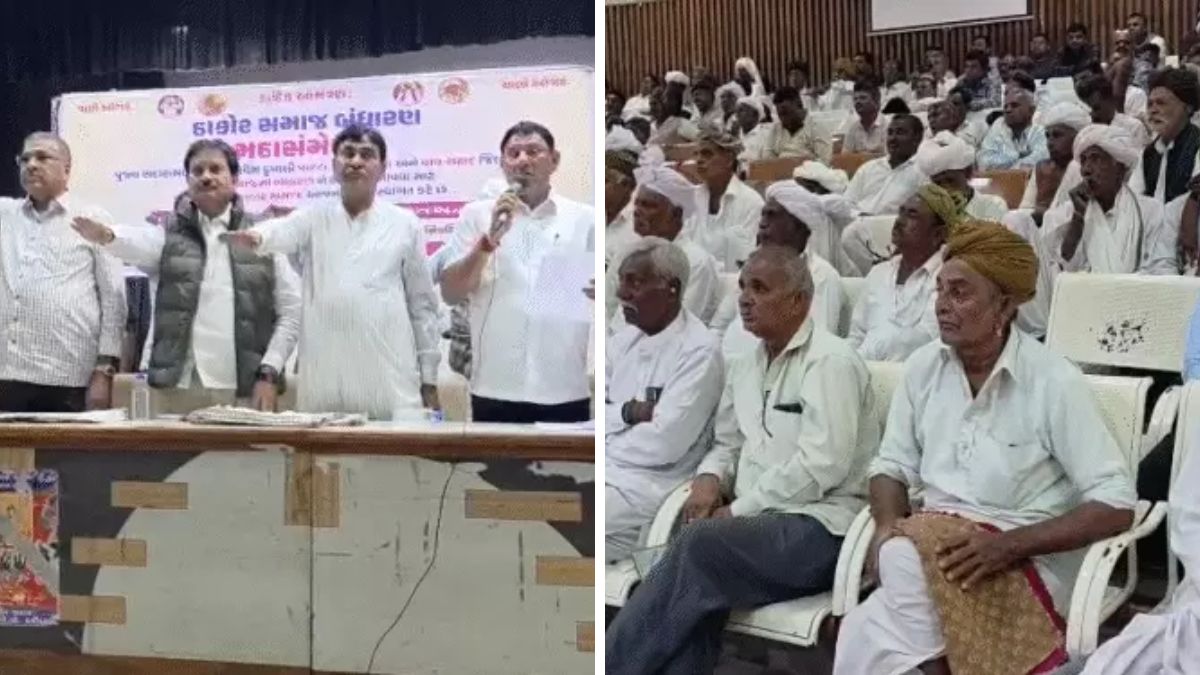
Patan | Gujarat — In a decisive move to rein in extravagant social practices and bring uniformity across customs, the Thakor Samaj in Gujarat has adopted its own “social constitution,” laying down strict rules governing weddings, engagements, funerals, and social conduct. The landmark decision, taken at the Bandharan Mahasammelan in Patan, signals a sweeping reform agenda aimed at reducing financial burdens on families and redirecting resources towards education and social upliftment.
The convention, held ahead of the grand Thakor Samaj Mahasammelan scheduled at Ogad in Banaskantha on January 4, witnessed the formal reading of the new constitution and an oath-taking ceremony by community leaders. Among those present was Banaskantha Congress MP Geniben Thakor, who played a key role in articulating the vision behind the reforms.
Key Decisions and New Rules
The newly adopted constitution introduces 16 binding rules designed to eliminate what the community describes as “outdated and burdensome customs.” Most notably, the Thakor Samaj has decided that friendship pacts and elopement love marriages will not be recognised by the society.
Other major provisions include strict caps on wedding-related gatherings and expenses. Engagement ceremonies will now be limited to just 21 attendees, with gifts restricted to one rupee, a coconut and a pair of clothes. Weddings can only be conducted during two months of the year—Maha and Vaishakh (Sud 1 to 15)—and attendance must not exceed 100 people, including children above 10 years of age.
The constitution also enforces a complete ban on DJ systems, sunroof cars and long vehicle processions during weddings. Only two drums and traditional sharnais will be permitted. Several rituals such as writing marriage papers, dhundh, haldi rasam and odhmana have been abolished. Dinner menus have been curtailed to limit excess, allowing only one sweet dish.
In a significant shift, jewellery in mamera has been replaced with cash gifts ranging from ₹11,000 to ₹1.51 lakh. For funerals, the food menu has been limited to simple khichdi-kadhi, and intoxicants have been banned at all social events. Birthday celebrations are also discouraged, with families urged to donate funds instead to educational institutions or libraries.
Vision Behind the Reform
Addressing the gathering, MP Geniben Thakor said the constitution would be implemented across 27 talukas of Banaskantha, Patan, Vav and Tharad districts. “As times change, it is necessary to reform customs and traditions. Earlier, marriages were simple and expenses were low. Today, social pressure and display have increased. These limits will bring equality and harmony,” she said.
She emphasised that savings from simplified ceremonies should be channelled into education. “Education is the only solution to eradicate social evils and addictions. When society becomes economically strong and educated, it becomes self-reliant,” Thakor said, adding that leaders from all political affiliations within the community were united behind the initiative.
Implementation and Scale
Coordination committees will be formed at the village and taluka levels to ensure compliance. The formal rollout will take place at the Ogad Mahasammelan on January 4, where an estimated 40,000 to 50,000 people, including saints, intellectuals and community leaders, are expected to participate.
With the slogan “One Society, One Customs,” the Thakor Samaj’s social constitution marks a bold attempt to redefine community life through discipline, equality and a renewed focus on education.
Advertisement
