
Morbi’s Ceramic Pride Fades as Policy Bottlenecks Force Factories to Shut
Sky-high construction jantri and policy mismatch push Gujarat’s globally renowned ceramic hub into deep distress

Advertisement
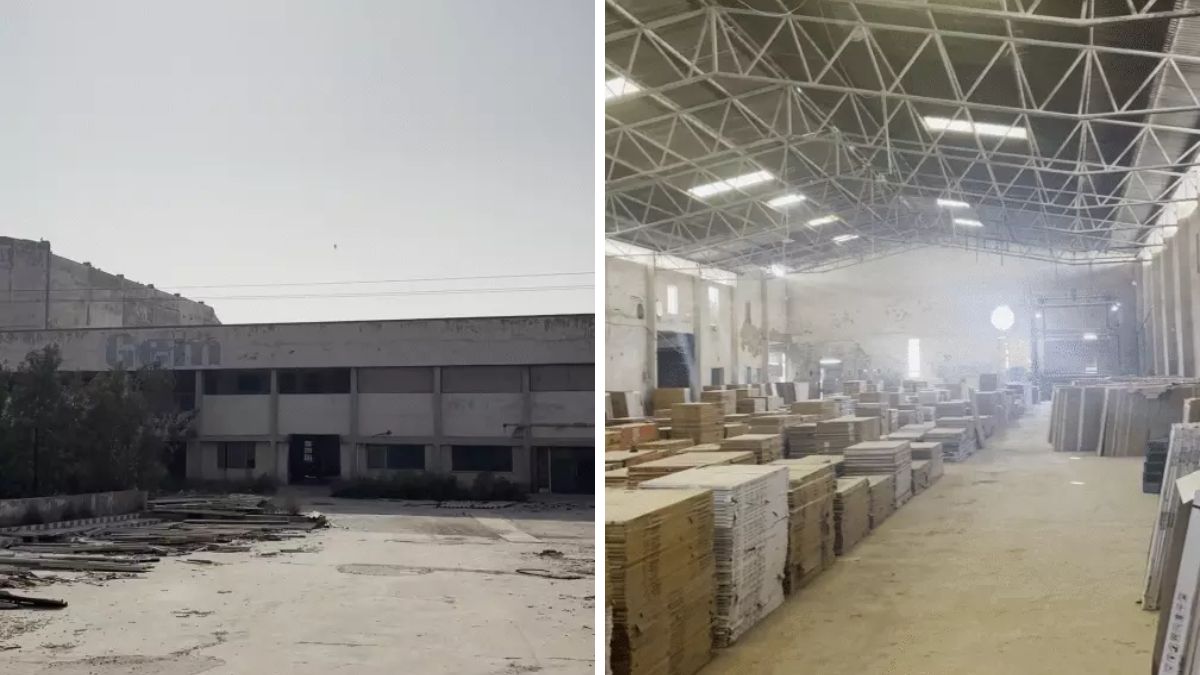
Morbi | Gujarat — Once known across the globe for its tiles and clocks, Morbi — the city that put India’s ceramic industry on the world map — is today battling a grim reality. A deadly mix of international competition, overproduction, and what industry leaders call deeply flawed government regulations has pushed the ceramic hub of Gujarat into one of its worst crises in decades. More than 200 ceramic factories in Morbi are currently shut, their machines rusting, sheds crumbling, and dreams of revival fading fast.
While competition from countries like China has squeezed margins, the bigger chokehold, say industrialists, is the construction jantri — the government’s valuation of industrial structures. The numbers are staggering. An industrial shed that costs around ₹3,500 per square metre to build attracts a government construction fee of nearly ₹12,300 per square metre — four to five times the actual cost.
In practical terms, a factory shed built for ₹5 crore ends up being valued at ₹18–22 crore on paper. “How can anyone buy or sell under these conditions?” asked the owner of a closed factory, who has been trying unsuccessfully to sell his unit for over two years. “If I could sell it, I could start another business. But no one is ready to touch it.”
A visit to several closed factories reveals a haunting sight — dusty machinery, piles of unsold tiles, and sheds repurposed as godowns or left abandoned. Nearly 2,000 bighas of premium industrial land, estimated to be worth ₹1,000 crore, now lies idle.
Veteran industrialist Mukesh Udhareja, who has been in the ceramic business since 1994 and once headed the Ceramic Association, calls the jantri issue “the biggest roadblock.”
“This jantri doesn’t hurt while building a factory. It destroys you when you try to sell it,” he said. “A unit worth ₹5 crore in the market becomes ₹20 crore on paper. No buyer will pay that.”
He also pointed out the irrational depreciation rules.“As per jantri norms, construction depreciates at just 1.2% per year and becomes zero only after 85 years. But as per Income Tax rules, depreciation is 10% annually. In reality, a ceramic shed has little value after 10 years,” Udhareja added.
Sukhdevbhai Patel, owner of Max Granite Pvt Ltd, echoed similar concerns.“Because of this technical flaw, factory loans and cash credit accounts are not getting settled. About 200 factories are shut, and banks are stuck too,” he said.
Ceramic Association President Hareshbhai Bapolia confirmed the scale of the crisis.“We have repeatedly taken this issue to the state government. More than 200 ceramic factories are closed, and thousands of crores worth of land and infrastructure are going waste.”
Advertisement
