







IIT-Gandhinagar Study Decodes Mustard Genes to Boost India’s Edible Oil Self-Reliance
GANDHINAGAR : A tiny molecular “refusal” inside a mustard flower could hold a major clue to reducing India’s dependence on imported edible oil. Researchers from the Indian Institute of Technology...

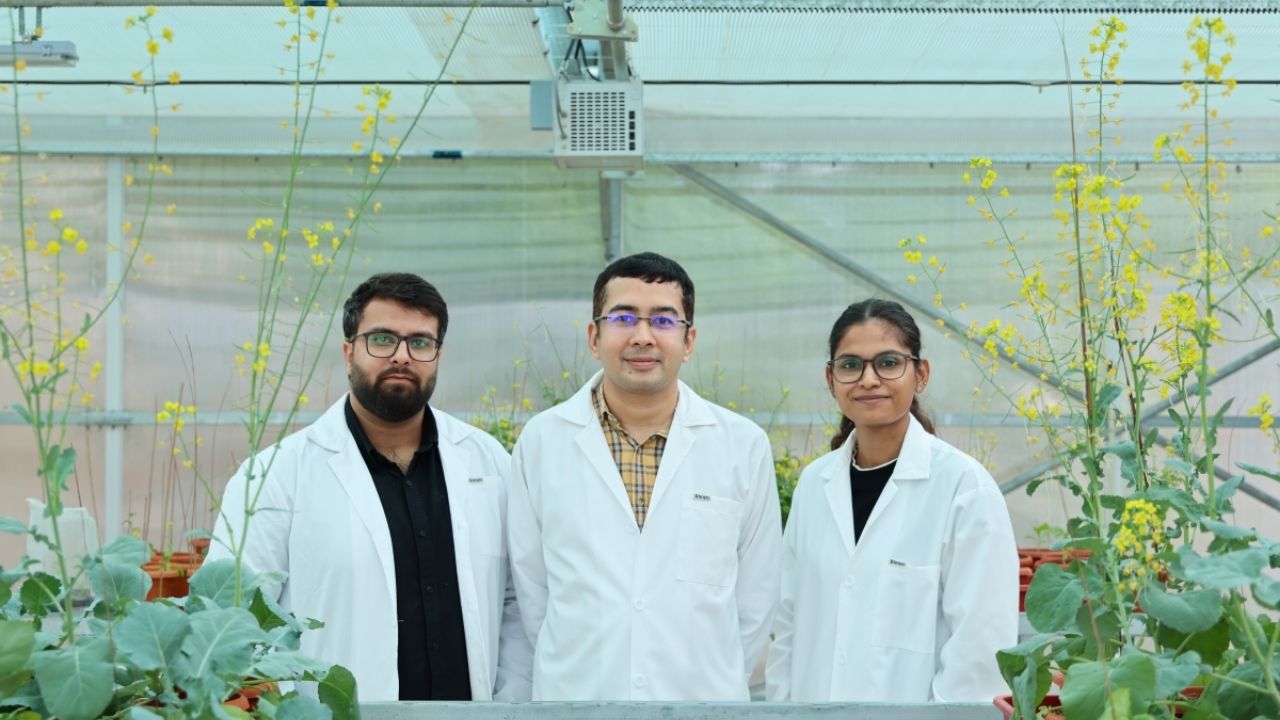
GANDHINAGAR : A tiny molecular “refusal” inside a mustard flower could hold a major clue to reducing India’s dependence on imported edible oil. Researchers from the Indian Institute of Technology Gandhinagar (IITGN) and ICAR-Directorate of Rapeseed-Mustard Research (ICAR-DRMR), Bharatpur, have mapped genes that control whether Indian mustard plants accept or reject their own pollen.
The study examined two commercially important Brassica rapa varieties—toria and yellow sarson—and identified four major genes involved in the plant’s self-incompatibility mechanism. The findings could help breeders develop high-yielding hybrid mustard varieties with improved productivity and resilience.
India imported more than half of its edible oil requirements in 2023-24, making higher domestic oilseed production an important agricultural priority.
The research, published in Frontiers in Plant Science, found that toria rejects its own pollen, while yellow sarson accepts it. Researchers studied pollen attachment, pollen-tube growth and seed development before investigating the molecular mechanism behind the contrasting behaviour.
“To maximise crop yields through hybridisation, we need precise control over pollination, which is aided by self-rejection,” said Dr Subramanian Sankaranarayanan, corresponding author and Assistant Professor at IITGN.
The team characterised four genes—SRK, FER1, MLPK and ARC1—using molecular biology, genetic sequencing and computational analysis. Protein structures were also modelled using AlphaFold3, an AI-based protein structure prediction tool.
Researchers then temporarily silenced individual genes to test their functions. When SRK, FER1 or ARC1 were switched off, toria’s ability to reject its own pollen collapsed, allowing pollen tubes to grow. Silencing MLPK produced only a partial weakening of the rejection response.
“Traditionally, this gene is considered vital to the self-rejection pathway in related mustard species,” said Hemal Bhalla, co-first author. “But, in toria, switching off MLPK only partially weakened the rejection response.”
The study also identified a second defence involving reactive oxygen species (ROS), which can prevent incompatible pollen from germinating. The findings suggest that different genes operate through distinct but connected pathways to prevent unwanted self-pollination.
The researchers said the work provides a molecular foundation for future hybrid-breeding programmes. Cross-tests between toria and yellow sarson also produced seeds with near-complete germination.
“Our findings provide a clear molecular blueprint of how pollination is governed in India’s oilseed varieties,” said co-first author Kumari Ankita. “Foundational genetics like this creates an execution pipeline for developing hybrids” with traits such as higher oil content, disease resistance and weather resilience.
The researchers emphasised that permanent gene editing and transgenic validation remain future steps. The work could nevertheless strengthen efforts to develop climate-resilient oilseeds and support India’s broader push towards edible-oil self-reliance.