
Gujarat Officer Masters 373 Indian Turban Styles, Revives Dying Art Across India
Gujarat cultural officer Dharamrajsinh Vaghela preserves India’s turban heritage by mastering 373 styles, training youth, and planning a museum showcase.

Advertisement
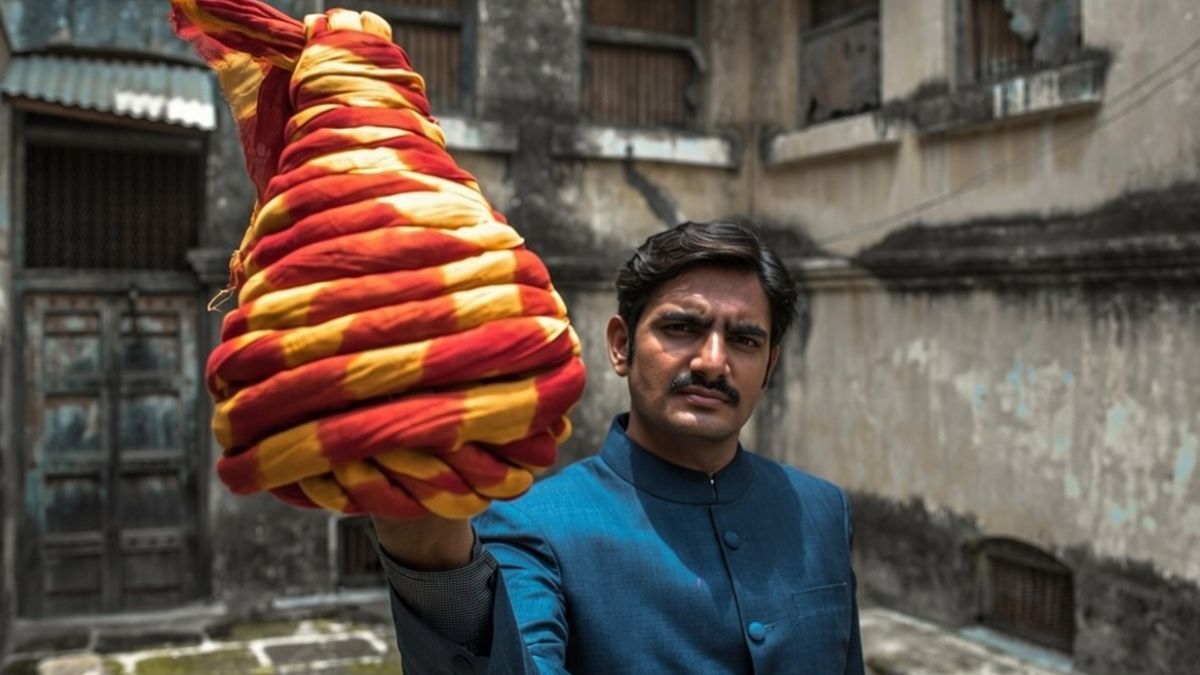
Ahmedabad | Gujarat — Dharamrajsinh Vaghela, who is employed as a district youth development officer in the Sports, Youth and Cultural Affairs Department of the state government has mastered a unique art. Vaghela can tie about 373 different types of turbans according to the tradition prevailing from ancient times to modern times. To keep this art alive, this officer, who chose to go to the Cultural Department instead of the Police Sub Inspector, has learned this art by traveling to various provinces of the country.
Vaghela has been fond of tying turbans since childhood. When he was five years old, he tied a safo for Raghuveersinh Vaghela of the royal family of his hometown Gangadh during the Naivedha ceremony. After that, when he gathered for auspicious and inauspicious family occasions, he was amazed to see different types of turbans tied on the heads of relatives from different provinces and regions and became curious to learn how to tie this turban.
He studied his graduation in Rajkot. During that time, he was associated with NCC. He participated in many national level camps like RDC. Apart from this, he was also a hockey and shooting player. Therefore, in this pursuit, he had to travel to many states. In every state he went to, he learned the art of turban tying, and in every province and region he went to, he met local experts and learned this art.
In addition to Maharashtra, Madhya Pradesh, Delhi, Uttar Pradesh, Bihar, Punjab, he has visited Rajasthan many times. Thus, he collected information about turbans made in the country and abroad and learned to tie 373 types of turbans. He knows this number. There are even more types of turbans than that.
His art is more interesting. In almost all regions, religions, and castes, turbans are considered a symbol of honor. In ancient times, the turban of a defeated king or warrior was taken after a war. It was considered a disgrace.
In ancient times, turbans were known as Ushnish. During peace, turbans were worn and turbans were worn in war. The making of turbans was more or less the same. But the turban, that is, what we now call turbans, varied according to the occasion, caste, and province. For example, the practice of tying a turban has come to us from the region of Gandhara (now the original turban of the Pathans of Afghanistan).
If we look at the basic types of headgear, apart from the turban tied with a turban, the turban tied with a turban, the turban and the turban are made of two simple fabrics. A ‘mabho’ is kept in the turban. Apart from this, a chhogu and a fung are also kept. The upper part of the turban is called a chhogu, the turban on the side is called a turban, the turban on the back is called a mabho, and the one below is called a fung.
In modern times, the credit for cataloguing turbans goes to the royal Fatesinh Gaekwad of Vadodara and Mahendrasinh Nagar of Jodhpur. They have collected turbans of different provinces and castes. After that, some artists from Madhya Pradesh, Rajasthan, and Uttar Pradesh know how to tie turbans, but only Vaghela knows the art of tying the most 373 types of turbans in the entire country.
The poet Pingalsinh Gadhvi has mentioned fifty types of turbans. However, his note is limited to the turbans tied in Kutch-Kathiawad. There is a couplet from the story of Veer Mandwawala, a famous character in Gujarati history. Fifty turbans, but not a single turban, but this horse and this horse, I will not ask for a spear! This indicates the practice of changing the style of tying turbans on inauspicious occasions. When a brave martyr (comes to work) in war – Dhingala, other people fighting with him used to leave the ends of the turban.
At one time, turbans in Gujarat were synonymous with the identity of a region or caste. For example, turbans were known by such names as Babashahi of Vadodara, Surti, Ahmedabadi, Pattani, Jhalawadi, Bhavnagari, Halari, Junagadhi, Morbishahi. Castes also wore different types of turbans.
For example, shepherds used to wear turbans called Bhojpuru. In which the style of tying the turban of the younger brother or the elder brother of the shepherd was different! Rabaris used to keep the ends of the turban tied. In addition to the Kshatriya tradition, Bhatias, Nagars, Patels, Dalits used to tie different types of turbans. All these things have been documented by Shri Pingalshi Gadhvi, Shri Zorawarsinh Jadhav.
Maratha, Shindeshahi turbans like those worn by Shivaji Maharaj are seen in pictures. In the provinces of Maharashtra and Madhya Pradesh, there was a profession of tying turbans. It was called Padgband. In Gujarat, this profession was known as Paghadal. When a king of Gujarat had to go to meet him, he had to wear a turban similar to that of his state.
Vaghela says, generally any Gujarati, Rajasthani Arwachin turban is tied with a full-length cloth of 9 to 13 meters. Out of these 373 types, the most difficult style is the artistic Kathiawadi turban. Earlier, Gulkhar or Dhaka muslin cloth was used to tie turbans. Many people in Gujarat used to tie turbans themselves. But now this practice is slowly being forgotten. My eight-year-old son Dhruvraj Singh has learned how to tie a safo. To keep these turbans alive, there are plans to put 373 types in the museum of the Prag Mahal Museum in Kutch.
He says he has offered the largest turban to Lord Shri Somnath. To cover the Shivlinga with a radius of 7 meters, about 200 meters of cloth were urgently printed and later used to tie the turban.
Vaghela is trying to keep the art of turban tying alive by doing a job according to his hobby. So far, he has held 16 exhibitions at different places to spread the knowledge and publicity of this art. He has also held 23 training camps for the youth who want to learn this art. In which many youths have been taught how to tie a safa turban. He has been teaching youths how to tie safa since he was 15 years old. Around 40 youths who learned from him are now tying safa on a professional basis. He has bought cloth for tying safa to some youths who are financially weak.
Advertisement
