
Fuel Supply Disruption Hits Gujarat as Global War Impact Reaches Local Petrol Pumps
Iran war impact disrupts crude supply chain in Gujarat; dealers deny shortage despite closures and panic queues

Advertisement
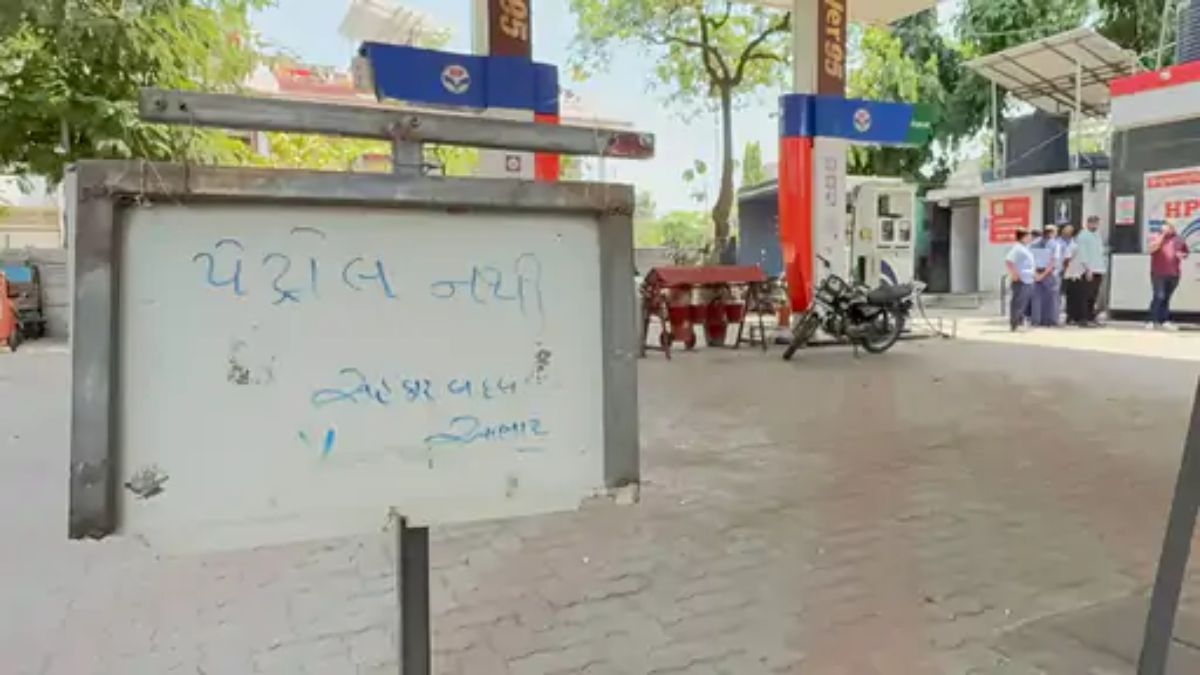
Ahmedabad | Gujarat — The ripple effects of the escalating tensions involving Iran, United States and Israel are now being felt far beyond global borders, as fuel supply disruptions begin to hit ground reality in Gujarat. In key cities like Surat and Rajkot, petrol pump dealers are grappling with a sudden 50% cut in supply, forcing several outlets to temporarily shut operations.
While oil dealers maintain that there is “no shortage” of petrol and diesel, the situation on the ground paints a more concerning picture. At least five petrol pumps in Surat have reportedly been closed due to supply disruptions, leaving motorists confused and anxious.
Drivers have already begun voicing fears of a worsening crisis. Kapil, a local driver, said, “When I reached the petrol pump, it was closed. If petrol is not available, the entire economy will stop. A lockdown-like situation can arise.” His concern reflects a growing unease among the public, even as retail fuel availability remains largely unaffected for now.
Another commuter, Kishorbhai Prajapati, shared his ordeal while travelling between cities. “I came from Vadodara to Ahmedabad and needed to return, but the petrol pump was closed. If petrol is not available, it creates serious problems for travel,” he said.
Petrol pump operators, however, attribute the disruption to logistical and operational issues rather than an actual shortage. Sanjay Dantani, a pump manager, explained, “The fuel tanker has not arrived for three days. Supply depends on advance payment, and due to holidays, deliveries were delayed. Once the tanker arrives, operations will resume.”
Scenes of panic buying have also emerged. In Ahmedabad’s Danapith area, long queues of vehicles were seen lining up at a Bharat Petroleum outlet as soon as a fuel tanker arrived, highlighting public anxiety over possible scarcity.
Industry representatives continue to downplay the crisis. Dhimant Ghelani, secretary of the Federation of Gujarat Petrol-Diesel Dealers Association, stated that only a handful of pumps linked to Indian Oil Corporation are temporarily shut. “There is no shortage of petrol and diesel. The disruption is due to a two-day holiday and supply chain adjustments. The situation will normalize within a week,” he assured.
However, structural changes in fuel distribution are adding pressure. Dealers say supply has dropped from three tankers a day to just one or one-and-a-half, while industrial buyers—once sourcing directly from companies—are now turning to retail pumps after price hikes of ₹12–₹22. This shift has increased demand at petrol stations, tightening availability.
Anil Desai of the Surat and Tapi District Petroleum Association pointed out another challenge: “Bulk supply to industries has been stopped. The same fuel is now distributed in smaller quantities, which is impacting both industries and retail supply.”
Though officials insist the disruption is temporary, the visible strain on supply chains and rising public concern suggest that Gujarat could be on the edge of a larger fuel crisis if global tensions persist.
Advertisement
