





Flooded: Surat Airport’s New Taxi Track Fails First Monsoon Test
SURAT : A runway expansion built to improve air connectivity has itself become a hurdle. Within weeks of its inauguration, Surat International Airport’s newly commissioned Phase-II Parallel Taxi...

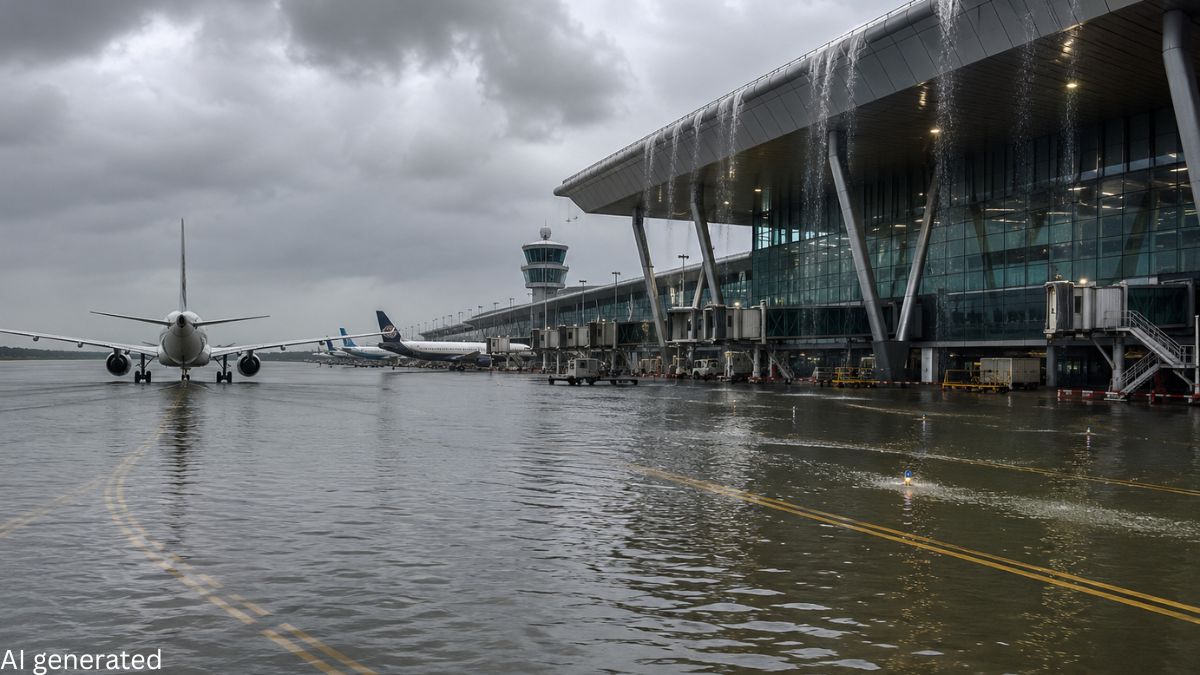
SURAT : A runway expansion built to improve air connectivity has itself become a hurdle. Within weeks of its inauguration, Surat International Airport’s newly commissioned Phase-II Parallel Taxi Track (PTT) was rendered unusable after heavy rainfall caused waterlogging, raising serious questions over drainage planning, engineering standards and infrastructure quality.
The Parallel Taxi Track, inaugurated on May 14, 2026, was designed to improve aircraft movement, reduce runway occupancy time and enhance operational efficiency. However, heavy rains on July 8 exposed its vulnerability as parts of the taxiway system were submerged, forcing restrictions on aircraft movement.
The airport authority issued a NOTAM (Notice to Airmen) announcing restrictions on multiple taxiways due to water accumulation. Taxiways E, C, D, E4 and E5 were affected, while aircraft movement was permitted only through Taxiways E3 and B.
The development has sparked concerns because Surat is a city that receives heavy monsoon rainfall every year. Waterlogging at a newly constructed aviation facility has raised questions over whether drainage systems were adequately designed to handle local weather conditions.
“Airport infrastructure must be designed keeping extreme weather conditions in mind. A newly commissioned facility facing waterlogging during its first monsoon raises serious concerns about planning and execution,” experts said.
The issue was further compounded by fresh complaints of rainwater leakage inside the airport terminal building. Videos circulated on social media showed water pouring from the ceiling of the terminal’s first floor during rainfall, creating embarrassment for an airport positioned as an international gateway.
The leakage issue is not new. During the previous monsoon, passengers had reported water dripping inside the terminal, with buckets placed at several locations to collect rainwater. The recurrence has intensified criticism over maintenance and corrective measures.
An airport is expected to provide reliability even during challenging weather conditions. A taxi track should remain operational during heavy rain, and terminal infrastructure should protect passengers from monsoon conditions rather than becoming a source of concern.
The incidents have raised several unanswered questions:
Was the storm-water drainage system designed after considering Surat’s heavy rainfall pattern?
Were adequate quality checks conducted before commissioning the new taxi track?
Why has terminal roof leakage continued despite earlier complaints?
Has an independent structural and technical audit been conducted?
Who will be accountable for defects in newly created infrastructure?
Public infrastructure involves significant taxpayer investment, and visible failures soon after commissioning demand transparency and accountability.
Blunt Facts
Phase-II Parallel Taxi Track inaugurated: May 14, 2026
Heavy rainfall exposing issues: July 8, 2026
Impact: Waterlogging on multiple taxiways
NOTAM issued: Aircraft movement restricted on Taxiways C, D, E, E4 and E5
Operational taxiways: E3 and B remained available
Additional issue: Terminal roof leakage resurfaced during monsoon
Previous warning: Similar leakage complaints were reported last year
Surat deserves an airport that withstands the monsoon—not infrastructure that struggles against it.