
BSF Camel Contingent from Bikaner to Shine at Ekta Parade in Gujarat
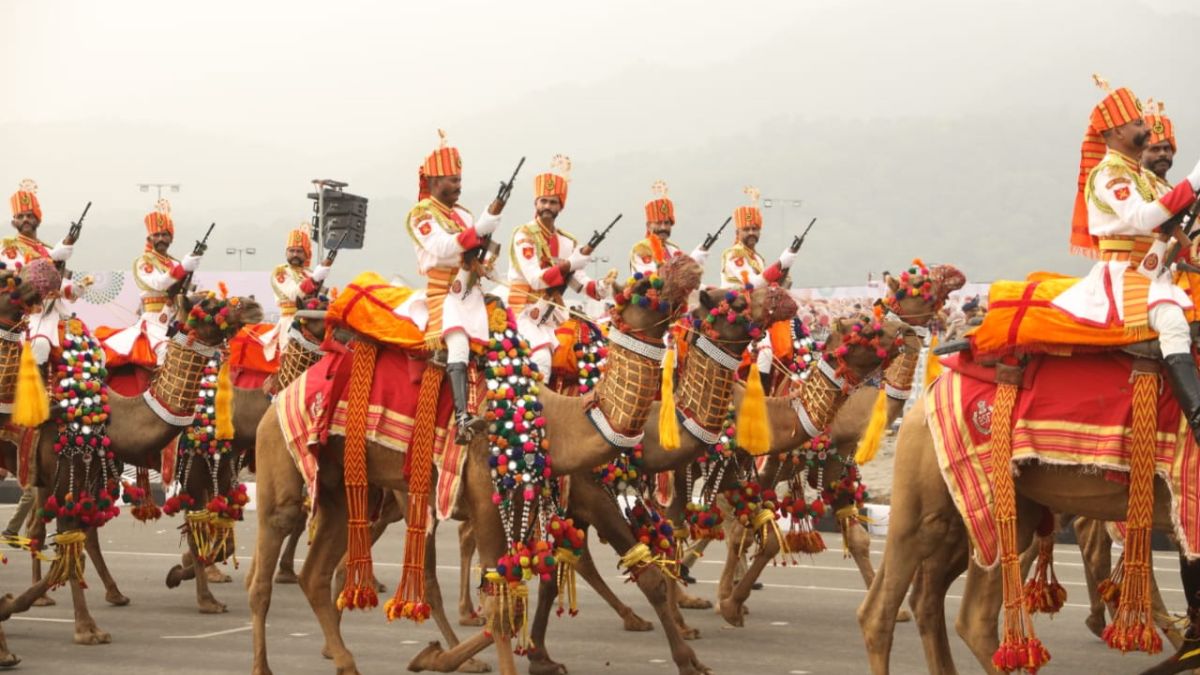
The historic Ganga Singh Risala, now the BSF Camel Contingent, arrives with 52 camels from Jodhpur to participate in the Ekta Parade at the Statue of Unity.

Advertisement
Ekta Nagar | Gujarat — The camel contingent of Bikaner state, formerly recognized as Gangasingh Risala, now serves as a vital unit within the Border Security Force. The camel contingent, often referred to as Gangasingh Risala during the parade in Delhi on National Day or when greeting esteemed dignitaries, is set to make its appearance at the Ekta Parade as well. This contingent captivates the crowd during the parade with the striking long moustache of the camel rider and their vibrant saffron-colored attire.
A total of 52 camels have arrived at Ekta Nagar as part of a camel contingent. A total of 52 camels have arrived at the Statue of Unity from Jodhpur, transported in specially designed vehicles. Extra attention is devoted to these camels taking part in the Unity Parade.
In the princely states of India, particularly within the arid landscapes of Rajasthan and certain areas of Kutch, soldiers relied on camels during that era. The inclusion of camels in the army is credited to Ganga Singh, the king of Bikaner. In the 19th century, he transformed the army in his state, establishing a unique unit dedicated to camels. This is precisely why it earned the name Ganga Singh Risala.
Following the nation’s independence, the Ganga Singh Risala was integrated into the Indian Army. The camel unit, recognized for its exceptional ability to traverse desert terrains and its unique body structure, has now been transformed into the Camel Contingent of the Indian Army. The association continued until 1965, the year the Border Security Force was formed, at which point the responsibility of the Camel Regiment was transferred to the BSF. Since that time, camels have proudly served as integral members of the Border Security Force.
The Border Security Force and various experts in rural regions, including Rajasthan, are once again acquiring camels. The camels in question primarily belong to the Jaisalmeri and Bikaneri breeds. Jaisalmeri camels excel in speed, while Bikaneri camels are known for their strength in carrying loads. The camels are incorporated into the Border Security Force following a thorough evaluation of their height, weight, body structure, teeth, and other essential criteria.
Upon joining the camel contingent, riders meticulously train and groom their camels. Each camel carries just one rider. Who else takes care of it? The camels receive names as well. The most disciplined camels typically take the lead in parades. Riding a camel can be quite challenging for the human body. To achieve a smoother experience, it’s essential for the rider to align their movements with the camel’s body, especially when navigating the camel’s hump.
KS Rathod, the senior officer of the Border Security Force, enhanced this contingent by establishing a camel training school in Jodhpur. The Camel Band began its training journey in 1986. Following three years of dedicated training, the Camel Band made its debut in the parade on January 26, 1990. Balancing on the back of a camel while holding instruments is quite a challenge. Even so, skilled riders can effortlessly master the instruments. Camels engage with numbers while goats interact with pebbles! Throughout the parade, meticulous attention is given to prevent the camels from being lured into snacking on the trees. Typically, a daily feed consists of ten kilos of fodder combined with 2 kilos of gram and pulses. The tail’s hair is expertly styled and designed, ready to make a stunning appearance at the parade.
Following the celebrations of 26th January and 15th August, this camel band now joins the Ekta Parade, becoming a captivating highlight of the event.
Advertisement
