
Amit Shah Emerges as BJP’s No. 2: Power Struggle Reshapes Post-Modi Politics
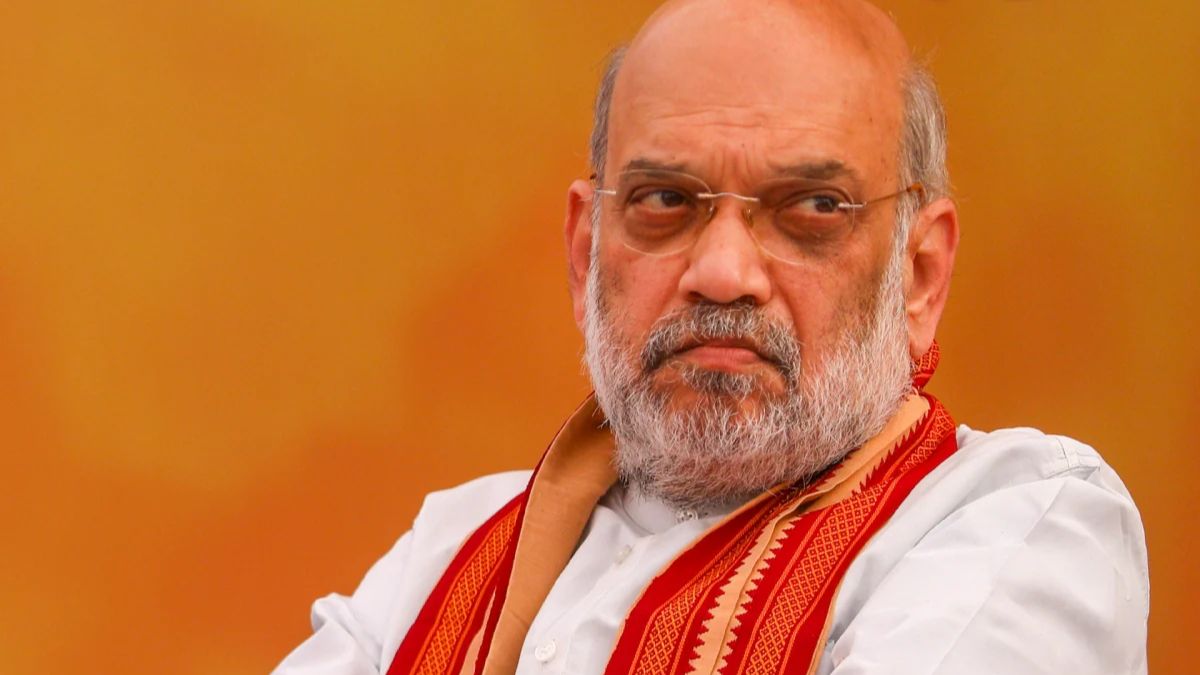
As the BJP reels from the 2024 election shock, internal equations shift dramatically, placing Home Minister Amit Shah at the centre of a fierce succession debate inside the party and the Sangh Parivar.

Advertisement
New Delhi — The year 2024 was meant to be the coronation of an unchallenged era, with Prime Minister Narendra Modi’s slogan of “400 plus” echoing across the nation. Instead, the general election delivered a political earthquake, dramatically shaking the foundations of the ruling Bharatiya Janata Party (BJP) and the wider Sangh Parivar.
The results—particularly the collapse of the BJP’s fortunes in key states like Uttar Pradesh and Maharashtra, and the stunning defeat in the ideological bastion of Ayodhya—have not just restored parliamentary opposition but have forcefully reopened the most critical and previously unspoken question in Indian politics: Who is number two in the Modi cabinet, and who will eventually succeed him?The old, routine question of whether Defence Minister Rajnath Singh or Home Minister Amit Shah occupies the second position in the cabinet has suddenly acquired a new, existential urgency.
Beyond the government, a larger, more ferocious battle is raging within the party and the Rashtriya Swayamsevak Sangh (RSS), drawing in powerful regional and organizational figures: the aggressively Hindutva-aligned Yogi Adityanath, the Nagpur-based, RSS-connected pragmatist Nitin Gadkari, and the mass leader and now Union Agriculture Minister Shivraj Singh Chauhan. The shock of 2024 has unleashed a powerful, pent-up force of succession, challenging the absolute authority of the Modi-Shah duo.
The Hard-Hitting Parliamentary Duel: Shah Seizes the NarrativeThe tremors of the electoral setback were instantly amplified by a sustained, hard-hitting narrative from the opposition. The slogan, “Vote thief, throne thief,” became a direct, frontal assault on the credibility of the Prime Minister, the BJP, and the Sangh Parivar itself. This narrative, centered around allegations of irregularities in the electoral process and the conduct of the Election Commission, posed an unprecedented challenge that the ruling party was struggling to counter.In this vacuum, the recent high-stakes debate in Parliament, focusing on electoral reforms and the opposition’s allegations, provided a powerful stage for the emerging power dynamic.
With Prime Minister Modi notably absent from the debate on electoral reforms, it was Home Minister Amit Shah who stepped into the arena, transforming a defensive moment for the government into a ferocious display of leadership and political dominance.Shah’s parliamentary response was not a measured ministerial statement but a direct, combative counter-attack designed to send a clear message: that he is the indispensable leader capable of running the government, controlling the narrative, and taking on the opposition’s fiercest face, Rahul Gandhi.
The tension peaked when the Leader of the Opposition, Rahul Gandhi, issued a challenge for a joint press conference. Shah’s response was a theatrical and uncompromising assertion of power, discarding parliamentary decorum for naked political aggression:“Honorable Sir, first of all, I want to clarify one thing. I have been elected as a representative in the Legislative Assembly and Parliament for 30 years. I have extensive experience with the parliamentary system. The Leader of the Opposition says that I should answer his question first. He wants to hear my answer. Parliament will not run according to your whims. I will decide the order of my speaking. Parliament will not function this way.”This calculated arrogance—a style previously synonymous only with Prime Minister Modi—was a clear signal.
By openly challenging and provoking Gandhi, Shah positioned himself as the only leader in the party capable of effectively neutralizing the opposition’s central figure and narrative. He was not just defending the government; he was aggressively claiming the mantle of political power management.The Five-Way Tussle: Aspirants and the RSS EnigmaThe rise of Amit Shah is directly proportional to the perceived vulnerability of the BJP following 2024, which has emboldened other senior leaders to quietly re-establish their presence.
1. Amit Shah: The Power Broker
The Parliament showdown firmly established Shah as the de facto successor in the eyes of the party’s rank and file, as well as the opposition. His control over the Home Ministry is the key to his power. The Home Ministry, with its jurisdiction over security agencies like the CBI, ED, and IT, and the deployment of paramilitary forces during elections, makes him the operational pivot of the government.”If you understand all the moves within this entire process, everything is currently under the control of Home Minister Amit Shah. The Home Ministry is with him. The CBI, ED, and IT are under him… how to take which line within the party, what will be the direction of Parliament? This is also being decided by Home Minister Amit Shah.”His message is clear: the greatest ideology is the ideology of retaining power, and he is the one who knows how to do it—by any means necessary, including the political maneuvering required to keep crucial allies like Nitish Kumar and Chandrababu Naidu in the current coalition government.
2. Rajnath Singh: The Middle Path
Rajnath Singh, a former party president, has traditionally been viewed as the most senior leader after Modi. However, his measured, non-controversial approach, while keeping him in the frame, places him outside the hard-knuckled political operational sphere dominated by Shah. He remains the choice for the old guard and those seeking a consensus figure.
3. Yogi Adityanath: The Aggressive Ideologue
The Chief Minister of Uttar Pradesh, Yogi Adityanath, is the undisputed flagbearer of the party’s core Hindutva ideology. Yet, the 2024 losses in UP—even in Ayodhya, the epicenter of the Ram Temple movement—have weakened his claim to an all-India role. While he has successfully adopted a similar aggressive style of governance as the Modi-Shah duo in his state, the message from the central leadership to him appears to be: solidify Uttar Pradesh first, and stand behind Shah.
4. Nitin Gadkari: The Economic Alternative
Nitin Gadkari, hailing from Nagpur and traditionally close to the RSS, emerges as the primary alternative rooted in organizational history and pragmatic governance, particularly on the economy. His consistent focus on projects like ethanol and reducing the country’s massive $22$ lakh crore energy import bill is a quiet counter-narrative to the purely political-ideological one. However, his strained relationship with the power center in Delhi has seen him increasingly sidelined from key organizational decision-making bodies.
5. Shivraj Singh Chauhan: The People’s Politician
Despite being sidelined as Chief Minister of Madhya Pradesh, Shivraj Singh Chauhan’s popular appeal has led to his inclusion in the cabinet as the Agriculture Minister. His political star seems to be quietly resurging, but the manner of his removal from the state leadership still indicates a check on his independent political aspirations.
The RSS Position: An Ambiguous Best Wish
Adding complexity to this internal turmoil is the position of the RSS, the ideological parent of the BJP. Amid the centenary celebrations of the organization, the RSS Chief, Mohan Bhagwat, was directly confronted with the question: “Who will be the next Prime Minister after Prime Minister Modi?”His response, while seemingly innocuous, highlighted the confusion and the organization’s deliberate distance from the immediate political battle:“What he said, verbatim, on the subject of the Sangh’s 100-year journey and new horizons, was that some questions are outside my jurisdiction. Therefore, I have no opinion on them. I can only offer my best wishes. Nothing more than that. Who will succeed Modi? This is something the BJP and Modi ji have to decide.”Bhagwat further lamented that discussions about the RSS are often based on perceptions, not on facts—a rare acknowledgment of the narrative warfare surrounding the Sangh Parivar. This ambiguous stance signals an unwillingness to openly back any single successor, leaving the field open for the strongest political player to seize control.
The Arrogance of Power: The New Doctrine
The ultimate takeaway from the parliamentary duel and the subsequent messaging is the establishment of a clear, uncompromising doctrine of power management. For the Modi-Shah duo, and now seemingly for Shah alone, ideology and even economic performance are secondary to the raw ability to retain political power.Shah’s aggressive style in Parliament—culminating in the dramatic opposition walkout—was a choreographed performance.
It was a message to the entire BJP and Sangh Parivar that amidst allegations of “vote theft,” a faltering economy, and leadership uncertainty, only one person possesses the political will and operational ruthlessness to not only withstand the attack but to aggressively counter it.The transition, which was once an open question, appears to be settling.
The 2024 elections did not just weaken the BJP’s majority; they forced the party into an inevitable, accelerated succession phase. And for the first time, a decisive signal has been sent to the party: “Who after Modi? Don’t look at any other face.”The power baton is visibly shifting from Prime Minister Modi to Home Minister Amit Shah. The arrogance of power that Shah displayed in Parliament is the new style—a style designed to silence internal dissent, send a warning to the RSS, and ultimately establish the new, unshakeable number two in Indian politics, who is ready to become number one.
Advertisement
