






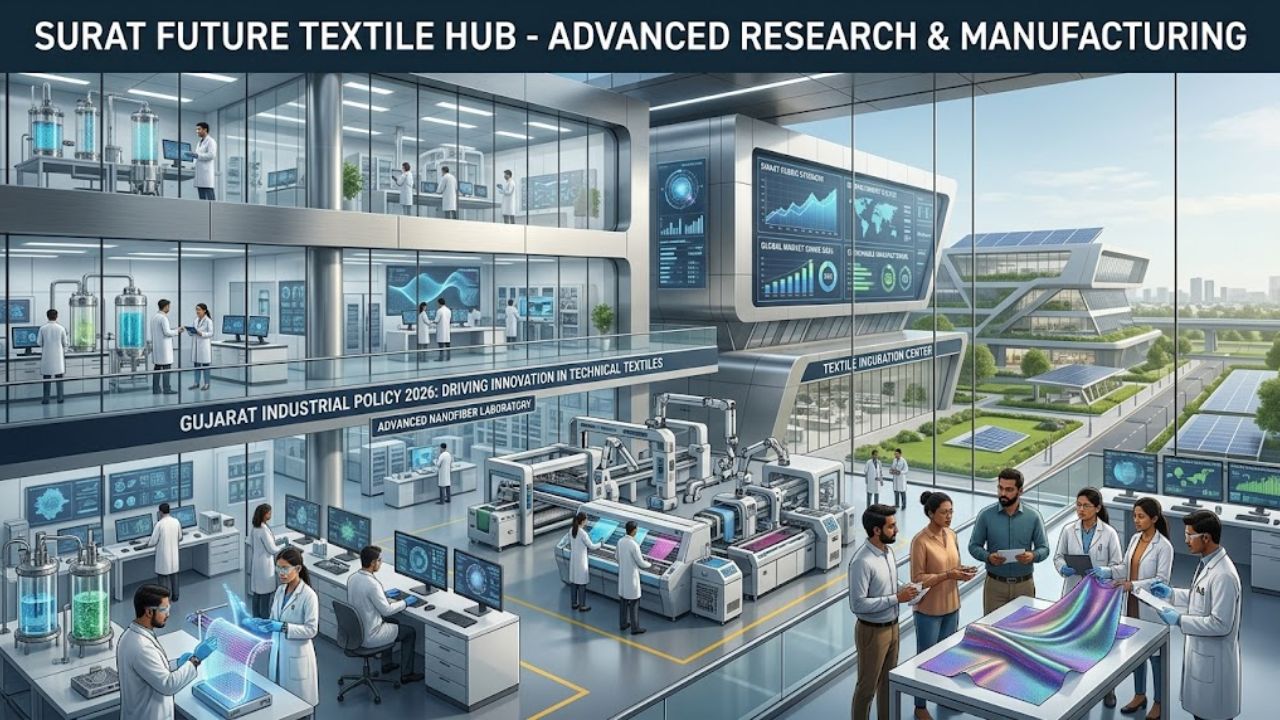
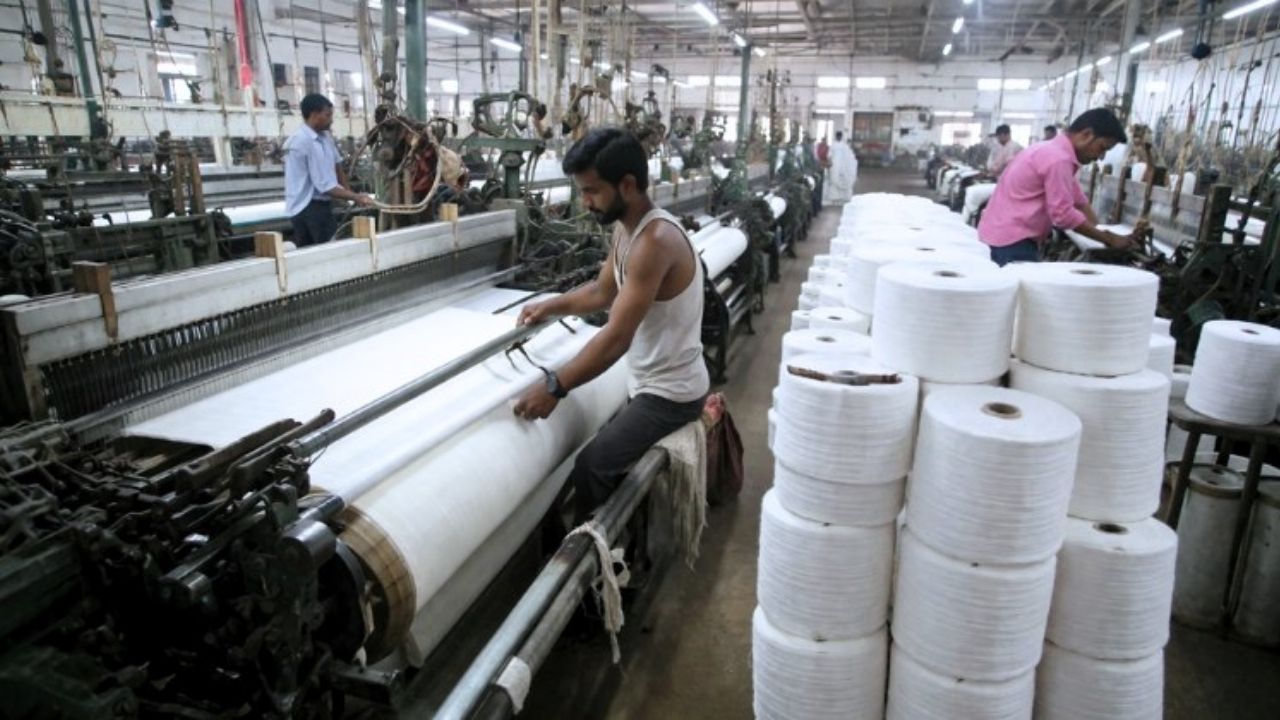
Gujarat Industrial Policy GR Out After 83 Days; Surat Industry Raises Concerns
SURAT : Gujarat’s long-awaited detailed Government Resolution (GR) for the Industrial Policy 2020 has finally been issued, 83 days after the policy was announced, but the incentive structure has...

SURAT : Gujarat’s long-awaited detailed Government Resolution (GR) for the Industrial Policy 2020 has finally been issued, 83 days after the policy was announced, but the incentive structure has already triggered questions among Surat’s industrial community over whether the additional subsidy offered in backward areas will actually persuade manufacturers to leave established industrial ecosystems.
The Gujarat government announced the Gujarat Industrial Policy 2020 on June 15, while the detailed GR was issued late on September 8. Under the framework, talukas have been divided into two categories based on their level of industrial development.
Category-A talukas will receive a 15% capital subsidy on eligible fixed capital investment, while Category-B areas, including developed urban centres such as Surat, Ahmedabad, Vadodara and Rajkot, will receive a 10% subsidy.
In Surat district, Mahuva, Ambika and Umarpada have been placed in Category A, making new manufacturing investments there eligible for the higher 15% subsidy. Mangrol, Kamrej, Palsana, Olpad, Surat city, Mandvi, Bardoli and Areth have been placed in Category B, with a 10% subsidy.
In South Gujarat, Khergam, Netrang, Kukarmunda, Uchchal, Nizar, Dolvan, Songadh, Umargam, Subir, Waghai and Ahwa are among the areas eligible for the 15% Category-A incentive.
For Category A, the package includes 7% interest subsidy, power tariff support of ₹2 per unit, and a maximum combined incentive of 20% of eligible fixed capital investment, subject to prescribed limits. Category B investors can receive up to 7% interest subsidy and ₹1 per unit power tariff support, with a maximum combined incentive of 15%.
The policy also provides enhanced incentives for thrust sectors, including textiles and apparel, chemicals, sustainability, capital equipment, green energy, healthcare and waste and textile-waste recycling.
However, industry observers say the biggest concern for Surat is the apparent lack of a dedicated incentive framework for MSMEs, despite the city’s textile and diamond sectors being heavily dominated by small and medium enterprises.
“The question is whether an additional five per cent subsidy is enough to make an investor leave an established industrial ecosystem,” industry representatives said.
Surat’s developed ecosystem offers labour, transport, infrastructure, raw-material supply, engineering support and established business networks. Shifting to a backward taluka could mean rebuilding these linkages from scratch.
The GR also promises exceptionally high incentives for five sectors—sports goods and equipment, toys, footwear, robots and drones—with capital subsidies of up to 50% in Category A and 45% in Category B. However, the benefits are linked to investments starting at ₹1,000 crore, making them largely relevant to mega-scale projects.
For Surat’s MSME-dominated economy, the next major expectation is therefore a separate incentive framework that addresses the needs of smaller industrial units and strengthens the city’s existing manufacturing ecosystem.