




Featured
From Evidence to Impact: BMJ Research Forum South Asia 2026 Calls for Research That Changes Lives
BoroPlus
BoroPlus Enters India’s Baby Care Market with ‘FromMaa’
Dedicated Freight Corridors transforming freight transportation landscape in India
September 8, 2026
The Blunt Times The Blunt Times
  • National
  • City Events
  • Business Vibes
  • Education
  • Entertainment
  • Regional
    • Bharuch
    • Dang
    • Navsari
    • Surat
    • Valsad
    • Hindi
    • Gujarati
  • Health
  • Crime corner
  • Sports
  • Spotlight
Search the Site
Popular Searches:
Chatgpt Nasa Halloween
Recent Posts
Gujarat ₹635 crore cyber fraud scam, the blunt times
₹635-Crore Cyber Fraud Network Busted in Gujarat, 6 Arrested
September 8, 2026
Healthcare
India’s Healthcare Has Great Doctors But Poor Patient Navigation
September 8, 2026
South Gujarat paddy and sugarcane crops at risk, the blunt times
20-Day Rain Break Puts South Gujarat Paddy, Sugarcane Crops at Risk
September 8, 2026
The Blunt Times The Blunt Times
  • National
  • City Events
  • Business Vibes
  • Education
  • Entertainment
  • Regional
    • Bharuch
    • Dang
    • Navsari
    • Surat
    • Valsad
    • Hindi
    • Gujarati
  • Health
  • Crime corner
  • Sports
  • Spotlight
Follow us
Healthcare
Home/Health/India’s Healthcare Has Great Doctors But Poor Patient Navigation
Health

India’s Healthcare Has Great Doctors But Poor Patient Navigation

India has scaled medical colleges and hospital capacity, but patients face confusion on where to go, whom to trust and costs. Livlong 365’s Surgicare adds a care coordinator across the surgical...

TBT Online Desk
September 8, 2026 5 Min Read
India likes to talk about its doctors, and it has earned the right to. We run more medical colleges than any other nation, approximately 800+, up from just 381 a decade earlier, and produce the largest number of medical graduates of any country in the world. Depending on which government counts you trust, India’s doctor-to-population ratio now sits somewhere between 1:811 and 1:900, as of December 2025, a number better than the WHO standard. The talent pipeline, in other words, is no longer the problem it once was. For years, the bigger constraint sat one level below the doctors, in bricks, beds, and machines. India simply didn’t have enough hospitals to match the size of its population, and what existed was concentrated in a handful of metros. That is changing too, if unevenly. Union Budget 2025–26 set aside close to ₹1 lakh crore for healthcare. Private equity poured roughly ₹5,000 crore into hospital M&A between 2022 and 2024 alone, and the sector logged 72 deals worth $3.5 billion in a single quarter last year. National chains are pushing hard into Tier-II and Tier-III cities, while global capital and global hospital brands increasingly treat India as a serious market rather than an outsourcing destination. Bed density is still thin, about 1.3 to 1.4 beds per 1,000 people against a WHO-recommended 2 to 3.5, but the trajectory is unmistakably upward, and the investment case has shifted from “will India build this?” to “how fast?” So doctors: improving. Infrastructure: improving. And yet ask anyone who has actually had to schedule a surgery for a parent, and you’ll hear the same story: confusion, delay, and a strange kind of helplessness that has nothing to do with the quality of medicine on offer.

The Gap Has Moved

That’s the real story hiding underneath the good news. The bottleneck in Indian healthcare hasn’t disappeared; it has simply moved. Earlier, it was supply side. Today it’s navigation. A patient diagnosed with, say, a gallbladder stone or a hernia doesn’t lack for surgeons. What they lack is a reliable way to answer four questions: Where should I go? Whom can I trust? What will this actually cost me? And a question people rarely ask out loud is this surgery even necessary, or would a second opinion change the picture? The numbers behind that confusion are stark:
  • Households in India still fund nearly half of all healthcare spending directly out of pocket; a recent national survey put out-of-pocket costs at close to 95% of hospitalisation expenses in rural India and about 83% in urban India, with average hospital bills running ₹31,500 and ₹47,000 respectively. Close to 400 million Indians carry no health insurance at all.
  • Even where medical colleges are dense, doctors and hospitals remain lopsided in their distribution; South and West India account for roughly half the country’s doctors while serving about a third of its population, which means a majority of Indians are navigating a system that is, quite literally, harder to find their way through.
None of this shows up as a shortage of clinical skill. It shows up as a delay. A symptom that could have been resolved with a straightforward day-care procedure at Stage 1 gets postponed, out of confusion about where to go, anxiety about cost, or simply not knowing whom to ask, until it becomes a Stage 2 or Stage 3 problem instead. The system has the expertise to treat people well. What it often doesn’t have is someone standing beside the patient at the moment they’re most lost, translating all of that expertise into a plan they can actually follow.

Enter the Concierge Model from Livlong 365: Livlong Surgicare

This is precisely the gap Livlong Surgicare has been built to close, not by adding more doctors or more beds, but by adding a guide. Livlong Surgicare is a surgical care coordination service, built for exactly the kind of planned or elective procedures where confusion does the most damage: gallbladder and kidney stone surgery, hernia and appendix procedures, piles, fissure and fistula treatment, cataract surgery, knee and hip replacement, hysterectomy and fibroid surgery, prostate surgery, tonsil and sinus procedures, angioplasty and bypass surgery, bariatric surgery, and cancer surgeries, among them. In practice, the service supports more than 50 planned and elective procedures across major specialties, spanning everything from common day-care surgeries to more advanced interventions. What makes the model interesting isn’t any single feature; it’s the fact that it wraps around the entire journey rather than a single appointment. Livlong Surgicare organises its support around four pillars:
  • Pre-surgery support: Booking consultations (virtual or in-person), helping patients pull together the reports they need, presenting two to three hospital options instead of one default choice, and giving an approximate pricing band once a consultation is done, so cost stops being a mystery that only surfaces at the billing counter.
  • In-hospital navigation: An on-ground manager who helps with admission desks and paperwork, collects the discharge document pack, and keeps the family updated on milestones without them having to chase hospital staff for information.
  • Insurance guidance: Checking cashless feasibility, supporting pre-authorisation queries, walking patients through the reimbursement checklist, and clarifying shortfalls or top-ups before they become a surprise.
  • Home recovery and follow-up: Booking follow-up consultations, coordinating home nursing or physiotherapy, and handing patients off to longer-term wellness programs once the acute episode is over.
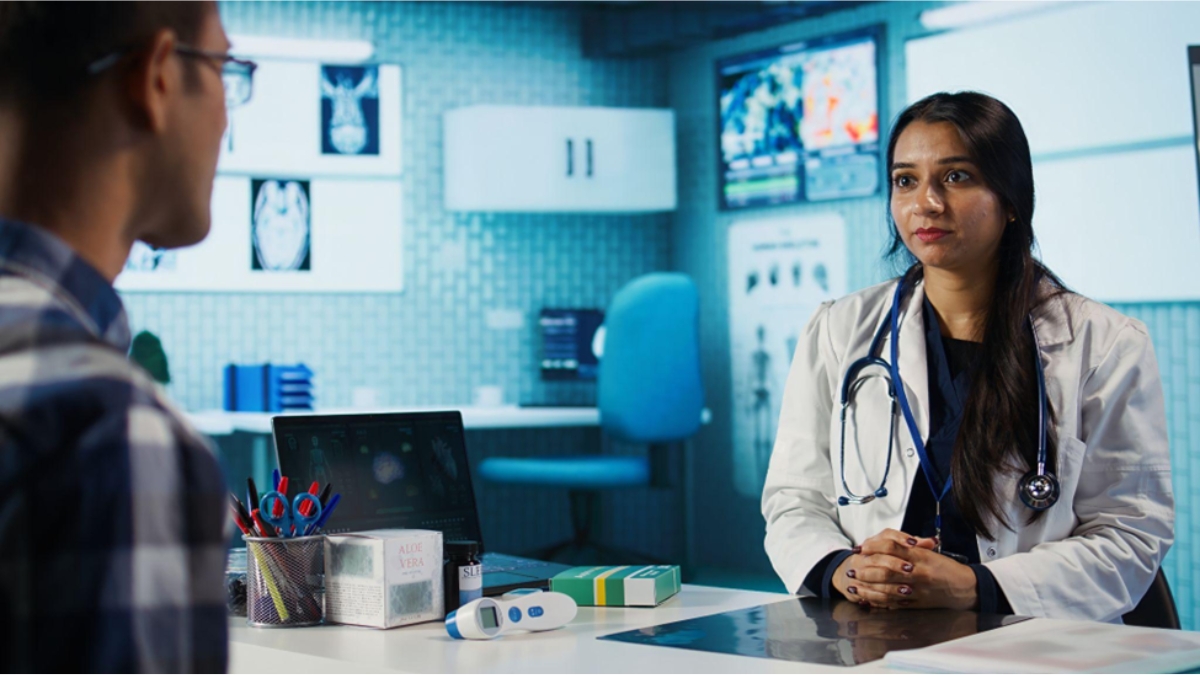
Underpinning all four is a single point of contact, what Livlong 365 calls a Surgicare Manager, a dedicated care coordinator who stays with the patient’s family from the first phone call through recovery, handling planning, hospital processes, insurance steps and follow-ups, and offering a free first consultation before any decision gets made. It also builds in something the current system rarely offers on its own: an expert second opinion, at no extra cost, so patients facing a recommended surgery have a real basis for confidence, or for asking more questions, before they commit.

Why This Matters Beyond One Company

Strip away the branding and there’s a broader point here about where Indian healthcare goes next. The country has largely solved the problem it spent decades worrying about, training enough doctors and building enough capacity. What’s left is a softer, more human problem: making that capacity legible to the ordinary person who is scared, under-informed, and trying to make an irreversible decision about their own body under time pressure. Surgicare is, in effect, a bet that the next phase of Indian healthcare improvement won’t come from another medical college or another 10,000 hospital beds, though the country still needs both. It will come from someone whose only job is to stand between the patient and the system and make the system make sense: fewer decisions made in panic, fewer treatable conditions left to drift into complications, and fewer families discovering the real cost of a procedure only after it’s already begun. India built the doctors. It’s building hospitals. The work still ahead is building the bridge between the two — and that is a much more human kind of infrastructure to get right. For more information, please visit: https://livlong.com/surgicare

Tags:

bed density 1.3 per 1000concierge modeldoctor-population ratio 1:811gallbladder hernia cataract knee replacement angioplasty bariatric cancer surgerieshome recovery follow-uphospital m&a ₹5000 crore 72 deals $3.5 billionin-hospital navigationindia healthcareinsurance guidancelivlong 365out-of-pocket spending 95% rural 83% urbanplanned elective procedurespre-surgery supportsecond opinionsurgical care coordinationsurgicareunion budget 2025-26 ₹1 lakh crore

Share Article

South Gujarat paddy and sugarcane crops at risk, the blunt times
Previous Post

20-Day Rain Break Puts South Gujarat Paddy, Sugarcane Crops at Risk

Gujarat ₹635 crore cyber fraud scam, the blunt times
Next Post

₹635-Crore Cyber Fraud Network Busted in Gujarat, 6 Arrested

Picked
Riyansh Multitrade Celebrates Seventh Anniversary in Delhi with Thousands of Direct Sellers
From Evidence to Impact: BMJ Research Forum South Asia 2026 Calls for Research That Changes Lives
BoroPlus
BoroPlus Enters India’s Baby Care Market with ‘FromMaa’
Dedicated Freight Corridors transforming freight transportation landscape in India
World Avocado Organisation
World Avocado Organisation Deepens Its India Focus with 2026 Campaign, Bringing Avocados Closer to Everyday Indian Cuisine!
PM Modi Gen Z outreach in Gujarat, the blunt times
PM Modi’s ‘Ramp Politics’ in Gujarat Targets Gen Z
Popular Posts
World Avocado Organisation
World Avocado Organisation Deepens Its India Focus with 2026 Campaign, Bringing Avocados Closer to Everyday Indian Cuisine!
By TBT Online Desk
PM Modi Gen Z outreach in Gujarat, the blunt times
PM Modi’s ‘Ramp Politics’ in Gujarat Targets Gen Z
By Times News Network
World Avocado Organisation
World Avocado Organisation Highlights Avocado’s Role in Post-Monsoon Wellness as India Enters the Festive Season
By TBT Online Desk
Ajay’s Café Enters Mumbai With First Maharashtra Outlet, Draws 2,500 Customers on Opening Day-TBT
Ajay’s Café Enters Mumbai With First Maharashtra Outlet, Draws 2,500 Customers on Opening Day
By TBT Online Desk
UCMAS
Over 7,000 Young Minds Showcase Mental Agility at the 25th UCMAS National Competition 2026 in Mumbai
By TBT Online Desk
Lansky Mr Miss Mrs India World 2026–27 Launches Nationwide Talent Hunt to Take Indian Talent Global-TBT
Lansky Mr Miss Mrs India World 2026–27 Launches Nationwide Talent Hunt to Take Indian Talent Global
By TBT Online Desk

Read Next

Healthcare
Health
India’s Healthcare Has Great Doctors But Poor Patient Navigation
September 8, 2026
5 Min Read
MetaGO
Health
MetaGO Opens Its First Clinic in Andheri, Mumbai: What Doctor-Supervised GLP-1 Care Looks Like In Person
September 3, 2026
4 Min Read
The Journey From Infertility To Parenthood With IVF
Health
The Journey From Infertility To Parenthood With IVF
August 27, 2026
3 Min Read
Anxiety Disorders
Health
Why Are Anxiety Disorders Rising in Young Professionals in Mumbai? The New Office Epidemic No One Is Talking About
August 26, 2026
3 Min Read
The Blunt Times

The Blunt Times is a 24-hour news portal from Surat and south Gujarat. It was launched by senior journalist Melvyn Thomas, who has over 21 years of experience working with the top news organizations such as The Indian Express, The Times of India, and The Economic Times.

Popular
Riyansh Multitrade Celebrates Seventh Anniversary in Delhi with Thousands of Direct Sellers
September 8, 2026
From Evidence to Impact: BMJ Research Forum South Asia 2026 Calls for Research That Changes Lives
September 8, 2026
BoroPlus Enters India’s Baby Care Market with ‘FromMaa’
September 8, 2026
Dedicated Freight Corridors transforming freight transportation landscape in India
September 8, 2026
Categories
City Events
National
Business Vibes
Lifestyle
Business
Education
Spotlight
Entertainment
Regional
Health
Press Release
Sports

© 2026 All Rights Reserved, The Blunt Times

  • Terms of Service
  • Privacy Policy