







IIT-Gandhinagar Study Finds New Weapon Against Drug-Resistant Staph
AHMEDABAD: Nearly a century after penicillin transformed the fight against Staphylococcus aureus, the bacterium that helped usher in the antibiotic era is again challenging scientists—this time as a...

AHMEDABAD: Nearly a century after penicillin transformed the fight against Staphylococcus aureus, the bacterium that helped usher in the antibiotic era is again challenging scientists—this time as a major drug-resistant threat. Researchers from IIT Gandhinagar and partner institutions have identified a potential new way to attack the pathogen by targeting an enzyme largely overlooked by existing antibiotics.
The collaborative team has developed DSA3, a laboratory-made molecule that targets thymidine kinase (TK), an enzyme essential for bacterial DNA replication and survival. The study, published in Chemistry & Biodiversity and funded by the Indian Council of Medical Research–Department of Health Research, provides an early proof of concept for the approach.
Staphylococcus aureus, particularly methicillin-resistant S. aureus (MRSA), is part of the ESKAPE group of pathogens known for their ability to evade multiple antibiotics. It can cause skin, bloodstream and surgical-implant infections.
“Antibiotic resistance is, in many ways, an evolutionary arms race. That is why researchers hunt for fresh points of attack,” said Prof Bhaskar Datta, corresponding author and faculty member at IIT Gandhinagar.
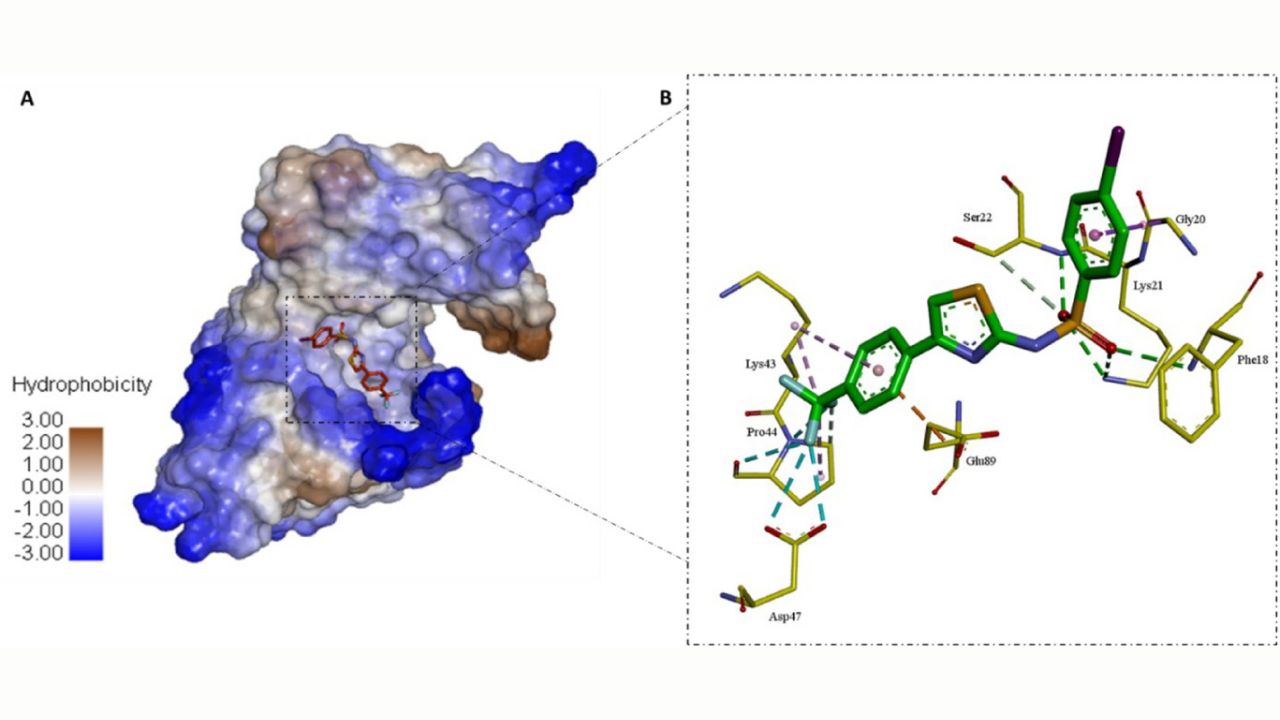
The researchers from IIT Gandhinagar, Jamia Millia Islamia, Jamia Hamdard, Xi’an Jiaotong-Liverpool University and Ahmedabad-based Sushen Medicamentos synthesised nine compounds. Using the crystal structure of S. aureus thymidine kinase, computer modelling and laboratory experiments, they identified DSA3 as the most promising candidate.
DSA3 showed strong interaction with the enzyme’s ATP-binding pocket, potentially disrupting the biochemical process required for bacterial DNA synthesis. Laboratory tests found that 6.996 micromolar of DSA3 reduced thymidine kinase activity by half. Further fluorescence and calorimetry experiments confirmed its interaction with the enzyme.
Importantly, DSA3 also inhibited the growth of S. aureus and, at higher concentrations, killed the bacteria in laboratory testing.
However, researchers stressed that the compound remains far from becoming a medicine.
“We see DSA3 as a proof of concept and a starting scaffold. It is not a drug,” said Dr Rajesh K Hadiya, co-first author and former IITGN PhD scholar. He said further work would include improving potency, testing resistant clinical isolates, assessing selectivity against the human enzyme and conducting animal studies.
Prof Datta said the research demonstrates how less-explored antimicrobial targets could contribute to broader efforts against AMR.