






Shreelakshmi Bhat: The Golden Girl of a Rising India
At an age when most young people are still choosing their interests, Shreelakshmi Bhat has built a record-setting portfolio across cinema, literature, healthcare, education and community service....

At an age when most young people are still choosing their interests, Shreelakshmi Bhat has built a record-setting portfolio across cinema, literature, healthcare, education and community service. National and international record organisations have recognised her as the Youngest Female Director, the World’s Youngest Braille Author, the Youngest Trained Medical Clown Performer and the Youngest Multi-Sensory Educational Neuroscience Innovator. Yet the more important story is not the number of titles she holds, but how consistently she has used them to widen access, confidence and opportunity. Across these varied roles, the common thread is disciplined experimentation and a deliberate effort to translate personal skill into public benefit.
Her filmmaking journey began at nine with Prakrati. She directed Srushti at 12, Nadhanka and the music album Siri at 14, and Ruthu at 15. Across the five multilingual projects, she also handled story, screenplay, dialogue and lyrics. Screenings at national and international festivals brought more than 30 awards, including honours for Best Youth Director and Youngest Female Director, and recognition from the London, India, Kalam and Karnataka Books of Records. The films have been noted for emotional depth, social messages and visual storytelling rather than spectacle alone.
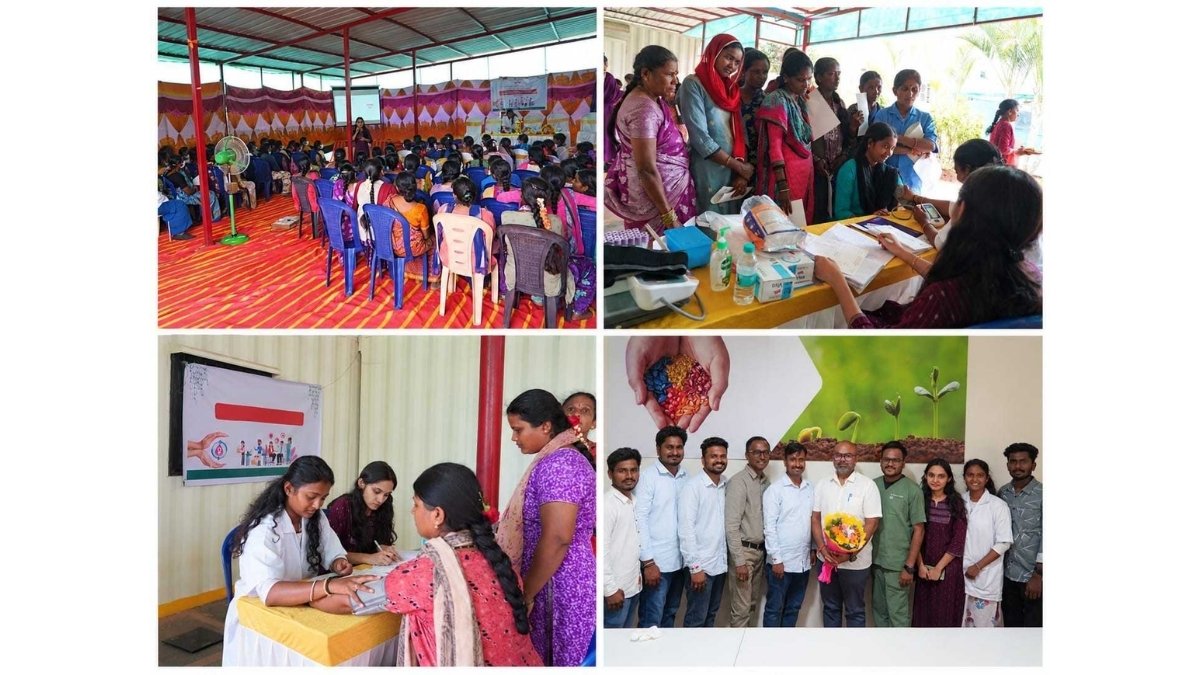
Cinema, however, is only one part of her public work. As a trained medical clown, Bhat uses humour, music therapy and expressive interaction to comfort patients, especially children receiving intensive cancer treatment. Her visits to cancer-care centres, government hospitals and service institutions aim to replace fear, however briefly, with laughter and reassurance. She extended that work into a cancer-awareness campaign covering more than 10,000 homes in a slum community, speaking with women, senior citizens and families about prevention, warning signs, timely consultation, regular check-ups and the need to overcome myths and hesitation. For patients and their families, her approach presents emotional reassurance as a valuable companion to clinical care.
Her commitment to inclusion is most visible in Mudra Sankalpa, the Braille and tactile yoga-mudra book that earned her recognition as the World’s Youngest Braille Author. Made with Braille sheets, raised textures and touch-based materials, it allows blind and visually impaired children to learn finger positions, breathing, concentration and self-discipline independently.
That effort has grown through Antar Chetana Yoga Mudra Abhiyaan, where she conducts practical sessions to build sensory awareness, listening, focus and inner balance. She also teaches abacus, rapid calculation and mental arithmetic; introduces Blind Chess on tactile and Braille boards; and encourages goalball, blind cricket, guided running, sound-based games and balance exercises. Through the Sparsha Shakti Initiative, students create art with clay, textured paper, thread, beads, wool, leaves and raised-line drawing, strengthening touch, patience and independent expression. Together, the activities frame ability through knowledge, courage, creativity and self-belief rather than sight alone.
Bhat’s Swara Taranga initiative addresses another often-overlooked learning need. Developed through observation, sustained interaction, study and consultation with doctors, the programme supports autistic children and those with intellectual, developmental, sensory, attention or communication challenges. Music, rhythm, calming movement, storytelling, puppets, magic-based activities, art, colour, instruments and repeated cues are adapted to each child’s sensory response and pace. The goal is a pressure-free route to stronger communication, attention, coordination, emotional expression, creativity, confidence and social participation. In practice, Swara Taranga seeks to build a bridge between learning and expression, allowing children to respond and connect beyond words.
Her community programmes follow the same practical philosophy. Livelihood training introduces women from underprivileged communities and transgender participants to candle making, incense-stick production, kumkum preparation and healthy-food making. Free health and eye camps, eye-donation outreach, the Rakta Sanjeevini Abhiyaan for blood-donation awareness and support for Pulse Polio Immunisation campaigns bring preventive care closer to communities.
Environmental action is another major pillar. More than 8,000 saplings have been planted through the Maatrachaaya Vruksh Abhiyaan in schools, hospitals, roadsides and urban spaces. The Trash to Tree Mission turns dumping sites into cleaner green areas, while the Bird Care Mission provides food, water and shelter during extreme heat. Plastic-Free Campus and Jal Rakshan campaigns connect classroom awareness with plastic reduction, water conservation, rainwater harvesting and protection of natural resources.
For students, Bhat conducts programmes on menstrual health, personal and cyber safety, road safety, self-defence, disaster preparedness and CPR awareness. Skill Development, Suraksha Jyoti and Book Buddy initiatives reinforce communication, leadership, study habits, time management, concentration and reading, treating confidence and preparedness as essential parts of education.
The range of her personal achievements is equally striking. She has acted in 29 Kannada, Telugu, Tamil and Hindi films, appeared in more than 4,500 television episodes across seven major serials, and received more than 30 Best Child Artist awards. In academics and National Olympiads, she has won over 56 gold and 24 silver medals. She is a trained rifle and pistol shooter who has represented India, a national-level chess tournament winner, and has trained in kickboxing, skating and badminton.
She is also trained in Bharatanatyam and Yakshagana and plays nine instruments: flute, sitar, tabla, veena, violin, pakhawaj, keyboard, guitar and manjira. Her four books are Yashodiganta, Student Key Success in Alphabets, Mudra Sankalpa and Nagumogadolagondu Mookamouna.
Bhat’s story offers a useful corrective to a culture that can treat records as endpoints. In her case, recognition has become an entry point to service. Whether the setting is a film set, hospital ward, special classroom, sports ground or neighbourhood campaign, her work carries the same argument: talent gains its fullest meaning when it creates dignity, access and hope for others.