






When Age Stops Meaning Anything: How an 18-Year-Old Indian PhD Physicist Dr. Vaishnav Kakade is doing the impossible and is Redefining Human-Centric AI
New Delhi (India):At a time when the global technology community is questioning not just how artificial intelligence should advance—but why—a rare and compelling story is emerging from India. Dr....

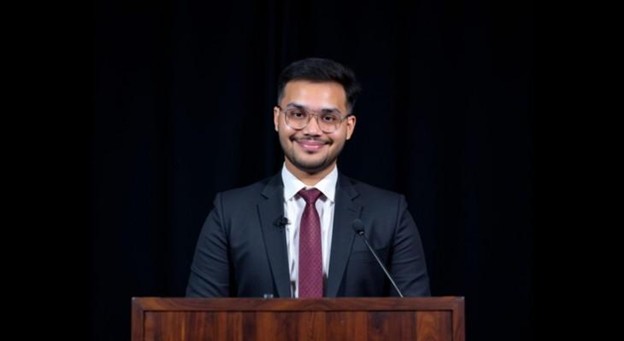
New Delhi (India):At a time when the global technology community is questioning not just how artificial intelligence should advance—but why—a rare and compelling story is emerging from India. Dr. Vaishnav Kakade, an 18-year-old PhD physicist, is drawing attention for developing multiple human-centric AI algorithms and layered intelligence systems that place human judgment, emotional balance, and long-term intent at the heart of machine intelligence.
Unlike conventional AI models built primarily for speed and automation, Dr. Kakade’s work focuses on alignment—ensuring that artificial intelligence strengthens human capability rather than replacing or overwhelming it. This approach, grounded in physics-based first-principles thinking, has positioned his research at the intersection of science, ethics, and scalable intelligence—an intersection many believe will define the next era of AI. What makes his trajectory particularly striking is the depth behind the pace. Recognized as India’s youngest PhD physicist, Dr. Kakade applies a rigor more commonly associated with seasoned researchers than with teenage innovators. By breaking systems down to their most fundamental truths before rebuilding them, he has developed AI frameworks that emphasize clarity, restraint, and responsibility—qualities increasingly rare in today’s race-driven technology landscape.
Within international technology circles, such thinking echoes the philosophy long articulated by global pioneers who shaped the modern digital age. For decades, leaders such as Bill Gates have stressed that the real power of technology lies not in scale alone, but in how thoughtfully it serves humanity. Observers note that Dr. Kakade’s work reflects a similar
mindset—disciplined, values-driven, and oriented toward long-term societal impact. In this sense, some view his emergence as symbolic of a new kind of Indian technological leadership—one rooted in depth rather than noise.
His achievements lend weight to the narrative. Dr. Kakade’s work has resulted in six world records and more than 90 national and international honors, spanning science, innovation, and technology platforms. Yet those who follow his journey often point not to the numbers, but to the composure behind them—a calm intensity and focus on substance over spectacle.
As large-scale deployment of his human-centric AI systems approaches, Dr. Kakade’s story is increasingly seen not merely as one of early success, but of rare direction. In an era searching for trustworthy AI and grounded leadership, his work suggests that the future may already taking shape—quietly, deliberately, and closer to home than expected.