







Gujarat ATS, Coast Guard Seize 200 kg Drugs Off Porbandar
Porbandar | Gujarat — In a major breakthrough against international narcotics trafficking, the Gujarat ATS drug seizure Porbandar operation has exposed yet another attempt to use the state’s vast...

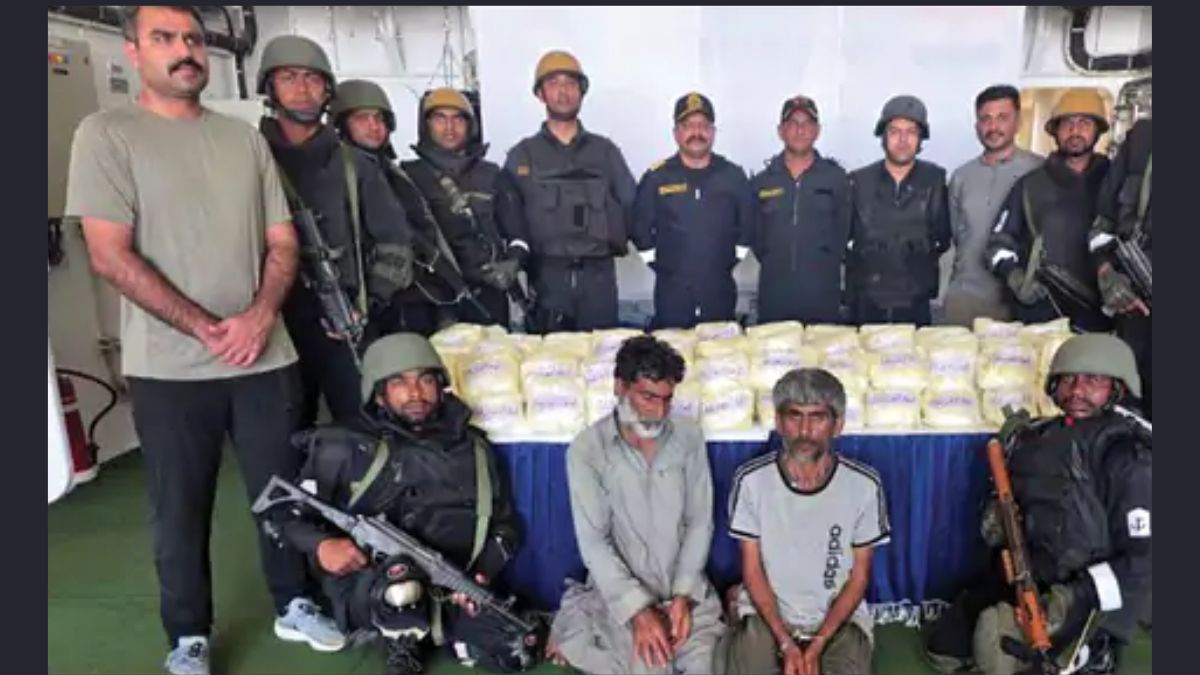
Porbandar | Gujarat — In a major breakthrough against international narcotics trafficking, the Gujarat ATS drug seizure Porbandar operation has exposed yet another attempt to use the state’s vast coastline as a gateway for illegal drugs. In a joint midnight operation, the Gujarat Anti-Terrorism Squad (ATS) and the Indian Coast Guard seized more than 200 kg of suspected narcotics from the Arabian Sea off Porbandar and arrested two Iranian nationals allegedly transporting the consignment.
Officials said the drugs were being smuggled into Gujarat by sea before being intercepted in territorial waters. The seized consignment will be brought to Porbandar Jetty for further forensic examination and legal procedures.
“This was a well-coordinated operation based on precise intelligence inputs. The accused were attempting to use Gujarat’s coastline as a landing point,” a senior ATS officer said. “Interrogation is underway to trace the larger international network behind this consignment.”
With a coastline stretching nearly 1,600 km — the longest in India — Gujarat has increasingly become vulnerable to maritime smuggling. Security agencies believe shifting global drug routes have turned the state into a transit hub after crackdowns in other countries.
Experts link the change to developments in Sri Lanka in 2019, when then President Maithripala Sirisena intensified anti-drug operations and approved death sentences for convicted traffickers. “After Sri Lanka tightened its waters, international cartels began scouting alternative routes. Gujarat’s long coastline became a soft target,” a senior maritime intelligence source said.
Authorities say narcotics originating from Pakistan, Afghanistan or Iran often land along Gujarat’s coast before being split into smaller packets and routed to other Asian nations, Europe and Australia. Some consignments are also trafficked inland via road networks.
According to the United Nations Office on Drugs and Crime, Afghanistan accounts for nearly 80 percent of global opium production, which is processed into heroin, methamphetamine (MD), brown sugar and other synthetic drugs.
Gujarat has witnessed several major drug busts in recent years, including raids in Bharuch, Surat and Valsad, where clandestine manufacturing units were unearthed.
Officials admit the challenge is enormous. Over 30,000 boats and small vessels operate along Gujarat’s coast, making surveillance in vast international waters extremely complex. “Monitoring every vessel is practically impossible, but intelligence-based interception is proving effective,” an officer said.