







DC-3 ‘Spirit of Douglas’ Lands in Gujarat, Revives WWII Legacy
Surat | Gujarat — The roar of history echoed across Gujarat’s skies as the legendary Douglas DC-3 — famously known as the ‘Spirit of Douglas’ — touched down at Surat and Vadodara airports during its...

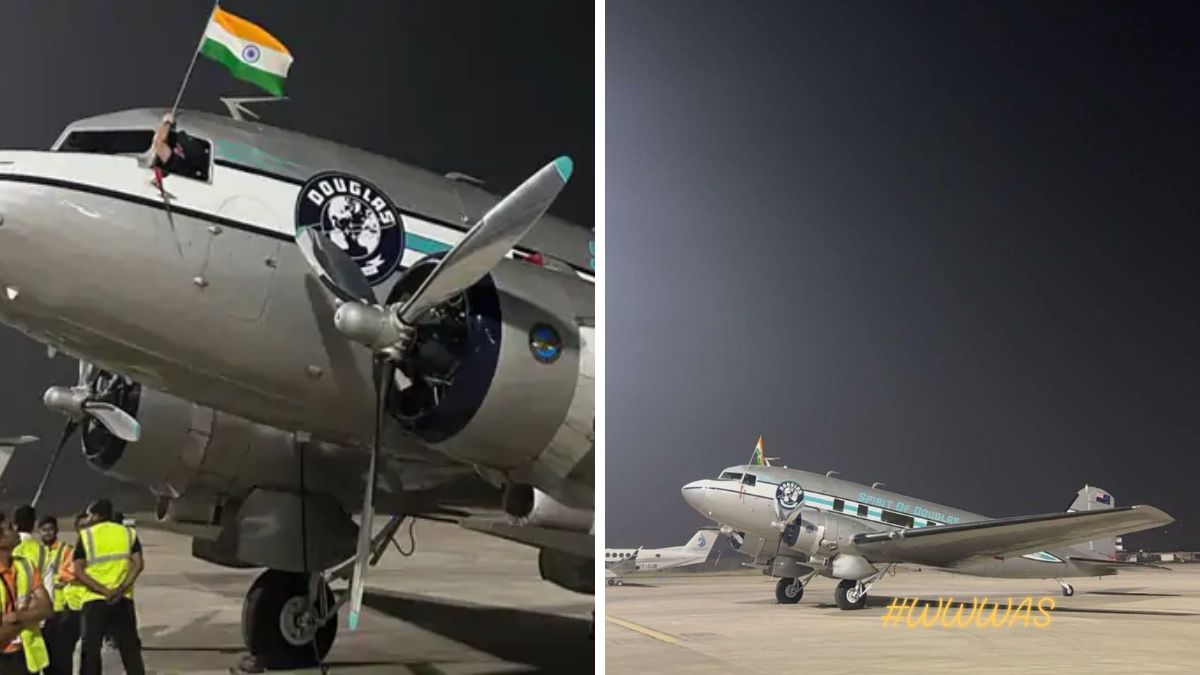
Surat | Gujarat — The roar of history echoed across Gujarat’s skies as the legendary Douglas DC-3 — famously known as the ‘Spirit of Douglas’ — touched down at Surat and Vadodara airports during its global heritage tour. For a brief moment, aviation enthusiasts and curious onlookers witnessed not just an aircraft, but a flying symbol of resilience that once altered the course of World War II.
The vintage aircraft made a scheduled halt at Surat airport for refueling before heading to Vadodara, drawing crowds eager to catch a glimpse of the 84-year-old aviation marvel. Airport officials confirmed that the stop was part of a carefully planned international tour aimed at celebrating aviation history.
“This is not just a plane; it is a living piece of global history,” said an aviation enthusiast present at Surat airport. “To see a World War II veteran aircraft flying strong even today is nothing short of extraordinary.”
The DC-3 holds a revered place in military history. During World War II, it served as the backbone of Allied transport operations, carrying troops, weapons, and crucial supplies across continents. Its most iconic contribution came during the historic Normandy landings, widely known as D-Day in 1944. The aircraft played a decisive role in transporting paratroopers and logistics that helped the Allied forces secure a turning point against Nazi Germany.
Aviation historians often describe the DC-3 as the ‘workhorse’ or ‘iron bird’ of the war. Its reliability, durability, and unmatched performance under extreme conditions made it indispensable in the fight against Adolf Hitler’s forces.
Built in the 1930s by the American manufacturer Douglas Aircraft Company, the DC-3 was ahead of its time. Powered by two robust Pratt & Whitney engines, the aircraft has the rare capability of flying safely for hours even if one engine fails mid-air — a feature that earned it a reputation for unmatched safety and endurance.
“Modern jets are often retired within 25 years, but this aircraft continues to fly after more than eight decades,” said a senior aviation expert in Vadodara. “It represents engineering brilliance and timeless design.”
The ongoing world tour aims to keep the legacy of early aviation alive and inspire younger generations to appreciate the pioneers of flight. After its brief but memorable stay in Gujarat, the ‘Spirit of Douglas’ continued its journey, leaving behind awe, nostalgia, and a powerful reminder that history, when preserved, can still take flight.